
Reviewed · TIRTA EMPUL PURIFICATION CEREMONIES
Purification Holy Bath at Beji Gria Waterfall
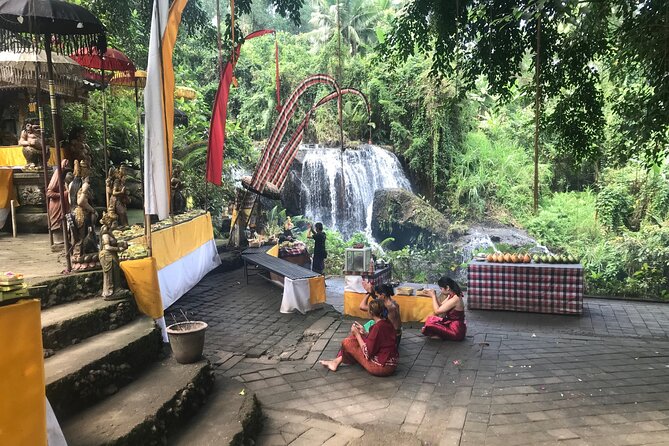
Beji Gria Waterfall offers more than a swim. You follow a Balinese purification ritual through a narrow canyon, small spring, and two waterfalls, with prayer and blessings from a temple priest along the way. The experience is part spiritual ceremony, part nature outing, and part emotional reset.
I like the private hotel pickup and the careful step-by-step guidance, especially for first-time visitors who would not know how to take part respectfully. I also like the unusual structure: you are asked to release sadness and tension at one waterfall, then express happiness at another. Guides including Pandu have been praised for explaining the process and taking photos.
The main consideration is that Beji Gria is not entirely removed from tourism. Some parts can feel commercial, and optional products or packages may be offered. The water is also cold, and the ceremony includes walking through wet, narrow areas, so bring a change of clothes and expect a physical experience.
Key points to know before booking
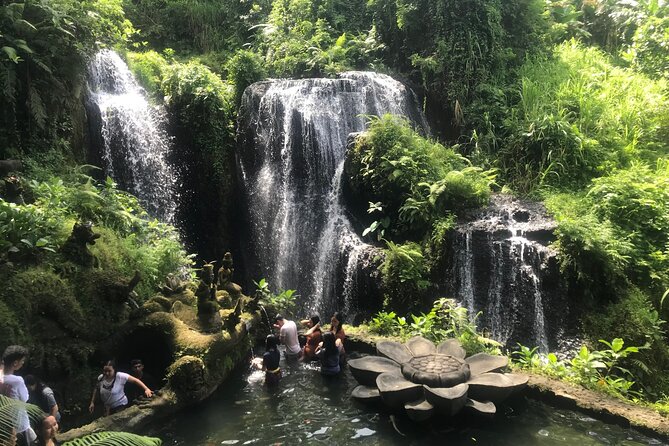
- A temple priest begins the ritual with meditation and prayer, giving the bath a clear religious purpose rather than treating it as a simple waterfall swim.
- The ceremony uses several stages, including a health-balancing bath, an aura-cleansing spring, emotional release, joyful expression, and a final blessing.
- Private hotel transfers are included, with about 30 to 60 minutes each way depending on your location and traffic.
- The experience is private for your group, though the site itself can feel somewhat commercial and may not always seem secluded.
- The age range is 10 to 60, and people who are menstruating cannot take part under the local temple policy.
- You should pack light clothing, swimwear, a towel or change of clothes, water, snacks, sun protection, and a little cash.
A Balinese purification ritual with a clear purpose
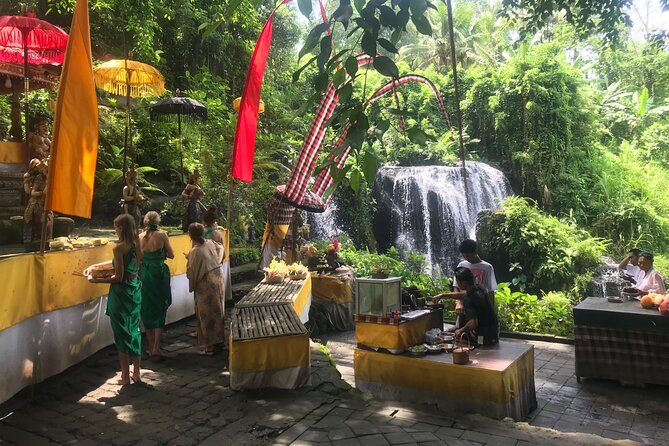
The appeal of this activity is its structure. You are not simply led to a pretty waterfall and told to enjoy the water. Each stage has a meaning, and the guide explains what you are doing as you move through the site.
The ceremony begins with meditation and prayer led by a temple priest. This opening matters. It sets the tone and reminds you that the holy bath is a religious practice, not a spa treatment or staged photo session. You are given a special sash or cloth for the ceremony, and the necessary offerings and incense are included.
The ritual then moves through several forms of cleansing. The first bath is connected with balance and health. The second takes place at a small well and is meant to cleanse your aura, helping you attract happiness and luck. The language may sound unfamiliar if you come from a different religious tradition, but the guide gives you a practical way to follow along.
The ceremony also includes two unusual emotional moments. At the first waterfall, you are encouraged to shout, cry, or otherwise release anxiety, tension, and sadness. At the second, you express happiness through smiling and loud laughter. It can feel theatrical at first, but that is part of the point. The ritual gives you permission to be expressive rather than quiet and self-conscious.
The final stage is a blessing from the priest using holy water taken from green and yellow coconuts. This creates a distinct ending instead of letting the activity simply stop when you leave the water.
More purification ceremonies at the water temples:
- Ubud: Monkey Forest, Jungle Swing, Rice Terrace, and Water Temple
★ 5.0 · 7,160 reviews - Half-Day Ubud Electric Cycling Tour to Tirta Empul Water Temple
★ 5.0 · 315 reviews - Ubud Tour – Balinese Healing By Shaman And Self Purification
★ 5.0 · 236 reviews
From your hotel to Beji Gria Waterfall
Bali Yowana Tour provides private pickup and drop-off from your hotel. The drive usually takes 30 minutes to one hour each way, depending on where you are staying and how traffic is moving. From Ubud, that makes this a manageable half-day activity, but you should not schedule something tightly afterward.
The advertised activity time is about three to four hours, while the full period from pickup to return can be around five hours. The difference comes from the road time and your hotel location. I would keep most of the day flexible, particularly if you are staying outside central Ubud.
A private transfer is useful here. You do not have to work out local transport while carrying dry clothes, a swimsuit, and personal items. You can also return directly to your hotel after the ceremony rather than searching for a ride from the waterfall.
Drivers are part of the experience. Vito has been singled out for being early, friendly, helpful, and careful on the road. That does not guarantee a particular driver for your booking, but it shows why the transfer is more than a minor add-on. Reliable timing matters when your day includes a religious appointment and a return journey through Bali traffic.
The opening prayer and first cleansing bath
At Beji Gria Waterfall, an authorized local guide meets you and stays with you through the ritual. The guide explains the sequence and helps you know when to move, pray, bathe, or make an offering.
First comes meditation and prayer with the priest. Incense and offerings are included, so you do not need to arrange them yourself. You will also receive the special sash or cloth used during the holy bath. Wear light, comfortable clothing underneath, since you will get wet and may need to change afterward.
The first cleansing takes place as you walk through a narrow canyon. This passage is one of the more distinctive parts of the activity. Instead of arriving at a single pool and staying there, you move through the natural setting as the ritual develops.
This first bath is intended to create balance in your health. The guide’s role is important because the meaning is not obvious from the setting alone. Listen carefully, follow the instructions, and avoid treating the water like an ordinary swimming spot.
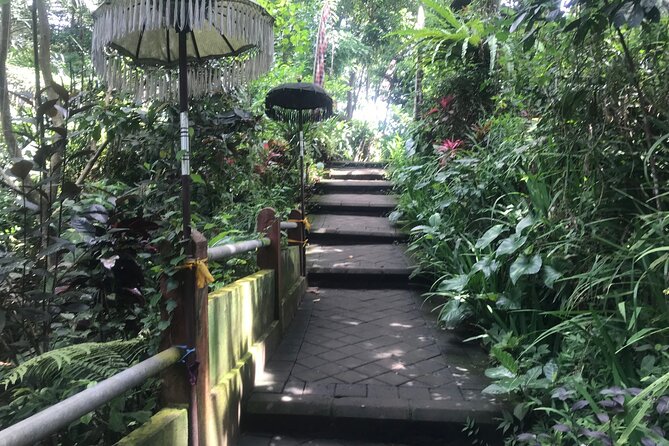
The narrow canyon may not suit anyone who dislikes slippery or confined areas. The information provided does not give details about steps, handrails, or exact walking conditions, so you should be prepared for a wet outdoor route rather than a fully paved attraction.
The spring, waterfalls, and emotional release
The second bath takes place at a small well. Its purpose is to cleanse your aura and help you attract happiness and luck. This is a quieter stage than the waterfall sections, and it gives the ritual a change of pace.
The emotional release at the first waterfall is the most unusual part. You can scream, cry, or call out as loudly as you can to let go of anxiety, tension, and sadness. You do not have to force an emotional response, but the ceremony gives you space to take part in a direct and physical way.
At the second waterfall, the mood changes. You are encouraged to smile and laugh loudly as an expression of happiness. For some people, this will feel natural. For others, it may feel awkward for the first few seconds. A good guide can help you understand that the activity is designed around participation, not quiet observation.
Pandu has been praised for guiding this process and capturing memorable moments on a phone. Guides may take photos during the experience, but you should still bring your own camera or phone if you want personal control over the pictures. Protect electronics from water and carry them only when the guide indicates that it is safe.
The site is visually strong, which explains why some people use the setting for photography. The waterfalls, canyon, offerings, ritual cloth, and water ceremony create more varied pictures than a standard waterfall visit. Still, photography should remain secondary to the religious practice. This is a place of worship as well as a scenic site.
More waterfall days out of Ubud:
- Best of Bali Waterfalls: Tibumana, Tukad Cepung and Tegenungan
★ 5.0 · 3,047 reviews - ATV Quad Bike Through Tunnel and Waterfall in Bali
★ 5.0 · 2,098 reviews - ATV Quad Bike Bali with Waterfall Gorilla Cave and Lunch
★ 5.0 · 1,925 reviews - Bali ATV Quad Bike Through Tunnel, Waterfall, White Water Rafting
★ 5.0 · 610 reviews
The final blessing with coconut water
The ceremony ends with a blessing from the priest. Pure holy water taken from green and yellow coconut water is used for the final stage.
This closing blessing gives the activity a sense of completion. You begin with meditation and prayer, pass through several forms of cleansing, release difficult feelings, express joy, and finish with a formal blessing. That sequence is what makes the experience feel more meaningful than a series of unrelated water stops.
The blessing is also a reminder that this is a local religious ceremony. You are being invited to take part in a practice with its own rules and symbolism. Follow the priest and guide, dress modestly, and treat the offerings and sacred water with care.
After the final stage, you can change into dry clothes before returning to your hotel. Food and drinks are not included, so use the water and snacks you bring for the day. The activity information recommends a water bottle and snacks, which is sensible given the travel time and physical movement.
What the $59 price covers
At $59 per person, the price includes private hotel pickup and drop-off, parking, an authorized local guide, offerings, incense sticks, and the special cloth or sash used during the bath.
The value depends on what you want from the outing. If you only want to see a waterfall, this will be more expensive than arranging a simple nature visit. You are paying for transport, a guide, a priest-led ceremony, supplies, and the ease of having the entire experience organized around your group.
I think the price makes the most sense for first-time visitors to Bali who want a guided cultural activity but do not want to navigate temple customs alone. The private format also helps if you prefer to ask questions or take part at your own pace.
Food, drinks, personal purchases, and other expenses are not included. You may also be offered additional products or packages at the site. The activity data does not say that you must buy anything, and one account describes the sales approach as a drawback. Go in knowing that the setting has a commercial side, and politely decline anything you do not want.
Group discounts are available, although the tour itself is private and only your group participates. Ask about the discount when booking if you are traveling with several people.
How commercial is the setting?
Beji Gria is presented as a beautiful spiritual site, but it is not guaranteed to feel completely remote. One clear criticism is that parts of the visit can feel commercial, with products offered for sale. That may disappoint you if you are seeking a quiet ceremony far from tourism.
At the same time, maintaining a site, paying staff, and organizing ritual services all cost money. The presence of staff and organized packages does not automatically make the ceremony meaningless. It simply means you should set realistic expectations.
I would describe this as a managed cultural attraction with genuine religious elements. You get the benefit of organized access, an authorized guide, included offerings, and a priest-led ceremony. You give up some of the quiet, unstructured feeling you might find at a less developed local shrine.
The best approach is to focus on the ritual and the natural setting, not on expecting total solitude. If staff offer extras, you can decide for yourself. The core holy bath is already included.
Who will enjoy this activity most?
This experience suits you if you want a cultural activity with a physical and emotional element. It is especially appropriate for people curious about Balinese purification traditions, visitors seeking a reflective experience, and couples or small private groups who want a memorable half-day outside Ubud.
It can also suit photographers. The setting is carefully designed and visually striking, and guides such as Pandu may help capture moments on your phone. Just remember that photography does not replace respectful participation.
You should think twice if you dislike cold water, wet clothing, narrow outdoor passages, or being asked to express emotions in a public setting. You should also avoid booking if you are outside the stated age range of 10 to 60.
Women who are menstruating cannot take part in the holy bath because of the local temple policy. This is a firm condition of the experience, so plan another activity during that time rather than expecting an exception.
What to bring and how to prepare
Wear light, comfortable clothing and bring a swimsuit. You will also want dry clothes for the ride back, plus a water bottle and snacks since food and drinks are not included.
Pack sunscreen, sunglasses, and a cap or hat for the parts of the day spent outside. Bring a camera if you want photographs, but use caution around the water. A small amount of cash is useful for personal expenses.
You do not need to bring offerings or incense. Those are included, along with the ceremonial sash or cloth. Your guide explains the steps, so you do not need prior knowledge of Balinese temple customs.
Arrive with an open mind, but do not feel pressured to manufacture a dramatic emotional moment. The purpose of the shouting, crying, smiling, and laughter is release and expression. Take part sincerely and respectfully, at a level that feels comfortable.
Confirmation is provided at booking. Free cancellation is available if you cancel at least 24 hours before the start time. Cancellations or changes made within 24 hours are not refunded or accepted.
Should you book the Beji Gria holy bath?
Book it if you want more than scenery. The combination of a priest-led blessing, several cleansing stages, emotional release, private transport, and a guide makes this a distinctive Bali experience. At $59, it offers fair value if you would otherwise struggle to arrange a respectful ceremony and transport on your own.
Skip it if your main goal is a quiet, uncommercial waterfall visit. The site may feel organized and sales-oriented, and the ceremony asks you to participate rather than simply watch.
For the right person, Beji Gria provides a memorable way to connect with Balinese spiritual practice. Go prepared for cold water, wet clothes, a five-hour door-to-door commitment, and a setting that mixes sacred tradition with tourism. Those conditions are easier to accept when you know exactly what you are booking.
FAQ
How long does the full experience take?
The activity at Beji Gria Waterfall lasts about two hours. Including pickup and return, the total time is around five hours, depending on your hotel location and traffic.
Is hotel pickup included?
Yes. Private pickup and drop-off from your hotel are included. The drive each way usually takes about 30 minutes to one hour.
Is the experience private?
Yes. This is a private activity, so only your group participates in the tour. Group discounts are also offered.
What does the purification ceremony include?
It includes meditation and prayer with a temple priest, a first bath in a narrow canyon, a second bath at a small well, emotional release at one waterfall, joyful expression at another waterfall, and a final blessing using green and yellow coconut water.
Are the offerings and ceremonial clothing included?
Yes. The price includes the offerings, incense sticks, and a special sash or cloth for the holy bath.
What should I bring?
Bring light, comfortable clothing, a swimsuit, a change of clothes, sunscreen, sunglasses, a cap or hat, a water bottle, snacks, a camera, and some petty cash.
Can children join the activity?
The minimum age is 10, and the maximum age is 60.
Can women take part while menstruating?
No. Women who are menstruating are not allowed to take part in the holy bath under the local temple policy.
Newly added Ubud trips
- Farm-to-Table Balinese Cooking Experience★ 4.0 · 3 reviews
- Sunrise Jeep Tour Mount Batur Kintamani Bali★ 5.0 · 24 reviews
- authentic Balinese organic cooking class in Ubud★ 5.0 · 4 reviews
- coconut wine and coffee safary tour★ 5.0 · 16 reviews
- Nungnung Waterfall,Jatiluwih Heritage UNESCO and Bedugul Tour★ 5.0 · 5 reviews
- Bali Amazing Cycling Tour★ 5.0 · 4 reviews
- Authentic Balinese Cooking Class with Jewelry Making Class★ 5.0 · 3 reviews
- Bali Rural Village Bike★ 5.0 · 10 reviews
Tirta Empul Purification Ceremonies, compared.
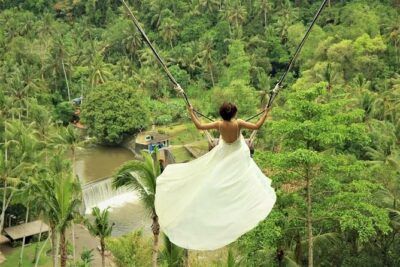
Monkey Forest, Jungle Swing, Rice Terrace, and Water Temple
Read our review →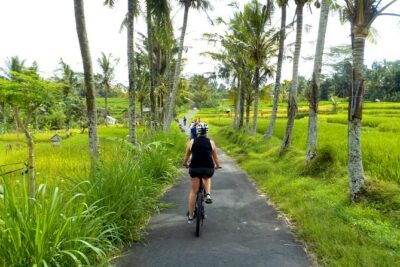
Half-Day Ubud Electric Cycling Tour to Tirta Empul Water Temple
Read our review →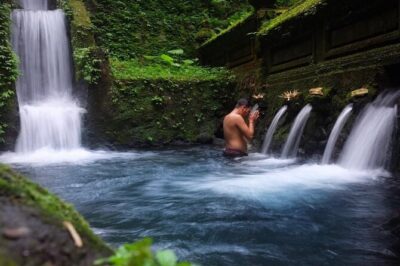
Ubud Tour – Balinese Healing By Shaman And Self Purification
Read our review →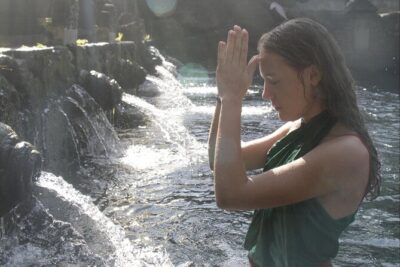
Melukat Ceremony and Temple Tour at Tirta Empul Temple
Read our review →
Skip the Line Tirta Empul Temple Entrance Ticket All Inclusive
Read our review →
Ubud Private Tour – Waterfalls, Water Temple & Rice Terraces
Read our review →
Ubud Tirta Empul Temple Tour with Purification Experience
Read our review →
Browse the lists this tour appears in