Reviewed · TOURS
Bali Bike Tour Ubud Area
Ubud’s best scenery is often found beyond its busy center, and this tour gets you there by bicycle. You start near Petang, then roll mostly downhill through rice fields, village lanes, temples, and family compounds before lunch in Bongkasa. The bike keeps you close to daily Balinese life in a way a car cannot.
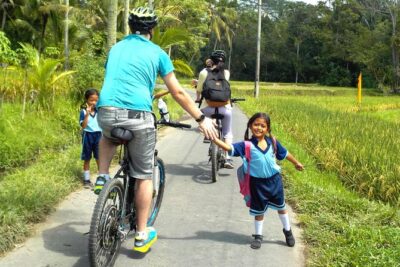
I like the quiet backroads and the chance to stop at a family compound, where you can learn how offerings are made and see a little of everyday life. I also like the practical setup: a support car follows the ride, and lunch, water, a helmet, and safety gear are included.
The main consideration is that you still need to feel comfortable on a mountain bike. Much of the route is downhill, but this is not a sightseeing bus with a short photo stop. You will pedal for about three hours, and good weather is required.
At a glance: what makes this ride worthwhile
- A mostly downhill route from Petang to Bongkasa, with mountain scenery and rice fields along the way.
- A visit to a Balinese family compound, including an introduction to household routines and making offerings.
- Local guides with strong cultural appeal, including Kumbara, Yande Widianthara, Made Kumbara, and Rias.
- A following safety vehicle, useful if you tire, need help, or simply want extra reassurance.
- A traditional Balinese lunch, served at a family house or cozy restaurant overlooking the rice fields.
- A six-hour outing with pickup, equipment, and drinking water included, making the day easy to organize.
Why two wheels work better than a bus near Ubud
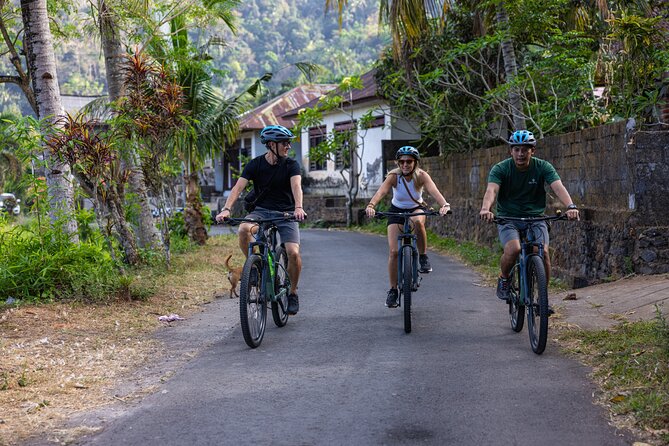
Ubud can feel crowded around its central streets, but rural Bali begins quickly once you head north. The bicycle route takes you away from the traffic and into narrow lanes, rice fields, village areas, and small local roads. You are not sealed behind glass. You can hear the countryside, pause when the guide points something out, and notice how homes and fields fit together.
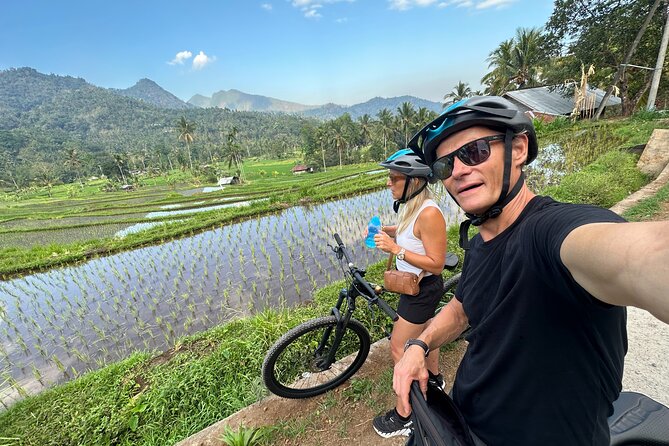
That closeness is the heart of the experience. A car can take you past a rice field, but a bike gives you time to see the irrigation channels, watch farmers at work, and spot details in village life. You will also move slowly enough to ask questions as you go.
The ride is described as mostly downhill, which makes it more approachable than a full-day cycling challenge. Still, the word mostly matters. You should be comfortable handling a mountain bike, braking on slopes, and riding for several hours. One family found the tour manageable for children as young as four to eight, but the practical question is not age alone. It is whether each child can follow safety instructions and manage a bike on rural roads.
The support vehicle helps keep the day relaxed. It follows the cyclists and provides a safety net if someone needs assistance. That does not remove every physical demand, but it makes the ride far less intimidating than cycling independently in an unfamiliar area.
If you have another day in Ubud, these come up a lot:
- All-Inclusive Ubud Private Tour
★ 5.0 · 14,344 reviews - Best of Ubud Full-Day Tour with Jungle Swing
★ 5.0 · 8,571 reviews - Ubud: Monkey Forest, Jungle Swing, Rice Terrace, and Water Temple
★ 5.0 · 7,160 reviews
Petang: a scenic start above the rice fields
The morning begins at 8:30 a.m. with transport toward Petang, the starting point. The drive takes about an hour and is part of the day’s scenery, with mountain views and rice fields along the way.
This transfer is useful for two reasons. First, it moves you away from Ubud’s central traffic without asking you to cycle uphill from town. Second, it places you in a higher rural area, where the route can gradually head downhill toward Bongkasa.
You receive a quality mountain bike, helmet, and safety gear before setting off. The exact bicycle fitting process is not specified, so I would pay attention during setup and tell the guide at once if the seat, handlebars, or brakes do not feel right. A small adjustment early can make three hours much more comfortable.
The start is not meant to be a major attraction in itself. Petang functions as the launch point for the ride. Its value is the change of pace: after the drive, you are ready to trade the vehicle for a bike and begin moving through the countryside under your own power.
Three hours through rural Ubud
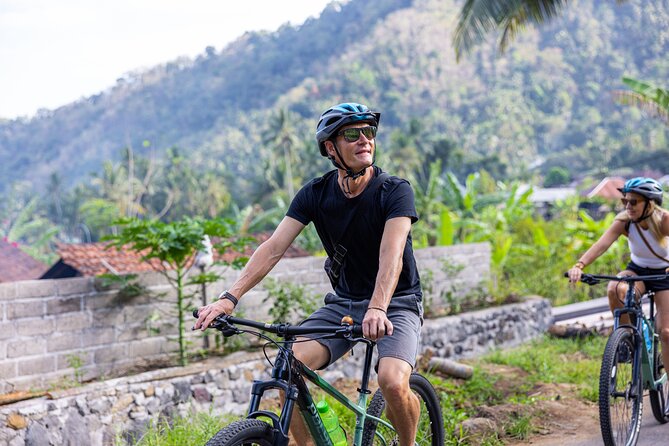
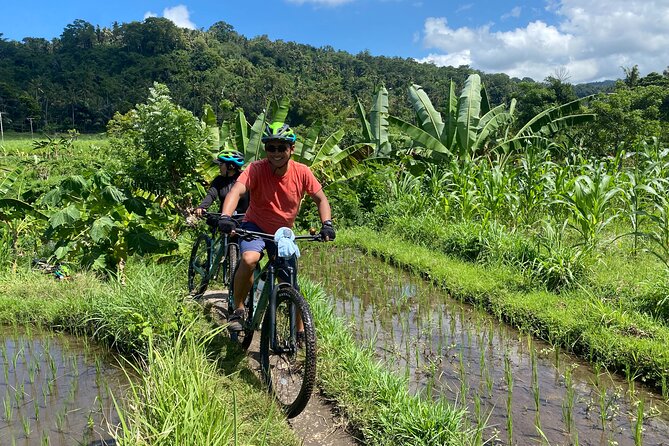
The main cycling section lasts about three hours. You ride through rice fields, winding lanes, and local villages, with the route designed to show rural Bali rather than the most visited parts of Ubud.
The guide provides cultural context along the way. Depending on your group and guide, that may include explanations about rice cultivation, plants, household customs, temples, rituals, and daily life. The strongest praise for this experience has focused on guides who explain things at the place where they happen, rather than saving all the information for a talk at the end.
Guide names associated with the experience include Kumbara, Yande Widianthara, and Rias. Made Kumbara has also been praised for speaking Danish, which can be useful for Danish-speaking families. The information gives you a reason to ask for a particular language or guide when booking, though guide availability is not guaranteed.
The route’s quieter roads are a major advantage, but quiet does not mean entirely traffic-free. You remain responsible for controlling your bicycle and following the guide’s instructions. Keep your attention on the road, especially on descents and around bends.
You might stop for views, explanations, and photographs, but the timing is not presented as a fixed list of photo stops. That is a good thing for a countryside ride. The day has room for local encounters and explanations instead of rushing from one attraction to the next.
A family compound and the meaning behind offerings
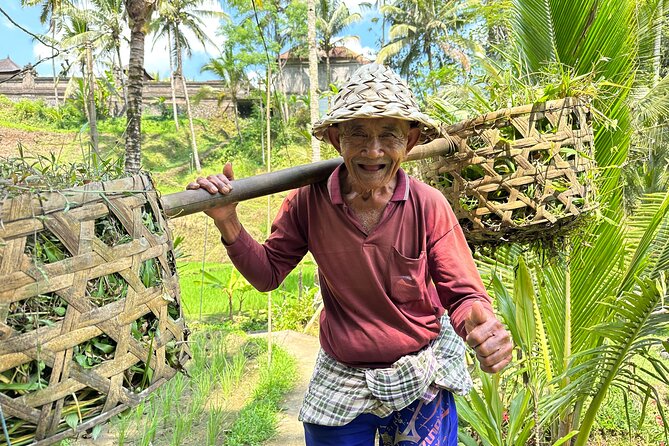
One of the most useful stops is a traditional Balinese family compound. This is where the ride moves beyond scenery and begins to explain how people live.
You can see the layout of a family home and learn about daily routines. The tour also introduces the making of offerings, a practice that gives you a more grounded way to understand Balinese religious life. Instead of seeing small offerings beside a doorway and treating them as decoration, you learn that they are part of an active household ritual.
This stop deserves respectful attention. You are entering a family setting, not a museum display. Listen to the guide, follow instructions about where to stand, and ask before taking photographs. The experience is most valuable when you treat the family and their home as hosts rather than as part of a show.
The presence of children can work well here because the activity is concrete. Making or seeing offerings gives younger riders something they can understand, while adults can ask broader questions about custom and family life. The guide’s role matters a great deal. A strong guide can connect the small details of the compound to the wider culture without turning the visit into a lecture.
A completely different kind of day out from Ubud:
- Best of Ubud 1-Day Private Tour
★ 5.0 · 4,451 reviews - Bali: Ubud Palace Legong Dance Show Ticket
★ 4.4 · 3,979 reviews - Uluwatu Sunset, Kecak Dance, and Dinner Jimbaran Beach
★ 5.0 · 3,681 reviews - Tanah Lot and North Bali Tour: Scenic Journey
★ 5.0 · 3,620 reviews
Bongkasa lunch after the ride
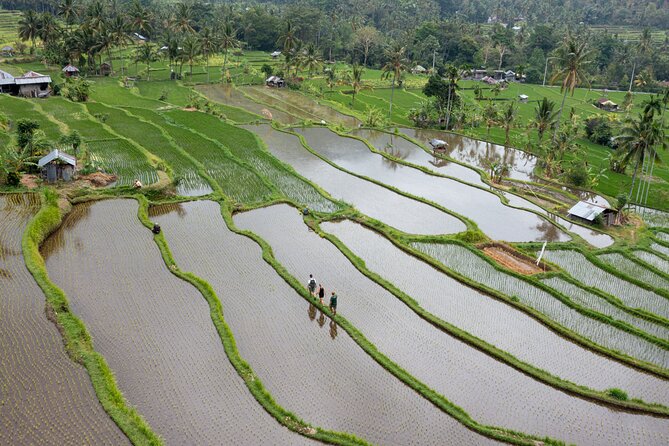
The cycling ends in Bongkasa, where lunch is served at a family house or cozy restaurant overlooking rice fields. Lunch and drinking water are included, and the meal is described as traditional Balinese food.
This is a smart ending. After a morning of riding, you want food, shade, and time to sit rather than another major activity. The meal also keeps the cultural focus going. Food offers another simple way to understand Bali, especially when it is served in a local setting rather than as a rushed stop between attractions.
The lunch stop lasts about 45 minutes according to the schedule. That is enough for a proper meal, but it may feel brief if you prefer a long, unhurried break. The details of the menu are not specified, so you should not book this expecting a particular dish or a special dietary arrangement unless you confirm it ahead of time.
The view over the rice fields adds to the appeal, but the setting should not be confused with a luxury restaurant experience. The value is in the combination of local food, a rural location, and a satisfying finish to the ride.
Safety, comfort, and fitness
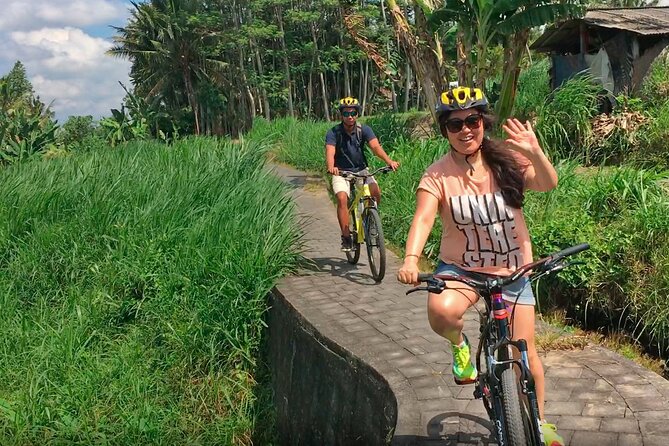
This is an active excursion, but it is designed to be accessible to most people with reasonable fitness. The mostly downhill route reduces the strain compared with a ride that climbs throughout the day. You still need balance, basic bike control, and enough stamina to remain comfortable in Bali’s outdoor conditions.
A helmet and safety equipment are included. The support car follows the group, and an air-conditioned vehicle handles the transfer to the start and the return arrangements. Together, these features make the trip more forgiving than renting a bicycle and trying to find the countryside alone.
The tour is described as a private activity, so only your group participates. The overall description also refers to private or small-group touring, and group discounts are offered. If you are booking for a larger party, ask how the discount applies and how the group will be managed on the road.
Do not mistake the downhill profile for a completely effortless ride. Mountain bikes can feel unfamiliar if you normally cycle on city streets. You may also encounter uneven rural surfaces, though the supplied information does not specify their condition. Wear practical clothing, closed shoes, and something suitable for a warm outdoor morning.
Rain matters. The experience requires good weather, and poor conditions can lead to a different date or a full refund. That policy is helpful in Bali, where weather can change the character of a cycling route quickly.
What the $67.28 price covers
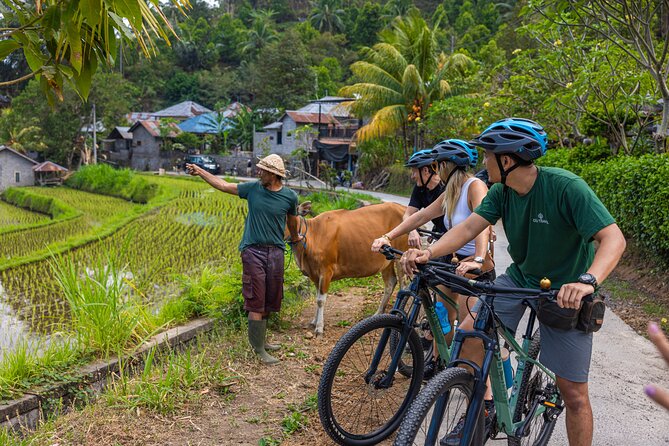
At $67.28 per person, this is not simply a bicycle rental. The price includes the bike, helmet, safety gear, guide, transportation, support vehicle, drinking water, and lunch. Those inclusions make the cost easier to justify, especially if you value the cultural explanations and do not want to arrange separate transport to the countryside.
The guide is the most important part of the value. Without a guide, you would still see rice fields, but you would miss much of the meaning behind the offerings, family compound, farming areas, and village customs. The support vehicle adds practical value as well, since independent cycling can become stressful if someone tires or has a mechanical problem.
You should compare this price with the cost of hiring transport, renting a suitable mountain bike, arranging a local guide, and finding lunch elsewhere. Once those pieces are added, the organized tour becomes more competitive.
The price does not include tips. Bring cash if you want to thank the guide or driver, but tipping is not included in the quoted amount.
Which guide experience should you hope for?
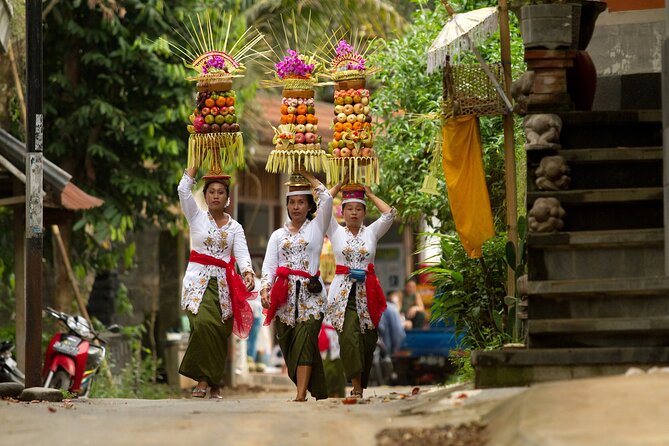
Several guide names appear in the experience’s praise, and each recommendation points to the same quality: personal attention and cultural explanation.
Kumbara is associated with clear local history and stories told at the places where they matter. Yande Widianthara is noted for combining cultural information with help and care during the ride. Rias has been especially well received by families with children. Made Kumbara is noted for his Danish language ability.
You cannot assume that a specific guide will be assigned. Still, these details help you make a useful request at booking. If language is important, mention it clearly. If you are bringing children, say so and ask about the guide’s experience with younger riders.
The best guide for you is not simply the person who knows the most facts. It is someone who keeps the group safe, explains local customs clearly, and adjusts the pace. The supplied information points strongly in that direction, but your own communication before the ride still matters.
Who should book this Ubud bike tour?
I would choose this for someone who wants rural Bali without giving up the comfort of organized transport and a support car. It suits couples, families, and private groups who prefer quiet roads and local contact over a packed attraction schedule.
It is also a good match if you are interested in culture but do not want a formal museum visit. The family compound and offering demonstration give you a direct look at household traditions, while the guide links those details to wider Balinese life.
Families should consider the youngest rider carefully. The experience can accommodate children, but every child needs to manage a bike safely and stay attentive. The tour is not described as a special child-only program.
You may want another activity if you dislike cycling, have trouble with downhill control, or want a completely passive day. The route is friendly for many fitness levels, but it remains a three-hour bike ride.
Practical details before you reserve
Pickup is offered, and the start time is 8:30 a.m. The full experience lasts about six hours, including the drive to Petang, the ride, lunch, and transport.
Confirmation is sent within 48 hours, subject to availability. Since this is a private activity, it is worth stating your group size, preferred language, and any concerns before the booking is finalized.
Most people can participate, but accessibility questions should be checked directly with the operator. The provided information does not give detailed specifications for wheelchair access, bike adaptations, or transfer assistance.
You can cancel for a full refund up to 24 hours before the start time. Changes or cancellations inside that window are not accepted, and no refund is provided. All cut-off times use Bali’s local time.
Should you book it?
Book this tour if you want to see the countryside around Ubud at a slower pace, learn about Balinese home life, and have the security of a guide and following vehicle. The strongest reasons are the quiet route, the family compound visit, and the chance to finish with a local lunch rather than returning straight to town.
Think twice if you are not comfortable on a bicycle or want a completely flexible, self-guided outing. For most reasonably fit riders, though, the mostly downhill route makes this a practical way to get beyond Ubud’s center. Ask about guide language, group discounts, and your group’s cycling ability before booking, then let the road, rice fields, and village lanes do the rest.
FAQ
Where does the bike ride begin?
The tour drives to Petang, where the cycling portion begins. The transfer takes about one hour and includes mountain and rice field scenery.
What time does the tour start?
The stated start time is 8:30 a.m.
How long does the experience last?
The full experience lasts approximately six hours. The cycling portion takes about three hours, followed by lunch and transport.
Is the cycling route mostly downhill?
Yes. The ride is described as mostly downhill and suitable for most fitness levels, though you still need to be comfortable using a mountain bike.
What equipment is included?
A quality mountain bike, helmet, and safety gear are included.
Is transportation provided?
Yes. An air-conditioned vehicle provides transport, and a safety vehicle follows the cyclists during the ride.
Is lunch included?
Yes. Traditional Balinese lunch and drinking water are included. Lunch is served at a family house or cozy restaurant in Bongkasa.
Can I cancel for a full refund?
Yes, if you cancel at least 24 hours before the experience start time. Poor weather may also lead to a different date or a full refund.
Newly added Ubud trips
- authentic Balinese organic cooking class in Ubud★ 5.0 · 4 reviews
- Farm-to-Table Balinese Cooking Experience★ 4.0 · 3 reviews
- Sunrise Jeep Tour Mount Batur Kintamani Bali★ 5.0 · 24 reviews
- coconut wine and coffee safary tour★ 5.0 · 16 reviews
- Nungnung Waterfall,Jatiluwih Heritage UNESCO and Bedugul Tour★ 5.0 · 5 reviews
- Bali Amazing Cycling Tour★ 5.0 · 4 reviews
- Authentic Balinese Cooking Class with Jewelry Making Class★ 5.0 · 3 reviews
- Bali Rural Village Bike★ 5.0 · 10 reviews
Tours, compared.

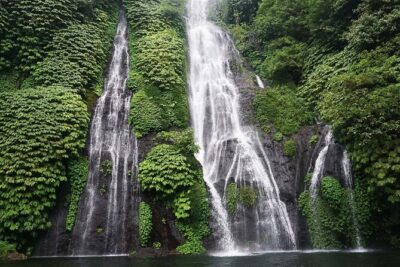
Tanah Lot and North Bali Tour: Scenic Journey
Read our review →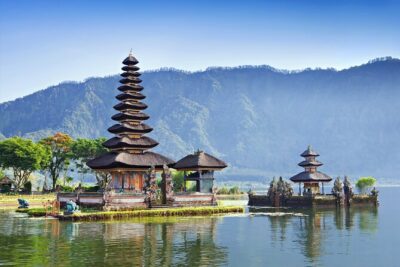
Full-Day Tour to Water Temples and UNESCO Rice Terraces in Bali
Read our review →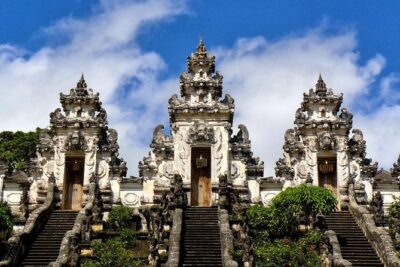
East Bali Tour: Gate of Heaven, Water Palace, Sleeping Gajah
Read our review →
Mount Batur Sunrise Jeep Tour with Optional Activities
Read our review →