
Reviewed · UBUD BALINESE HEALING CEREMONIES
Meditate with a Shaman
Ubud’s most meaningful spiritual experiences often happen away from its busiest temples. This early-starting day takes you to Mengening Temple, where you join a Balinese water purification ritual, then to a local shaman who usually works with Balinese people rather than international visitors. I like the quiet setting and the chance to learn what the ceremony means instead of simply posing for temple photos. I also like the small group size, capped at eight, which gives the guide room to explain each step.
The main consideration is that this is a serious spiritual experience, not a sightseeing show. You should be comfortable with ritual, silence, wet clothes, and a shamanic reading whose meaning depends on your own beliefs. The day can also run long, with pickup around 6 or 7 a.m. and return to Ubud around 2 p.m.
Key points to know before booking
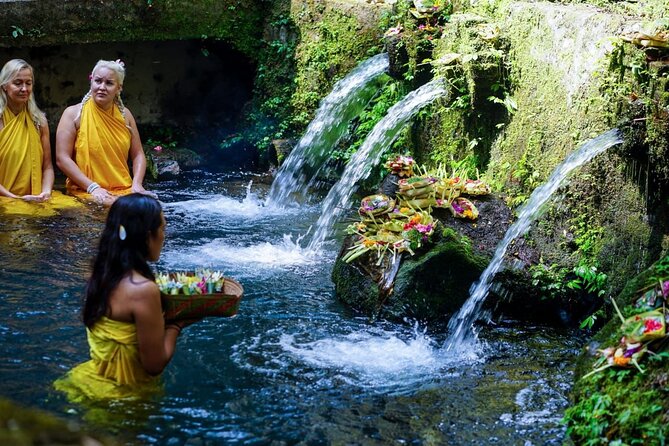
- Mengening Temple means stillness: The water ritual takes place at a quieter temple rather than one of Bali’s most crowded purification sites.
- The shaman visit is personal: She reads your palm, considers your birth date, and speaks through your guide because she does not speak English.
- Groups stay small: A maximum of eight people makes it easier to ask questions and receive translation.
- Breakfast breaks up the morning: You return toward Ubud for a meal at a scenic restaurant before continuing to the shaman’s home.
- Bring swimwear and a towel: You will need them for the water purification ceremony.
- Plan around the early start: Pickup begins around 6 to 7 a.m., and the experience generally finishes near 2 p.m.
Why this Ubud experience feels different
This is not a standard temple stop followed by a quick blessing. The day has a clear spiritual purpose: first, you take part in melukat, a Balinese cleansing ritual involving sacred water; later, you sit with a traditional healer for personal guidance.
I like that the experience connects two parts of Balinese spiritual life. Mengening offers a communal ritual tied to place and water. The shaman visit turns inward, focusing on your palm, birth date, and personal direction. You are not simply collecting photographs. You are being asked to pay attention.
That also means you should arrive with the right attitude. You do not need to share every belief connected with Balinese Hindu practice, but you should show respect. Listen to your guide, follow temple customs, and avoid treating the ceremony as a performance.
The guides are an important part of the day. Names associated with this experience include Ena, Anna, and Putu, and the guide’s job goes well beyond getting you from one stop to the next. Your guide explains the ritual, translates during the shaman session, and helps you understand details that would otherwise pass too quickly.
More healers and blessing ceremonies in Ubud:
- Ubud Tour – Balinese Healing By Shaman And Self Purification
★ 5.0 · 236 reviews - Melukat Ceremony and Temple Tour at Tirta Empul Temple
★ 5.0 · 218 reviews - Ubud: Monkey Forest, Rice Terraces & Sacred Temples
★ 5.0 · 69 reviews
The 6 to 7 a.m. pickup from Ubud
Pickup is offered from hotels around the Ubud area, with the meeting window generally beginning between 6 and 7 a.m. The exact time depends on your pickup point and the day’s arrangements, so keep your morning flexible.
An early departure is a real advantage here. Mengening Temple is known for its quiet atmosphere, and arriving early gives you a better chance to experience the site without a large crowd. Several people who have taken the experience found the temple nearly empty, with only a few local worshippers nearby.
The trade-off is simple: this is not a late breakfast outing. If you are staying in Ubud and want a slow morning, this may feel demanding. If you can get up early, the calm arrival is part of what makes the experience work.
Transportation is included both ways, but allow for traffic on the return. One participant had to arrange a Grab or Gojek for the final 10 to 15 minutes instead of being dropped directly at the hotel. That appears to be a traffic-related exception rather than the normal plan, but it is wise to carry some cash and keep your afternoon schedule loose.
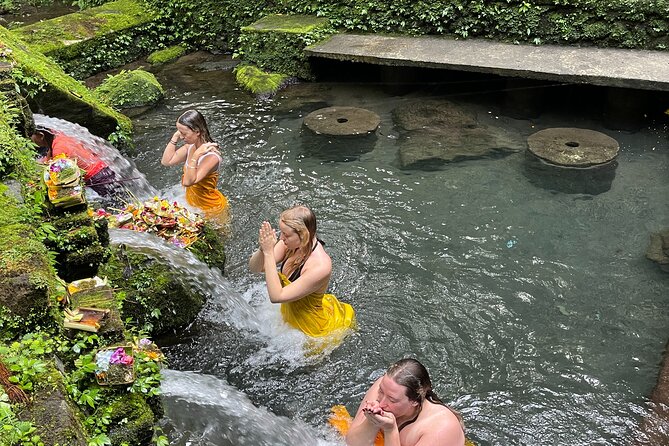
Entering Mengening Temple for the water ritual
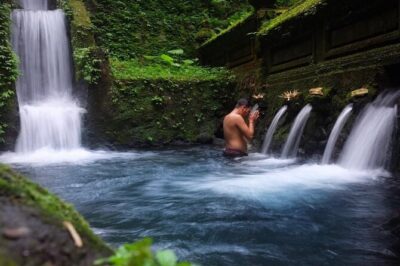
Mengening means stillness, an apt name for a temple centered on water and quiet reflection. The ceremony asks you to let go of what no longer serves you and take in what helps you move forward.
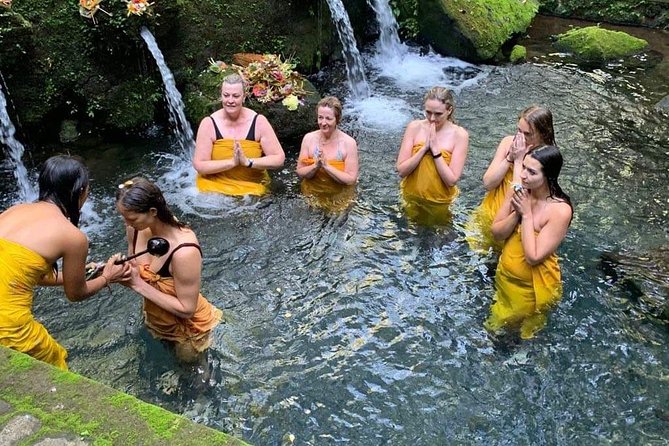
Your guide explains the meaning and process before you begin. The ritual involves entering the sacred water, so bring swimwear and your own towel. The practical details matter: you should wear something easy to change out of and avoid bringing anything you would worry about getting wet.
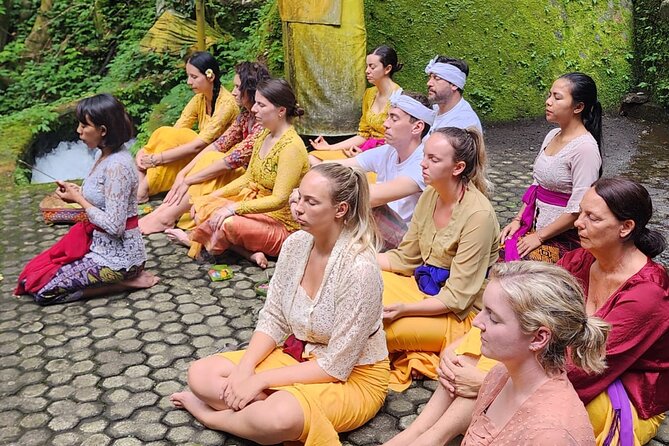
This is the part of the day most likely to feel unfamiliar. The value comes from taking part respectfully rather than watching from the edge. You may be asked to follow specific steps, pause in prayer or reflection, and move through the water in a set order. Your guide is there to explain what you are doing and why.
I appreciate the setting because it gives the ritual room to breathe. A crowded temple can make a spiritual ceremony feel rushed. Here, the small group and early hour offer more privacy. The experience still takes place in a real religious setting, so it is important not to assume that every part can be interrupted for photographs.
There are also temple restrictions to note. Women who are menstruating are not permitted to take part in the water temple portion. This is stated as a participation rule, so check it before booking if it affects your plans.
Breakfast near Ubud after the ceremony
After the temple, you drive back toward Ubud for breakfast at a beautiful restaurant. This pause is useful, not just pleasant. You have time to dry off, eat, discuss the ritual, and shift from the temple visit to the more personal shaman session.
The meal has received strong marks for quality, and vegan and gluten-free options are available. If you have dietary needs, it is still sensible to confirm them when booking, but the restaurant can accommodate those preferences according to the available information.
The breakfast stop also gives the day a good rhythm. The temple portion is quiet and ceremonial. A meal offers a normal, social break before the more intense conversation ahead. You are not rushed from one spiritual appointment straight into another.
A completely different kind of day out from Ubud:
- All-Inclusive Ubud Private Tour
★ 5.0 · 14,344 reviews - Best of Ubud Full-Day Tour with Jungle Swing
★ 5.0 · 8,571 reviews - Ubud: Monkey Forest, Jungle Swing, Rice Terrace, and Water Temple
★ 5.0 · 7,160 reviews - Best of Ubud 1-Day Private Tour
★ 5.0 · 4,451 reviews
Meeting the shaman at her home
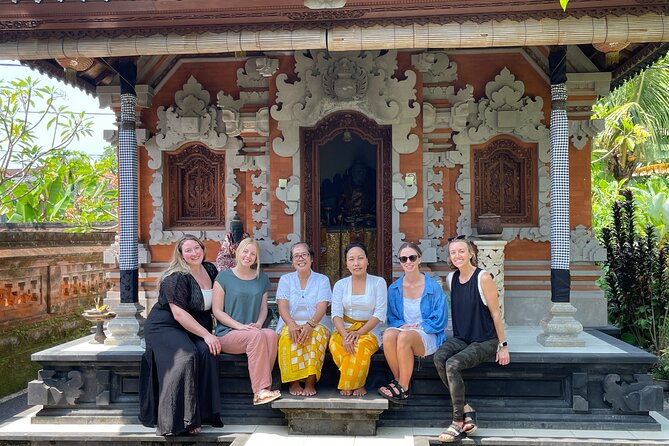
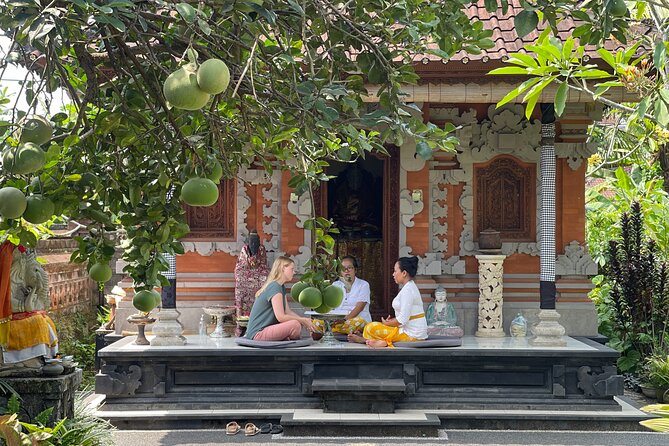
Around 11 a.m., you drive about 30 minutes to the shaman’s house. She normally sees Balinese people and does not speak English, so your guide translates the conversation.
That translation is central to the experience. You are not listening to a speech in your own language or receiving a standardized reading from a tourist attraction. The guide carries meaning back and forth, explains points when needed, and helps keep the conversation clear.
The shaman reads your palm, looks at your birth date, and connects those details with what she perceives as the energy of your soul. She then offers advice about your direction in life. The session is personal, and the amount of time each person receives may depend on the size of the group and the number of people being read.
Some participants found the reading strikingly accurate and emotionally powerful. Others approached it as a cultural and spiritual experience rather than something to test as a prediction. Both approaches are reasonable. The reading is not a guaranteed answer to major life decisions, and you should keep your own judgment in charge.
You may be able to record the session, which is helpful because the translation and advice can include more detail than you remember later. Ask your guide first and follow the shaman’s wishes. A recording should be treated as a courtesy, not an entitlement.
The setting matters, too. Meeting a healer at her home feels more intimate than visiting a staged attraction. At the same time, that intimacy can make the experience feel intense. If you prefer a clear separation between a holiday and personal spiritual questions, you may find this part more than you want.
The role of the guide and translator
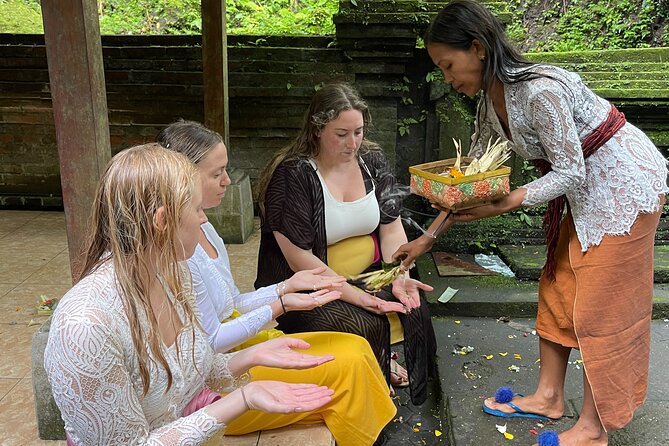
The guide can make or break this experience. You need someone who can explain Balinese customs in plain language, translate carefully, and give you time to absorb what is happening.
Guides named in connection with the day include Ena, Anna, and Putu. Ena has been praised for patience and clear explanations, while Putu and driver Wahyu were singled out for helping participants understand the temple and ceremony. The exact guide team may vary, so do not assume a particular person is guaranteed unless the provider confirms it.
A good guide also handles small but important details. They can help with the ritual sequence, explain offerings, answer questions about Balinese culture, and help take photographs at suitable moments. Several people appreciated having photos taken during the day, but remember that spiritual privacy should come before getting the perfect image.
Because the group limit is eight, you have a better chance of asking questions than you would on a large bus tour. If the group is full, you will still share the shaman visit, so the experience is not completely private. That is worth knowing if you want a one-on-one reading.
How much value do you get for $99.27?
At $99.27 per person, this is not the cheapest way to visit a Balinese temple. The price makes more sense when you consider what is bundled together: hotel pickup in the Ubud area, transportation, a guided purification ritual, breakfast, translation, and the shaman visit.
You are also paying for access and coordination. Visiting Mengening Temple on your own would not necessarily give you the same explanation of the ritual. Meeting the shaman would be difficult without local connections and translation. The small group limit adds value because the guide can give more attention than on a large group excursion.
I would call the price fair for someone specifically seeking a spiritual and cultural experience. It is less compelling if you simply want temple architecture, scenic photos, or a general Ubud tour. You can find less expensive sightseeing days, but they will not offer this particular combination of ritual and personal reading.
The strongest value comes from the experience’s focus. It does not try to cram in six unrelated attractions. Instead, it gives you time for two connected encounters and a meal between them.
What to bring and how to prepare
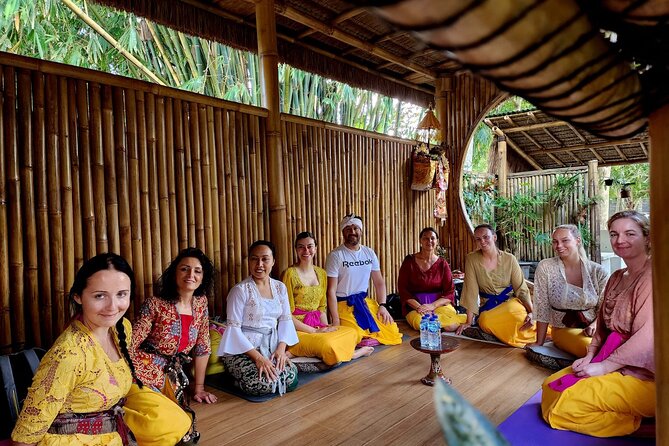
Bring a swimsuit or other suitable swimwear and a towel for Mengening Temple. You should also carry a change of clothes, since the purification ritual involves water.
Wear something respectful and practical for a temple visit. The available information does not specify a strict dress code, so follow your guide’s instructions and temple customs on the day.
A few other preparations will make the morning easier:
- Keep your pickup morning free from 6 a.m. onward.
- Carry cash in case traffic affects the final drop-off.
- Ask before taking photographs or recording the shaman.
- Bring questions if you want cultural context from the guide.
- Leave room in your schedule after the tour, since the return time depends on traffic and group timing.
Most people can participate, but the experience is not recommended for women who are menstruating because of the water temple restriction. The activity also requires good weather, and a minimum group size may apply. If poor weather or low numbers cancel the experience, you can receive another date or a full refund.
Who should book this spiritual day?
I would recommend it to you if you want to look beyond Bali’s famous sights and take part in a local ritual with explanation and guidance. It suits solo visitors, couples, parent and adult-child combinations, and small groups of friends. One particularly appealing feature is that you do not need to arrange a separate cultural guide, driver, and translator.
It is also a good choice if you want a reflective day rather than a packed sightseeing schedule. The slow pace at the temple, the breakfast break, and the personal reading create space to think.
I would be more cautious if you are uncomfortable with religious ceremony, getting wet, palm readings, or spiritual advice. You should also skip it if you want a late start or a fully private appointment. The group is small, but it can include up to eight people, and the shaman session is shared within that schedule.
Should you book Meditate with a Shaman?
Book this experience if you want an intimate introduction to Balinese spiritual practice and are willing to approach it with respect and an open mind. The quiet Mengening Temple, thoughtful guides, included breakfast, and hard-to-arrange shaman visit make it more distinctive than a routine Ubud excursion.
Skip it if you are looking for a conventional temple tour or prefer to keep spiritual questions out of your holiday. For the right person, the day can feel calming, personal, and memorable. For the wrong person, the ritual and reading may feel too serious or outside your comfort zone.
Free cancellation is available up to 24 hours before the start time for a full refund. Changes or cancellations made less than 24 hours ahead are not accepted for a refund.
FAQ
Where does the experience take place?
The day begins with pickup from hotels around Ubud. You visit Mengening Temple for the water purification ritual, return toward Ubud for breakfast, and then drive about 30 minutes to the shaman’s home.
What time does the experience start?
The stated start time is 7:00 a.m., with pickup generally taking place between 6 and 7 a.m. Keep your schedule free during that full pickup window.
How long does the experience last?
It lasts approximately eight hours. The activity generally finishes and returns to Ubud around 2 p.m., depending on traffic and the number of people in the group.
How many people can join?
The group is limited to a maximum of eight participants.
Do I need to bring anything?
Bring your own towel and swimwear for the water purification ritual at Mengening Temple.
Can women take part while menstruating?
No. The experience is not recommended for women who are menstruating because they cannot participate in the water temple portion.
What happens during the shaman reading?
The shaman reads your palm, considers your birth date, and offers guidance about your life direction. She does not speak English, so your guide translates the conversation.
Newly added Ubud trips
- authentic Balinese organic cooking class in Ubud★ 5.0 · 4 reviews
- Farm-to-Table Balinese Cooking Experience★ 4.0 · 3 reviews
- Sunrise Jeep Tour Mount Batur Kintamani Bali★ 5.0 · 24 reviews
- coconut wine and coffee safary tour★ 5.0 · 16 reviews
- Nungnung Waterfall,Jatiluwih Heritage UNESCO and Bedugul Tour★ 5.0 · 5 reviews
- Bali Amazing Cycling Tour★ 5.0 · 4 reviews
- Authentic Balinese Cooking Class with Jewelry Making Class★ 5.0 · 3 reviews
- Bali Rural Village Bike★ 5.0 · 10 reviews
Ubud Balinese Healing Ceremonies, compared.
Ubud Tour – Balinese Healing By Shaman And Self Purification
Read our review →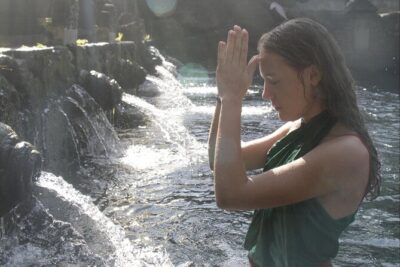
Melukat Ceremony and Temple Tour at Tirta Empul Temple
Read our review →


Discover Ubud: Exotism Ubud and Optional Meet the Bali Shaman
Read our review →
Bali Spiritual Shamanic-Palm Reading, Temple Healing Tour
Read our review →
![[All Inclusive] The Soul of Bali: Temples, Art & Traditions Tour](https://img.ubudguides.com/wp-content/uploads/all-inclusive-the-soul-of-bali-temples-art-traditions-tour-400x267.jpg)
[All Inclusive] The Soul of Bali: Temples, Art & Traditions Tour
Read our review →Browse the lists this tour appears in