
Reviewed · UBUD RICE TERRACE TOURS
Sidemen Trekking Through Rice Terraces and Villages
Sidemen’s best moments are close to the ground: muddy paths, irrigation water slipping between rice plots, farmers tending crops, and Mount Agung rising beyond the fields. This short walk takes you through the Subak of Ogang, Bali’s traditional cooperative irrigation system, rather than keeping you on a roadside viewpoint.
I like the small private format, where your group walks with a guide instead of following a large crowd. I also like the chance to meet Wayan, a local guide who can explain rice farming, fruit plants, temples, and village customs from personal experience. The main caution is timing: the advertised outing is about one hour, yet some walks have lasted two hours, and the fields may be partly harvested when you visit.
Key points
- Mount Agung views: Look across the rice terraces toward Bali’s highest volcano when weather and visibility cooperate.
- Subak of Ogang: Follow traditional irrigation channels and see how water supports the rice-growing cycle.
- Local guide Wayan: He is praised for his friendly manner, local knowledge, and ability to explain farming and plants.
- Village life up close: Pass temples, farmers, market streets, and a wooden bridge used by residents and motorbikes.
- Early start: Meet at 7:00 am, a useful time for cooler walking and a more active village atmosphere.
- Low price, private outing: At $9.80 per person, the experience offers strong value, though hotel transport is optional and may affect the final cost.
Sidemen at 7:00 am: A Quiet Start Near the Market
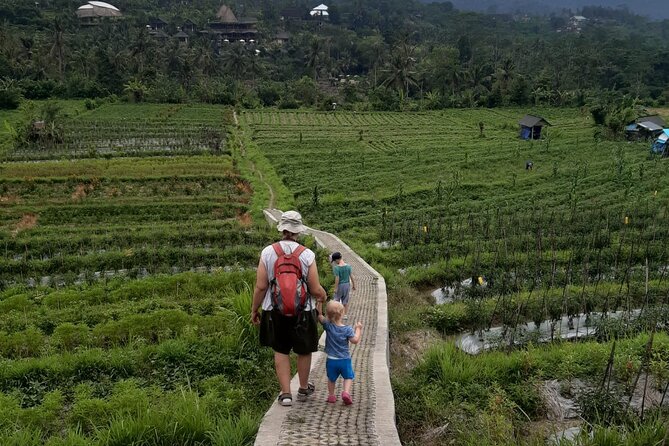
The walk begins at Sidemen Rice Terrace on Jalan Sidemen-Sangkan Gn., near the traditional market and village center. Starting at 7:00 am matters here. You get cooler conditions than later in the day, and the village is already beginning its work without feeling fully rushed.
From this starting point, you head toward the rice paddies. The route is not built around one grand lookout. Its appeal comes from the changing details underfoot and beside the path: irrigation water, narrow field edges, village buildings, temples, and people working in the plots.
You should think of this as a local walking tour with mountain views, not as a polished attraction with marked platforms and a fixed photo stop. That makes it more personal, but it also means the exact feel of the walk depends on weather, farming activity, and the condition of the paths.
More days out in East Bali:
- Best of Bali Waterfalls: Tibumana, Tukad Cepung and Tegenungan
★ 5.0 · 3,047 reviews - East Bali Tour: Gate of Heaven, Water Palace, Sleeping Gajah
★ 5.0 · 1,726 reviews - All Inclusive : Bali Blue Lagoon Snorkeling, Lunch, and Transport
★ 5.0 · 1,097 reviews
Walking Through the Rice Terraces
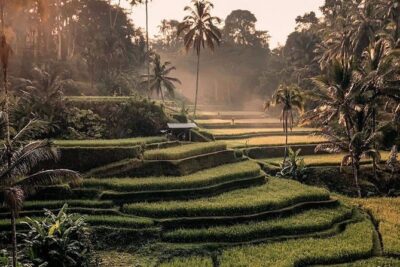
The rice terraces are the main reason to book, but they are working farmland first and a scenic setting second. You may see farmers plowing, planting, or harvesting, depending on the season. The greenest views are not guaranteed all year.
This is the most important expectation to set before booking. One person found the visit disappointing because much of the rice had already been harvested. If you arrive hoping for endless bright-green fields, the timing of the agricultural cycle can make a real difference. Harvested plots still show how the terraces work, but they will not provide the classic Bali image in every season.
The guide adds value by explaining the process rather than simply pointing at it. Wayan’s own family grows rice, so he can discuss the practical cycle of the fields and the work involved. You may also learn about fruit plants growing in the area, which gives the walk a broader view of village agriculture.
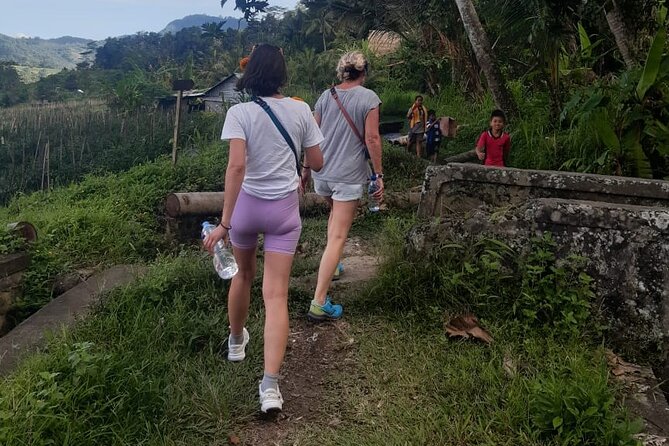
The paths can be uneven, and wet weather changes the outing. After rain, expect the possibility of mud and wet clothing. Wayan has checked that walkers were prepared for such conditions and helped with tricky sections, but you should still wear shoes with a firm grip and clothes you do not mind getting dirty.
The Subak of Ogang and Bali’s Water System
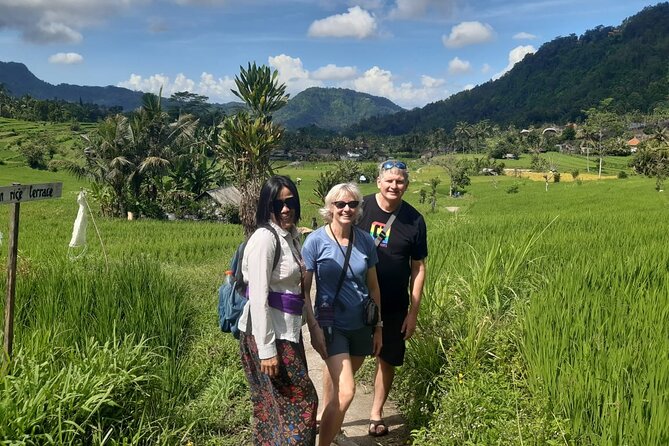
The walk passes through the Subak of Ogang, an especially useful part of the route for anyone interested in how Bali’s rice fields function. Subak is a traditional irrigation system that organizes the movement of water among farming communities.
You are not just looking at separate plots of rice. The channels, field boundaries, and shared water supply show how farming depends on cooperation. A guide can help you see the system as part of village life rather than as scenery arranged for visitors.
Following the irrigation channels also changes the pace of the walk. Instead of moving quickly from one viewpoint to the next, you trace the water through the fields and watch how the terraces fit together. This is a good reason to choose the experience if you prefer an explanation of local life over a short photo stop.
The water channels may also make some sections damp or slippery. The supplied information does not specify a fixed difficulty rating, but most travelers can participate, and the private format allows your guide to help your group through awkward sections.
Mount Agung Beyond the Fields
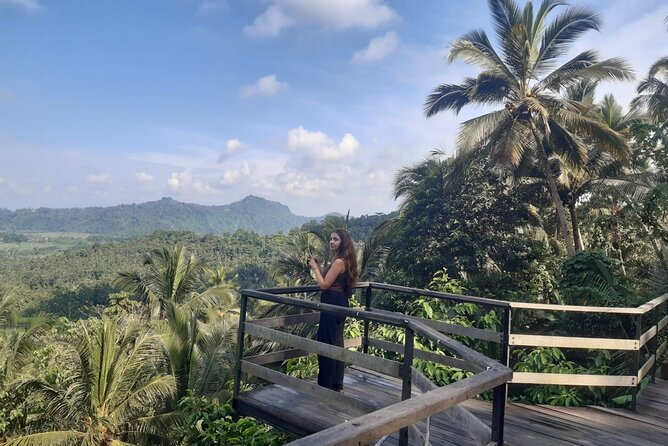
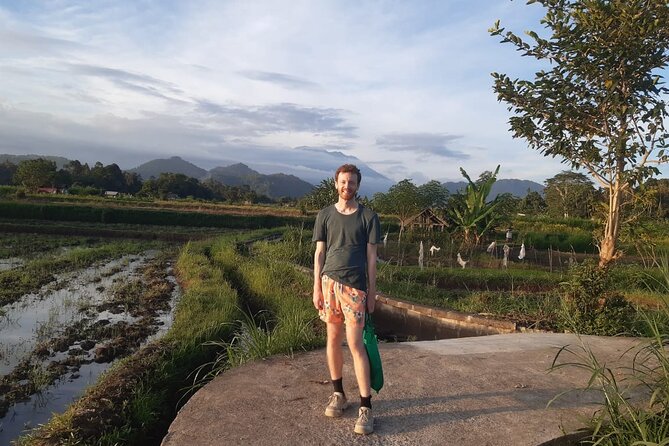
Mount Agung provides the long view. From the rice terraces, the volcano can appear beyond the paddies and village paths, giving the walk a strong sense of place. The view depends on clouds and weather, so it should be treated as a welcome part of the route rather than a promise of a clear mountain photograph.
This setting helps distinguish Sidemen from a quick stop at a famous terrace viewpoint. You are seeing the fields from within them, with the mountain framed by irrigation channels, palms, temples, and farm plots. The effect is less about one perfect angle and more about understanding how the village sits beneath the volcano.
Bring your phone or camera, but leave room for observation. Narrow paths, working fields, and moving residents make this a poor place for stopping in the middle of the route for long stretches. Your guide can help you find natural pauses without blocking local activity.
More village and culture days around Ubud:
- Balinese Life Style Tour
★ 5.0 · 150 reviews - Private Tour to Trunyan Village “Skull Island of Bali”
★ 5.0 · 73 reviews - Trunyan Cemetery, Hot Spring, Penglipuran Village, and Waterfall Tour
★ 5.0 · 65 reviews - Besakih Temple Tour – Traditional Bali Village – All Inclusive
★ 5.0 · 46 reviews
The Wooden Bridge Shared by Locals and Motorbikes
One of the more memorable details is a wooden bridge used by both pedestrians and motorbikes. It is a small piece of village infrastructure, yet it tells you a great deal about the route. This is not a controlled park trail built only for walking groups.
Crossing the bridge gives you a direct look at how residents move through the area. You may need to step aside for a motorbike, so listen to your guide and take your time. The bridge is part of daily life, not a staged attraction, which is exactly why it feels more revealing than a standard viewing platform.
If you dislike narrow crossings or uneven surfaces, this is worth considering before you book. The walk is designed for most participants, but it is still a village trek rather than a paved promenade.
Temples, Farmers, and Everyday Sidemen
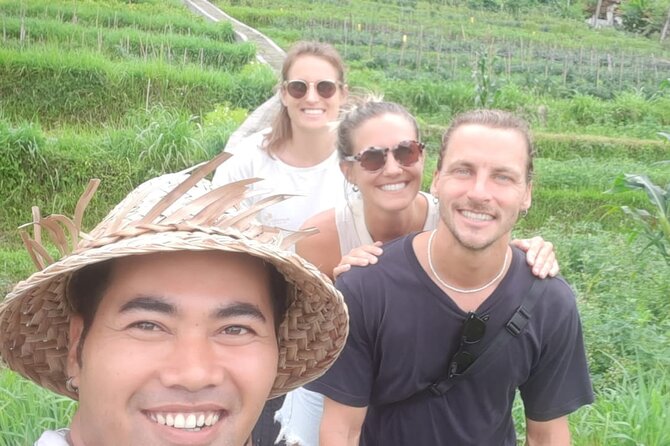
The route passes temples and working areas where farmers plow, plant, and harvest. These stops are not presented as formal museum visits. Their value comes from seeing how spiritual places and farming land sit beside one another in the village.
Your guide can give meaning to what you see. Wayan is particularly well regarded for his friendly conversation and his ability to answer questions about Sidemen. A useful guide here is not simply someone who leads the way. You want someone who can explain why water moves through the fields, what is growing beside the path, and how the village functions.
The walk can also suit families. A parent with a toddler found the guide kind and helpful, and the private setting means your group is not forced to keep pace with strangers. Still, the route may include mud, narrow paths, and the wooden bridge, so parents should judge those conditions for their own children.
What Your Guide Adds to the Experience
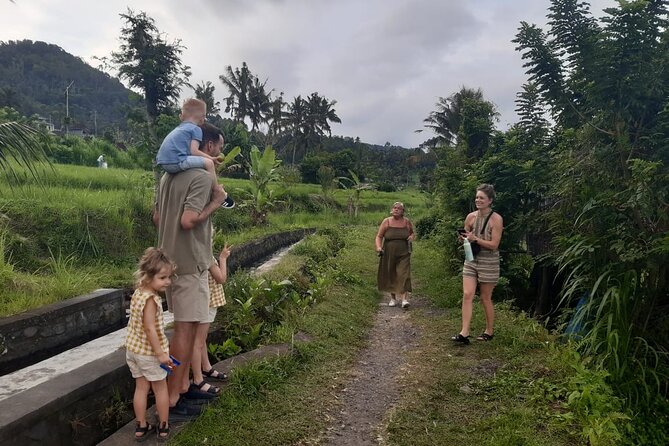
The guide can make or break a short walking tour, and Wayan’s role appears to be one of the strongest reasons to book this one. He is a local who lives near the rice fields, and his family’s connection to farming gives him a direct way to explain the area.
You can ask about the rice cycle, fruit plants, village life, and the irrigation system. His friendly style also suits people who want conversation rather than a memorized speech. Some outings have extended beyond the advertised hour, and one included a visit to a family warung for a late meal. Treat those additions as possible extras, not guaranteed parts of the one-hour plan.
The activity is private, so only your group participates. That gives you more freedom to ask questions and stop briefly for photographs. It also means the experience may feel less social if you hoped to meet other people on the walk.
Is $9.80 Good Value?
At $9.80 per person, this is a strong-value experience if you are already in the Sidemen area and want a local introduction to the rice terraces. The price includes bottled water and a trekking guide. For a private walk with a local escort, that is a modest cost.
Hotel pickup and drop-off are optional, so do not assume transport is part of the base price. The meeting point is the Sidemen Rice Terrace location near the village center. If you need transportation from your hotel, confirm the arrangement and any added charge before setting your budget.
The value depends on what you want. If you need a long mountain hike, a full-day itinerary, or a guaranteed green-field panorama, this short outing may feel limited. If you want a focused walk with practical cultural context, the price is easier to justify.
The advertised duration is approximately one hour, while some outings described by participants lasted around two hours and included extra stops. Allow more time than the minimum if you have a loose morning schedule, but do not assume every booking includes a waterfall visit or a family meal.
What to Bring and How to Prepare
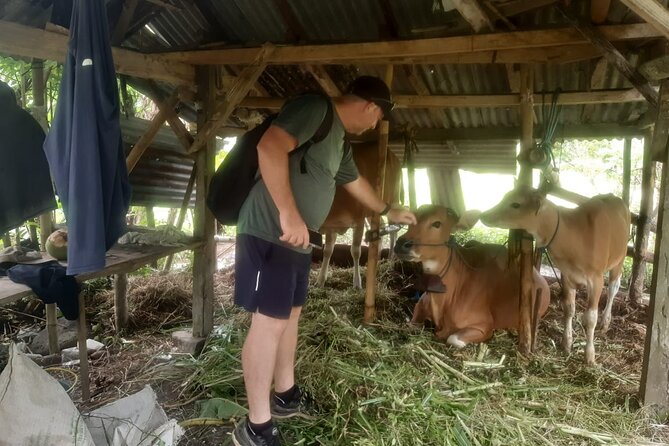
Wear shoes that can handle uneven ground and possible mud. Rain can make the paths slippery, and the route may pass close to irrigation channels and field edges.
A light rain layer is sensible, especially because the walk takes place outdoors and conditions can change. Bring sun protection as well, though the early start should be more comfortable than a late morning departure.
Bottled water is included, but you may still want a small personal bag for your phone and other essentials. Keep it light. You will get more from the walk if you can move easily across narrow paths and pause without managing bulky luggage.
The meeting time is 7:00 am. Arrive ready to walk rather than expecting a long orientation at the starting point. Since the activity ends back at the meeting point, you can plan the rest of your morning from there.
Who Should Book This Sidemen Walk?
I would choose this experience if you want to understand the rice terraces as part of a living village. It suits you especially well if you enjoy nature, local farming, photography, and asking questions about daily life.
It is also a good fit for:
- Couples wanting a quiet private outing
- Families who prefer a flexible guide
- First-time visitors to Sidemen
- People interested in Subak irrigation
- Walkers who want a short morning activity
- Visitors who prefer local paths to major sightseeing stops
I would hesitate if you need a fully paved route, a fixed one-hour finish, or a guaranteed view of bright-green rice. Harvest timing can change the appearance of the fields, and rain can make the walk messier than expected.
The 92 percent recommendation rate and 4.6 rating suggest a dependable experience, but the small number of ratings means you should still read the practical details carefully. The biggest strength is the guide-led connection to the area. The biggest variable is the condition and appearance of the fields on your chosen date.
Booking, Pickup, and Cancellation Details
Confirmation is provided when you book, and the activity is listed as suitable for most participants. Public transportation is nearby, though the exact transport arrangement is not included in the base details.
Pickup and drop-off can be requested as an optional service. The walk starts and ends at the meeting point, so check the pickup terms before relying on hotel transport.
Free cancellation is available up to 24 hours before the 7:00 am start time for a full refund. Cancellations or changes made within 24 hours are not refunded or accepted.
Should You Book the Sidemen Rice Terrace Trek?
Book it if you want a low-cost, private introduction to Sidemen led by someone who understands the fields from local experience. The Subak of Ogang, wooden bridge, temples, and farm activity give the walk more substance than a quick viewpoint visit.
Go with realistic expectations. The fields may be harvested, the path may be muddy, and the outing may last longer than the stated one hour. If those details sound like part of the appeal rather than a problem, this is a practical way to see Sidemen at a slower, more human scale.
FAQ
Where does the Sidemen trekking experience start?
It starts at Sidemen Rice Terrace, at GCJP+77P, Jalan Sidemen-Sangkan Gn., Sangkan Gn., Sidemen, Karangasem, Bali 80864, Indonesia.
What time does the trek begin?
The stated start time is 7:00 am.
How long does the experience last?
The listed duration is approximately one hour. Some outings have lasted about two hours, so allow extra time if your schedule permits.
Does the tour include hotel pickup and drop-off?
Hotel pickup and drop-off are optional. The activity begins and ends at the listed meeting point.
Is this a private tour?
Yes. Only your group participates in the activity.
What is included in the price?
The experience includes bottled water and a trekking guide. Optional hotel pickup and drop-off may also be arranged.
Will I definitely see green rice fields?
No. The appearance of the fields depends on the farming season. Some plots may have already been harvested when you visit.
Can I cancel for a full refund?
Yes. You can cancel at least 24 hours before the experience start time for a full refund. Cancellations or changes made within 24 hours are not refunded.
More treks and jungle hikes around Ubud
- Mount Batur Sunrise Hike and Natural Hot Spring Option
★ 5.0 · 1,927 reviews - Mount Batur Sunrise Hike with Breakfast
★ 5.0 · 1,757 reviews - Mount Batur Sunrise Trekking Private All Inclusive
★ 5.0 · 906 reviews - Private Mount Batur Sunrise Trekking Tour
★ 5.0 · 634 reviews
More rice terrace walks around Ubud
- Ubud: Monkey Forest, Jungle Swing, Rice Terrace, and Water Temple
★ 5.0 · 7,160 reviews - Full-Day Tour to Water Temples and UNESCO Rice Terraces in Bali
★ 5.0 · 2,539 reviews - Ubud: Downhill Cycling with Volcano, Rice Terraces and Meal
★ 5.0 · 536 reviews - Ubud eBikes Tour to Tegallalang Rice Terrace
★ 5.0 · 507 reviews
Newly added Ubud trips
- authentic Balinese organic cooking class in Ubud★ 5.0 · 4 reviews
- Farm-to-Table Balinese Cooking Experience★ 4.0 · 3 reviews
- Sunrise Jeep Tour Mount Batur Kintamani Bali★ 5.0 · 24 reviews
- coconut wine and coffee safary tour★ 5.0 · 16 reviews
- Nungnung Waterfall,Jatiluwih Heritage UNESCO and Bedugul Tour★ 5.0 · 5 reviews
- Bali Amazing Cycling Tour★ 5.0 · 4 reviews
- Authentic Balinese Cooking Class with Jewelry Making Class★ 5.0 · 3 reviews
- Bali Rural Village Bike★ 5.0 · 10 reviews
Ubud Rice Terrace Tours, compared.

Monkey Forest, Jungle Swing, Rice Terrace, and Water Temple
Read our review →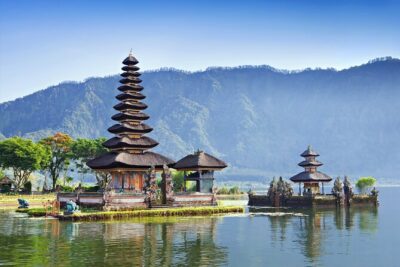
Full-Day Tour to Water Temples and UNESCO Rice Terraces in Bali
Read our review →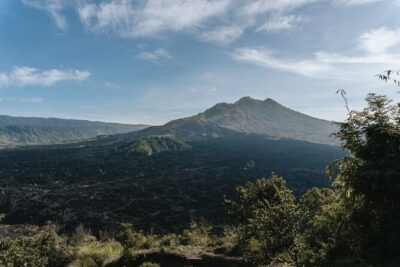
Downhill Cycling with Volcano, Rice Terraces and Meal
Read our review →
Ubud Top Attractions: Waterfalls, Temples and Rice Terraces
Read our review →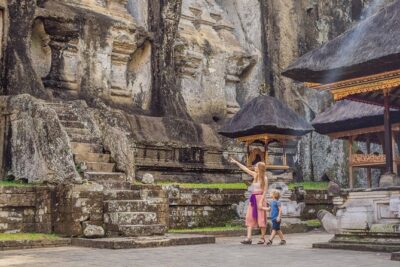
Private Full-Day Tour: Balinese Temples and Rice Terraces
Read our review →
Ubud ATV Quad Bike through river, Jungle, waterfall & rice fields
Read our review →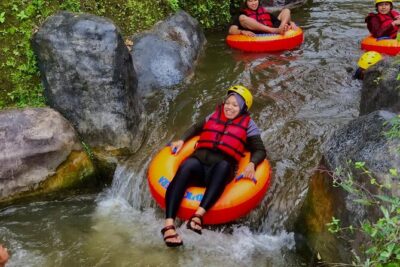
Best of Ubud Waterfalls, Tegalalang Rice Terrace and Swing Tour
Read our review →Browse the lists this tour appears in