
Reviewed · BALINESE VILLAGE AND CULTURE TOURS
Traditional Balinese Meal in Ubud in Dewa’s Family Village Home
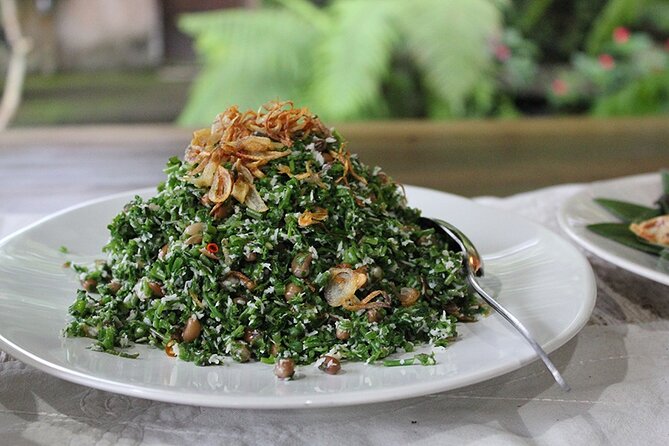
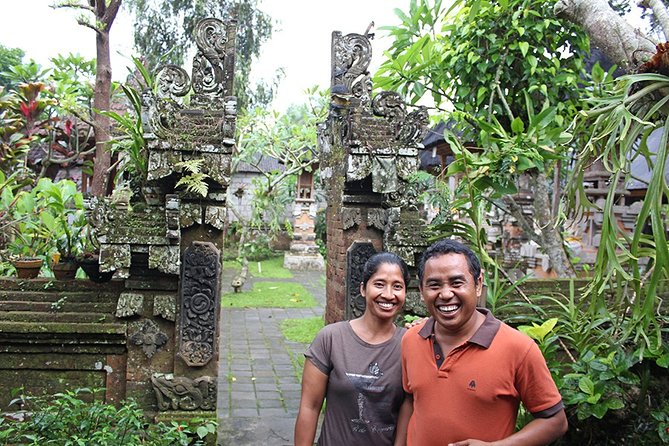
A plate of pepes ikan, chicken in turmeric and coconut milk, corn fritters, and vegetables with coconut tells you more about daily Bali than another restaurant meal. Here, Dewa and Jero welcome you into a traditional family compound north of Ubud, where food, gardens, courtyards, and spiritual practice all share the same space.
I like the farm-to-table setting, with herbs, fruit, spices, and other ingredients growing near the home. I also like the small private format: your group gets time to ask questions, see how the compound works, and eat a home-cooked meal rather than follow a large class.
The main consideration is cultural. Your hosts do not sit at the table during the meal, following their family custom of eating separately and focusing on personal meditation. If you want a lively shared dinner with your guide, this may feel quiet or unusual.
Key points at a glance
- Traditional family compound: Walk through a walled Balinese home with open pavilions, a central courtyard, gardens, and family spaces.
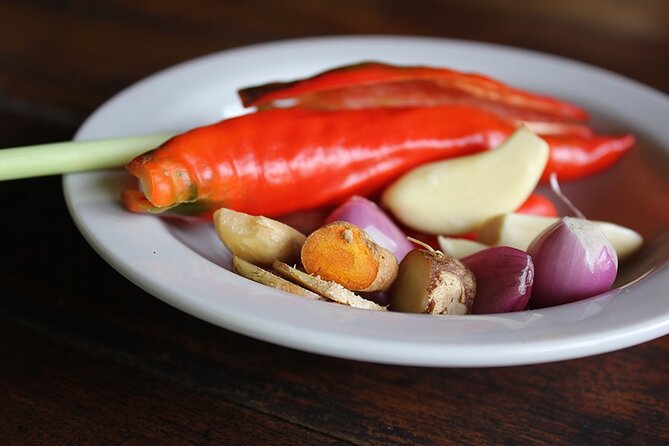
- Local ingredients: Learn about galangal, cloves, cacao, nutmeg, and other plants, including their medicinal uses.
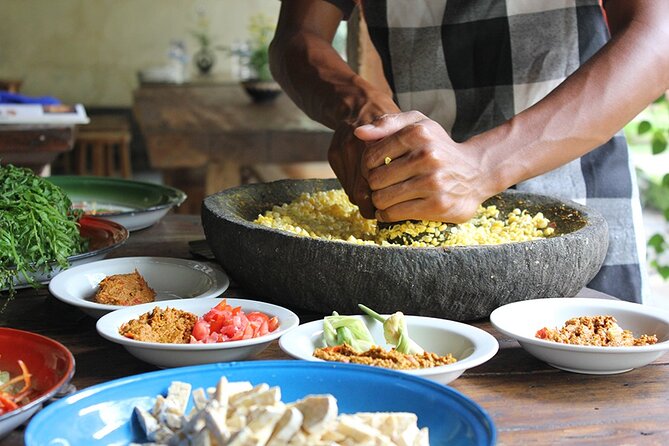
- Authentic home cooking: The meal may include pepes ikan, bumbu kuning chicken, bregedel, and jukut urab.
- Private experience: Only your group participates, making it easier to ask questions and set the pace.
- Ubud pickup included: Hotel pickup and drop-off are offered within the Ubud area.
- Quiet cultural custom: Your hosts may prepare and serve the meal without joining you at the dining table.
A Balinese meal inside a real family compound
This experience is less about checking off famous sights and more about seeing how a Balinese household fits together. You travel to a village in the terraced foothills north of Ubud, then enter a walled family compound made up of open pavilions around a courtyard.
That layout matters. A traditional Balinese home is not simply one building with bedrooms, a kitchen, and a living room. Family life takes place across several structures and shared spaces. You get a chance to see that arrangement at close range, with Dewa and Jero or another family member explaining how the compound is used.
I like this part because it gives the meal a setting and a reason. You are not just eating Balinese food in a room decorated to look local. You are sitting within the family’s own home environment, surrounded by the garden and the buildings that shape everyday life.
The compound is also home to extended family members. That can make the visit feel more personal, but it also means you should treat the space with care. This is a private home, not a staged attraction. Keep your voice respectful, ask before photographing people, and follow your host’s lead around family and religious areas.
More village and culture days around Ubud:
- Balinese Life Style Tour
★ 5.0 · 150 reviews - Private Tour to Trunyan Village “Skull Island of Bali”
★ 5.0 · 73 reviews - Trunyan Cemetery, Hot Spring, Penglipuran Village, and Waterfall Tour
★ 5.0 · 65 reviews
Starting from your Ubud hotel
If you stay in Ubud, hotel pickup and drop-off are included. That is useful because the meeting location is outside the central tourist core, and village roads can be less familiar than the lanes around central Ubud.
The experience lasts about two hours. Pickup time and driving time will affect how much of that window is spent at the home, so confirm your hotel is within the pickup list before booking. If you are staying outside Ubud, you need to make your own way to Alam Sari Resort near Keliki and meet Dewa there.
The formal meeting point is listed as Rumah Makan Jero Nini in Keliki, at Jl. Arjuna. The instructions also identify Alam Sari Resort as the meeting place for people staying outside Ubud. Because both locations appear in the directions, I would confirm the exact pickup or meeting point after booking rather than rely on a map pin alone.
This is a small but important planning detail. Ubud is spread out, and a hotel described as being near Ubud may not qualify for included transport. The provider asks you to contact them to confirm your hotel, which is worth doing before you commit.
Walking through the garden of ingredients
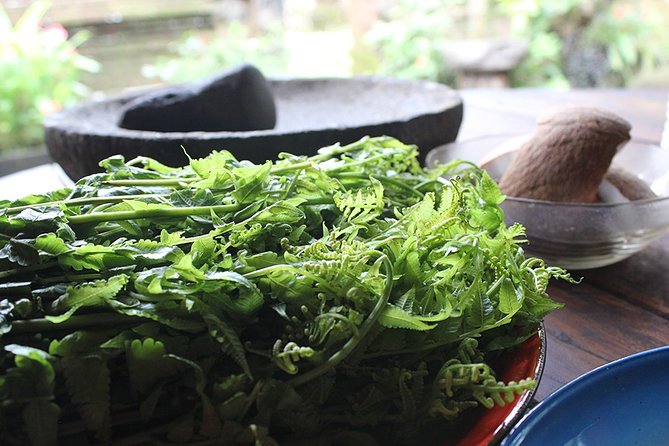
Near the family home, you learn about Balinese fruits, herbs, and spices. The examples given include galangal, cloves, cacao, and nutmeg, along with information about their medicinal properties.
For me, this is one of the most useful parts of the visit. A restaurant menu may tell you what is in a dish, but it rarely shows you the plant or spice in its natural setting. Seeing the ingredients near the kitchen helps explain why Balinese cooking can taste so layered even when the finished dish looks simple.
The garden also gives you a better way to think about local food. Ingredients are not just items purchased from a supermarket. They have practical uses, family knowledge, and connections to health and household life. You may leave with a clearer sense of how tropical plants move from garden to cooking pot.
The walk to the home takes about 10 minutes. That short walk is worth noting if you have mobility concerns, since the route is part of the stated plan. The experience is described as suitable for most people, and service animals are allowed, but the information does not give details about paving, stairs, or uneven ground. Ask the provider if you need a precise accessibility answer.
The home tour before the meal
Once you reach the home, Dewa or a family member shows you around the compound. You can expect open pavilions, a central courtyard, and the close presence of extended family life.
This tour is where the experience moves beyond food. You get an inside look at how a Balinese family home is organized and how domestic life fits alongside spirituality. The setting may be especially meaningful if you have spent your Bali trip admiring family temples and ornate gates from the road but have not had a chance to understand what lies behind them.
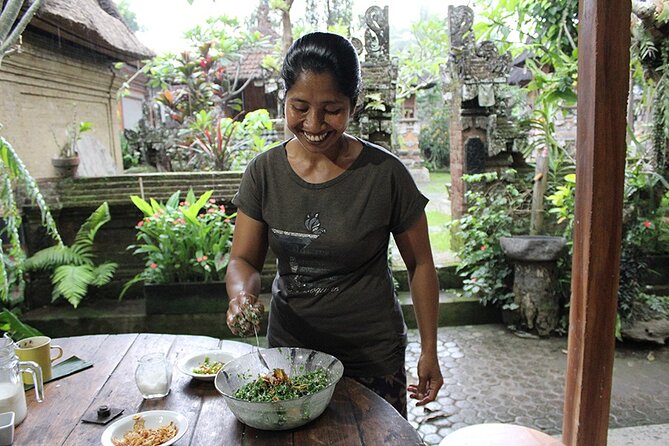
Several of the detailed accounts connected with this experience describe Putu as the host or cooking teacher. The main arrangement identifies Dewa and his wife Jero, or an equally lovely family member, as hosts. In practice, your host may therefore be Dewa, Jero, Putu, or another member of the family, depending on availability. If meeting a particular person matters to you, ask when you confirm.
Some descriptions also refer to cooking instruction. The core offering is an in-home meal, but your host may explain ingredients and preparation as the food is made. Do not book this expecting a formal professional cooking school with a set class syllabus. Think of it as a home visit where cooking is the bridge to conversation and culture.
A completely different kind of day out from Ubud:
- All-Inclusive Ubud Private Tour
★ 5.0 · 14,344 reviews - Best of Ubud Full-Day Tour with Jungle Swing
★ 5.0 · 8,571 reviews - Ubud: Monkey Forest, Jungle Swing, Rice Terrace, and Water Temple
★ 5.0 · 7,160 reviews - Best of Ubud 1-Day Private Tour
★ 5.0 · 4,451 reviews
What you may eat at Jero’s table
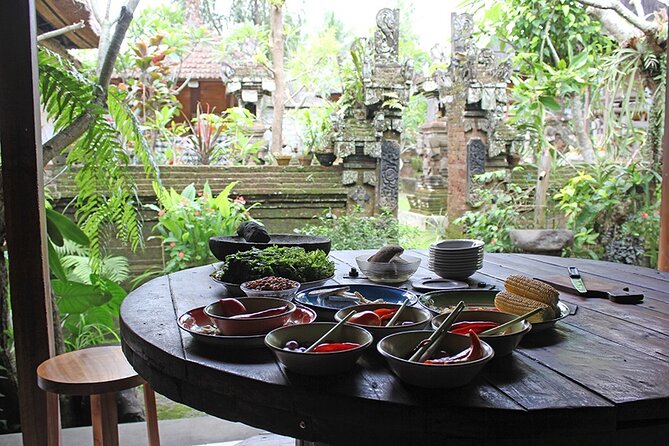
The menu can include several classic Balinese dishes:
- Pepes ikan: Tuna grilled in banana leaves. The wrapping helps hold in moisture and fragrance.
- Bumbu kuning: Chicken cooked with fresh turmeric and coconut milk.
- Bregedel: Corn fritters with a crisp, satisfying texture.
- Jukut urab: Seasonal vegetables mixed with grated coconut and fried shallots.
The wording allows for variation, so you should not assume every dish will appear at every meal. That is part of the appeal of a home menu. It follows what is available and what the family chooses to prepare rather than a fixed restaurant card.
Vegetarians can request a vegetarian option at booking. Do not wait until the meal begins to mention dietary needs. The provider specifically asks for this information in advance, giving the host time to plan a suitable meal.
Beverages are included, as are gratuities. That makes the $56 price easier to assess. You are paying for a private two-hour visit, transport from an eligible Ubud hotel, a home-cooked meal, drinks, a compound tour, and direct time with a local family. It is not the cheapest way to eat in Ubud, but it offers access and context that a standard restaurant meal cannot provide.
The value is strongest for someone who wants a personal cultural encounter. If you only want a large meal or a cooking lesson with many hands-on dishes, you may find better value elsewhere. If you want to understand the home behind the food, the price is more reasonable.
The quiet dining custom you should understand
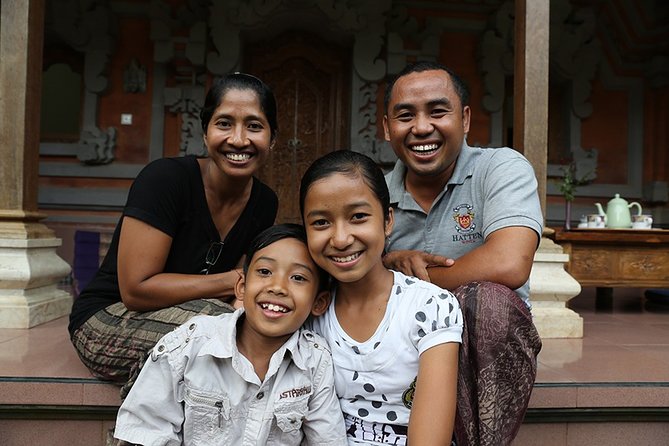
The hosts do not share the meal at the dining table. Their family tradition is to eat on their own and focus on personal meditation to reach a positive state of mind.
This is the most important expectation to set before you go. Many home dining experiences are built around sitting together, chatting through each course, and watching the host eat the same food. Here, the separation is intentional and spiritual, not a sign that you have done something wrong.
You may still have conversation before and after the meal, and your hosts can explain the food and family customs. But the actual eating period may feel quiet and private. I see that as a meaningful cultural detail, though it will not suit everyone.
If you like time to reflect, this custom can make the meal feel calm. If you want to toast your host, trade stories throughout dinner, or take part in a lively shared table, you should weigh this carefully.
What the two-hour schedule really gives you
Two hours is enough for a focused home visit, but it is not a full-day village tour. You get transport if eligible, an ingredient and compound introduction, a short walk, the home tour, and the meal. The schedule should feel manageable rather than rushed, provided your hotel is close enough for pickup.
The experience is private, so your group does not have to wait for strangers or follow a large tour bus. That can make the time feel more generous. You can ask about ingredients, family spaces, and Balinese customs without competing for the guide’s attention.
On the other hand, a private format does not guarantee a long cooking demonstration. The description centers on the meal and home visit, while the detailed accounts connected with the experience describe cooking guidance to varying degrees. Ask the provider what your specific booking will include if hands-on preparation is important to you.
You receive family recipes, according to the experience details. That is a nice practical souvenir, especially if you want to recreate one of the dishes at home. The recipes may be more useful than a standard souvenir because they connect directly to what you ate and learned.
Who will enjoy this Ubud food experience
I would recommend this for you if you want:
- A private visit rather than a large group activity.
- A closer look at a traditional Balinese family compound.
- Food prepared in a family home, not just a restaurant kitchen.
- A gentle introduction to local herbs, spices, and garden ingredients.
- A cultural experience that includes spiritual customs and quiet reflection.
- Hotel pickup from an eligible Ubud property.
- A vegetarian meal, provided you request it in advance.
It is especially suitable for couples, families, and small groups who enjoy asking questions and paying attention to ordinary details. The experience also works well for people who have already seen Ubud’s main temples and markets and want something more personal.
I would hesitate to recommend it if you need a highly structured cooking class, a large social table, or a long list of dishes you prepare yourself. I would also confirm the walking route if anyone in your group has mobility limits.
The experience is popular enough that it is booked about 18 days ahead on average. That does not mean every date sells out, but it is a useful signal for planning. Reserve early if your Ubud dates are fixed, especially because confirmation is subject to availability and may arrive within 48 hours.
Booking details worth checking before you pay
The price is $56 per person. Hotel pickup and drop-off apply only to Ubud hotels, and drinks and gratuities are included. If you stay elsewhere, transportation is not included, and you must meet at the designated point near Keliki.
Free cancellation is available if you cancel at least 24 hours before the start time. Cancellations or changes made less than 24 hours before the experience are not refunded or accepted, with cut-off times based on local Bali time.
A mobile ticket is provided. Confirmation arrives within 48 hours, subject to availability. Most people can participate, and service animals are allowed.
The provider is Traveling Spoon, and the activity is private. Only your group takes part, which is a major advantage for anyone who prefers a slower, more personal visit.
Should you book it?
Book this experience if your idea of a good meal includes seeing where the ingredients grow, learning how a Balinese home is arranged, and accepting a family custom that keeps hosts separate during the meal. The strongest parts are the private compound visit, the garden ingredients, and the chance to eat food prepared in a real family setting.
Think twice if you want a conventional cooking class or a chatty dinner shared with your host. Confirm the pickup zone, the exact host, dietary needs, and how much hands-on cooking will be included. For the right kind of food-focused visitor, $56 buys more than dinner: it gives you a respectful look at family life north of Ubud.
FAQ
Where does the experience take place?
It takes place at a traditional Balinese family home in Keliki, in the terraced foothills north of Ubud. The listed meeting point is Rumah Makan Jero Nini on Jl. Arjuna, Keliki.
Is hotel pickup included?
Pickup and drop-off are included from Ubud hotels only. If your hotel is outside the Ubud region, transport is not included.
Where do I meet the host if I am not staying in Ubud?
You should make your own way to Alam Sari Resort on Jl. Raya Keliki and meet Dewa there. Confirm the exact meeting instructions after booking.
How long does the experience last?
The experience lasts approximately two hours.
What food may be served?
The meal may include pepes ikan, bumbu kuning chicken, bregedel corn fritters, and jukut urab vegetables with grated coconut and fried shallots. The exact menu can vary.
Is a vegetarian option available?
Yes. Request a vegetarian option when you book.
Will the hosts eat with me?
No. In keeping with their family tradition, the hosts do not share the meal at the dining table. They eat separately and focus on personal meditation.
Can I cancel for a refund?
Yes, if you cancel at least 24 hours before the experience start time. Cancellations or changes made less than 24 hours in advance are not refunded or accepted.
Newly added Ubud trips
- Sunrise Jeep Tour Mount Batur Kintamani Bali★ 5.0 · 24 reviews
- authentic Balinese organic cooking class in Ubud★ 5.0 · 4 reviews
- Farm-to-Table Balinese Cooking Experience★ 4.0 · 3 reviews
- coconut wine and coffee safary tour★ 5.0 · 16 reviews
- Nungnung Waterfall,Jatiluwih Heritage UNESCO and Bedugul Tour★ 5.0 · 5 reviews
- Bali Amazing Cycling Tour★ 5.0 · 4 reviews
- Authentic Balinese Cooking Class with Jewelry Making Class★ 5.0 · 3 reviews
- Bali Rural Village Bike★ 5.0 · 10 reviews
Balinese Village and Culture Tours, compared.


Private Tour to Trunyan Village “Skull Island of Bali”
Read our review →
Trunyan Cemetery, Hot Spring, Penglipuran Village, and Waterfall Tour
Read our review →
Besakih Temple Tour – Traditional Bali Village – All Inclusive
Read our review →
Half-Day Ubud Rice Field and Village Cycling Tour
Read our review →
Make Traditional Bali Coconut Oil with a Balinese Family
Read our review →
Private Jatiluwih Rice Terraces Heritage Site and Culture Tour
Read our review →
Browse the lists this tour appears in