
Reviewed · EAST BALI DAY TRIPS FROM UBUD
Sidemen Trekking: A Walk from a Different Perspective
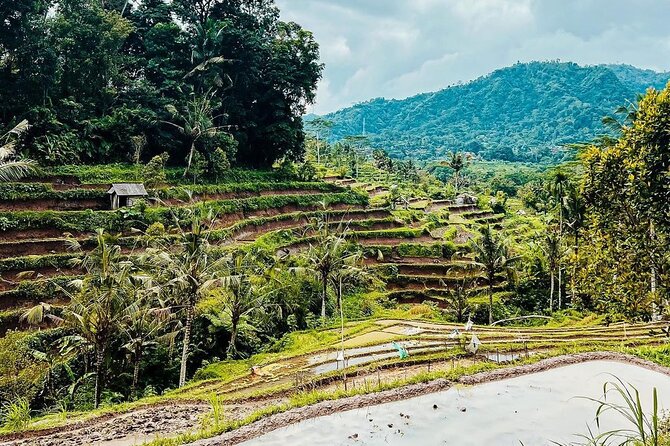
Sidemen’s best views are not found from a roadside lookout. They appear as you follow small farm paths through rice fields, cross a wooden bridge, and look back toward Mount Agung. This is a quiet, local side of Bali, far removed from the resort strip around Kuta, Legian, or Seminyak.
I like two things most here: the guide-led insight into rice farming and Balinese life, and the chance to walk routes you would be unlikely to find alone. Guides such as Adi, Darya, and Wayan are praised for their humor, local ties, and easy explanations. The main consideration is footing. This is not a hard hike, but narrow raised paths and muddy or slippery sections require balance.
Key points to know before you book
- The route follows real farm paths: Expect irrigation channels, narrow rice terraces, village roads, and paths used by local farmers.
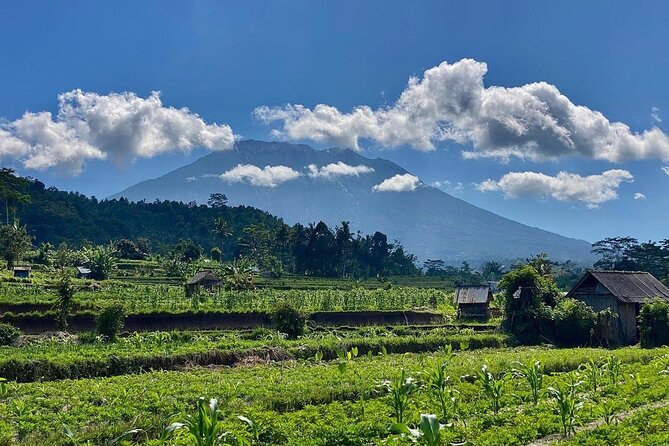
- Mount Agung is part of the scenery: Clear views of Bali’s great volcano appear from several points along the walk.
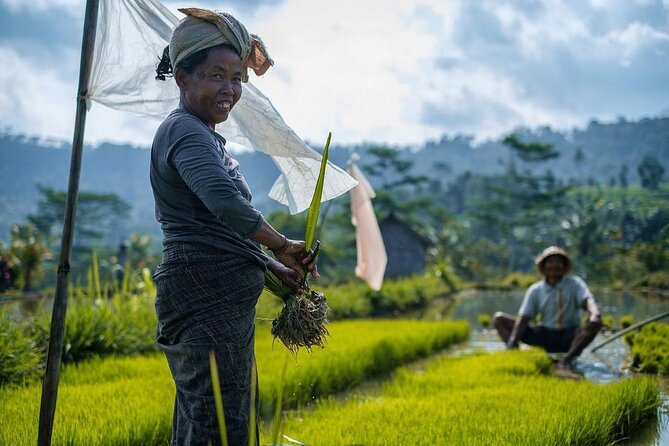
- The guide adds the real value: You learn about rice cultivation, local crops, food, temples, offerings, and everyday village customs.
- It is an easy walk, not a strenuous hike: The route takes about two hours, but balance matters more than stamina.
- Transport needs planning: The walk starts at Pasar Sidemen and ends about 2 to 2.5 hours later at Warung Ume Anyar.
- The price is unusually low: At $13.75 per person, this is a good-value way to see rural Sidemen with local context.
Why Sidemen feels different from southern Bali
Sidemen is in eastern Bali, in Karangasem Regency, though this activity is commonly sold from the wider Ubud area. The setting is agricultural, with villages, rice terraces, irrigation channels, temples, and views toward Mount Agung. You are not being led from one major sight to another. Instead, the walk shows how the countryside works.
That difference matters. A photo of a rice terrace tells you very little about who maintains it, how water reaches it, or how the harvest fits into daily meals and religious life. On this walk, your guide can explain the process as you pass the fields themselves.
The experience also gives you a useful contrast with Bali’s busy southern coast. There are no large attractions or long list of formal stops. The interest comes from ordinary places: a market, a village lane, a prayer temple, a field path, and the people working nearby.
More days out in East Bali:
- Best of Bali Waterfalls: Tibumana, Tukad Cepung and Tegenungan
★ 5.0 · 3,047 reviews - East Bali Tour: Gate of Heaven, Water Palace, Sleeping Gajah
★ 5.0 · 1,726 reviews - All Inclusive : Bali Blue Lagoon Snorkeling, Lunch, and Transport
★ 5.0 · 1,097 reviews
Starting at Pasar Sidemen before the fields
The meeting point is Pasar Sidemen, the traditional market, at the shop marked Upa Boga on Jl. Sidemen. This is a practical starting place because it puts you in the middle of local Sidemen rather than at a hotel or tourist attraction.
If you book a morning session, you can arrive early enough to look around the market before the walk. Pasar Sidemen is open from 5:00 AM to 10:00 AM. The market visit is optional, so you do not need to treat it as part of the two-hour walk, but an early start gives you a useful glimpse of the village before heading into the fields.
Getting to the market takes some thought. If you stay in Sidemen, arrange a ride through your hotel. Grab may be available, but some hotels do not allow Grab drivers to collect passengers from the property. If you are coming from elsewhere, a prearranged driver is the safer choice.
Walking from village lanes to rice terraces
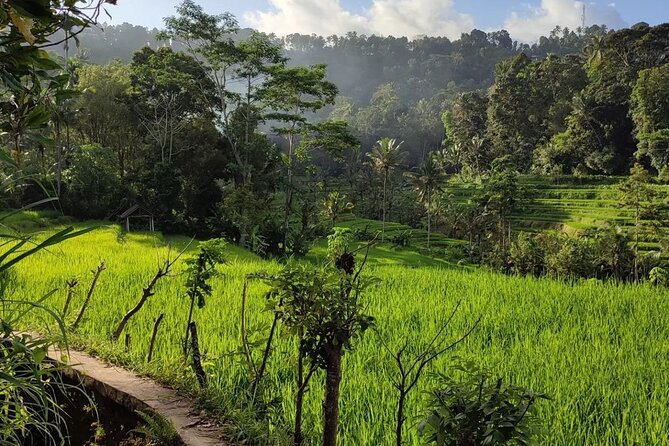
From the market, the route moves through the village and then heads toward the rice paddies. The path does not always look like a formal walking trail. You may follow irrigation lines, uneven ground, farm tracks, and narrow strips between fields.
This is where the tour guide earns the modest price. A local guide knows which turns lead into the paddies and can explain what you are seeing instead of leaving you to guess. Guides named Adi, Darya, Adidas, and Wayan have all been praised for their friendly manner, humor, and ability to explain local customs. The assigned guide can vary, but the emphasis is the same: local knowledge rather than a scripted sightseeing circuit.
The walk usually includes plenty of pauses for photos and explanations. You may learn how rice is planted, harvested, and used in local cooking. One useful seasonal point is that fields can look different at different times of year. In December, some rice may already be harvested, while other crops are being planted. That means the view is not always a wall of green, but the changing fields give you a better sense of working farmland.
You may also see other crops, including chili plants, and learn about flowers used in daily offerings. The value is in connecting these details. Farming, cooking, religion, and village life are not separate subjects here.
Irrigation paths, a wooden bridge, and Mount Agung
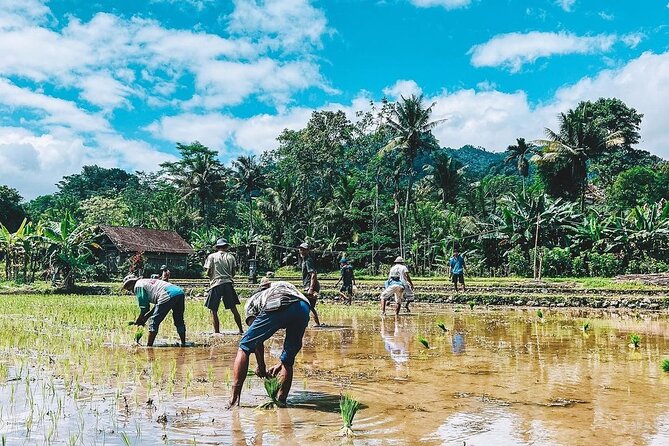
A memorable section follows the water system that feeds the fields. The irrigation route helps you understand why the terraces exist where they do and how the area depends on carefully managed water.
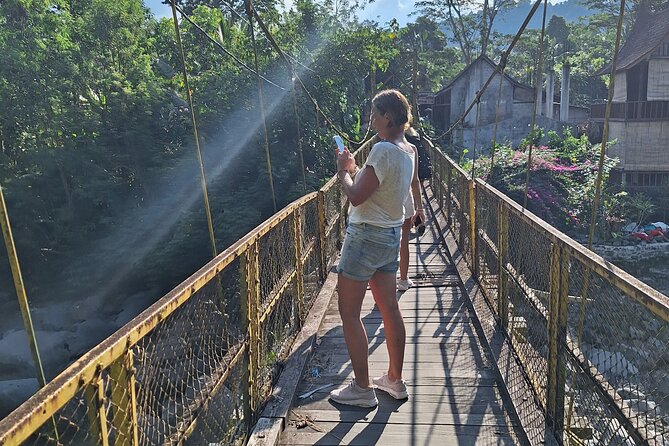
The route also crosses a hanging wooden bridge used by both people and motorbikes. This is not presented as a major thrill ride, but it adds a little drama to an otherwise gentle walk. Move carefully and give local traffic room.
Mount Agung provides the grand visual backdrop. From selected viewpoints, you look across the rice terraces toward the volcano. Clear conditions will make the mountain more visible, but the tour depends on good weather and may be rescheduled or refunded if conditions are poor.
The best part is the changing viewpoint. From the road, you see a broad scene. From the terrace paths, you notice the irrigation, field edges, workers, and small village details that make the view feel lived in.
More walking tours in Ubud:
- Ubud Guided Walking Tour
★ 5.0 · 79 reviews - Ubud Countryside Tour: Campuhan Ridge Walk and Rice Terrace
★ 5.0 · 72 reviews - Hikaria: Bali’s First Immersive Night Walk
★ 5.0 · 16 reviews - Myth of Pejeng Walking Tour
★ 5.0 · 6 reviews
Temples, offerings, and everyday Balinese customs
The route passes through a village temple used by local people for prayer. It is a working religious place, not simply a monument arranged for sightseeing. You should follow your guide’s lead on where to walk, when to pause, and how to behave respectfully.
Guides explain how Balinese Hindu practices connect with ordinary routines. You may hear about temple customs, religious beliefs, flowers used in offerings, and the way community life is organized around shared traditions. The explanations are one of the strongest reasons to choose a guided walk rather than simply wandering through the countryside.
The conversations can also go beyond polished tourism stories. One guide discussed how Bali has changed and how the pressure for big money affects local communities. That kind of talk may not suit someone looking only for a pretty walk, but it gives the countryside a more honest setting.
You are also likely to have a two-way conversation. Several guides are described as interested in visitors’ cultures as well as their own. That makes the experience feel less like a lecture and more like a relaxed exchange while walking.
What the two-hour walk is really like

The distance is described in one account as almost 4 kilometers, although the supplied details give the main duration as approximately two hours to two and a half hours. Expect a steady but relaxed outing with stops rather than a fitness challenge.
The route rises and falls along village streets and field edges. You do not need exceptional endurance, but you do need to place your feet carefully. Narrow elevated paths beside the rice terraces can be uncomfortable for anyone with poor balance, and slippery sections may appear.
Wear proper walking shoes or hiking shoes. Sandals are a poor choice for the paddies, especially if the ground is wet or muddy. Bring a sun hat, sunscreen, sunglasses, and water. One bottled water is included.
The activity is not ideal for someone seeking a serious mountain hike. One of the clearest distinctions to understand is this: the walk is easy in effort but demanding in footing. If you want steep climbs and a hard workout, choose another activity. If you want a manageable countryside walk with frequent stops, this fits much better.
Finishing at Warung Ume Anyar

The walk ends at Warung Ume Anyar Restaurant in Ogang Village. This gives you a natural place to sit down for a drink or meal after the fields.
The end point is not the same as the market, so plan your ride before you start. Ask your driver to meet you at Warung Ume Anyar around 2 to 2.5 hours after the start. Grab may work, but there are only a few drivers in the area. Some may ask for offline payment or an extra fee, and you may end up waiting.
If necessary, you can walk back to the starting point along the main road. The distance is about 3 kilometers and takes roughly 30 to 40 minutes, but arranging transport is more comfortable, especially after walking on uneven paths.
Hotel pickup and drop-off are not included. Tips are also not included, and the $13.75 price covers the experience and bottled water rather than transport or a meal.
Is $13.75 good value?
Yes, provided you want a local walking experience rather than a polished attraction. For $13.75 per person, you receive about two hours with a guide, access to less obvious paths, local explanations, and views that would be hard to assemble on your own.
The low price does not mean the activity is bare-bones. The main value lies in the guide’s ability to interpret what you see. Without that context, a rice-field walk can become a pleasant photo stop. With someone who understands farming, religion, and village relationships, the same path becomes much more meaningful.
The group is capped at 10 people, which keeps the outing smaller than a large coach excursion. Group discounts are available, making it even more attractive for companions booking together. Just remember to add the cost of transport to and from the meeting points.
Who will enjoy this Sidemen walk?
I would choose this for you if you want to see working rural Bali rather than a staged cultural attraction. It suits curious visitors who enjoy asking questions, taking photographs, and learning how food, faith, and farming fit together.
It is also a good first activity in Sidemen. You get an introduction to the village, surrounding countryside, local crops, and Mount Agung without committing to a full-day trek.
You may want to skip it if you have trouble with balance, dislike uneven ground, or expect a clearly marked hiking trail. It is also not the best choice if your schedule leaves no room for the return journey from Ogang Village.
The guide can make a major difference. Adi and Adidas are praised for humor and farming knowledge, while Darya and Wayan are described as thoughtful, local, and easy to talk with. You cannot rely on a particular guide unless the operator confirms the assignment, but the repeated focus on personal storytelling is a strong sign of what the experience is designed to provide.
Booking, timing, and cancellation details
You receive confirmation when you book. Reserve with enough time to arrange transport, especially if you are staying outside Sidemen.
Free cancellation is available up to 24 hours before the start time for a full refund. Changes or cancellations made less than 24 hours before the activity are not refunded. The local weather matters, and a weather cancellation leads to a different date or a full refund.
Allow at least two and a half hours for the walk itself and the transfer afterward. If you have a later reservation, leave extra time rather than booking the next activity too closely.
Should you book the Sidemen Trekking walk?
Book it if you want a low-cost, small-group way to understand Sidemen beyond its photographs. The rice terraces, irrigation paths, temple, wooden bridge, and Mount Agung views are attractive, but the guide’s explanations about farming and village life are what give the walk its purpose.
Do not book it expecting a demanding hike or a perfectly even path. Bring good shoes, protect yourself from the sun, and arrange your ride from Warung Ume Anyar in advance.
For most visitors staying in or near Sidemen, this is a smart two-hour outing. It is simple, local, and fairly priced, with just enough physical challenge to make the scenery feel earned.
FAQ
Where does the Sidemen Trekking walk start?
It starts at Pasar Sidemen, the Sidemen Traditional Market, at the shop marked Upa Boga on Jl. Sidemen.
Where does the walk finish?
The walk finishes at Warung Ume Anyar Restaurant in Ogang Village.
How long does the experience take?
The walk takes approximately two hours. You should allow about 2 to 2.5 hours from the start when planning your pickup.
How much does the activity cost?
The listed price is $13.75 per person. Group discounts are available.
Is hotel pickup included?
No. Hotel pickup and drop-off are not included, so you need to arrange your own transport to the market and from the restaurant.
What should I bring?
Bring a sun hat, hiking boots or walking shoes, sunscreen, sunglasses, and suitable clothing for outdoor walking. Bottled water is included.
Is this a difficult hike?
It is described as an easy walk rather than a strenuous hike. However, some rice-field paths are narrow, raised, uneven, or slippery, so you need reasonable balance.
Can I visit the traditional market before walking?
Yes. Pasar Sidemen is open from 5:00 AM to 10:00 AM. Book a morning session if you want time to visit the market before the walk.
Is Grab available after the walk?
Grab is available in the area, but only a few drivers operate there. Some may request offline payment or extra payment, so arranging a driver in advance is recommended.
What happens if the weather is poor?
The activity requires good weather. If it is canceled because of poor conditions, you can receive a different date or a full refund.
Can I cancel for a full refund?
Yes. Cancel at least 24 hours before the local start time for a full refund. Cancellations or changes made less than 24 hours before the start time are not refunded.
More treks and jungle hikes around Ubud
- Mount Batur Sunrise Hike and Natural Hot Spring Option
★ 5.0 · 1,927 reviews - Mount Batur Sunrise Hike with Breakfast
★ 5.0 · 1,757 reviews - Mount Batur Sunrise Trekking Private All Inclusive
★ 5.0 · 906 reviews - Private Mount Batur Sunrise Trekking Tour
★ 5.0 · 634 reviews
Newly added Ubud trips
- authentic Balinese organic cooking class in Ubud★ 5.0 · 4 reviews
- Farm-to-Table Balinese Cooking Experience★ 4.0 · 3 reviews
- Sunrise Jeep Tour Mount Batur Kintamani Bali★ 5.0 · 24 reviews
- coconut wine and coffee safary tour★ 5.0 · 16 reviews
- Nungnung Waterfall,Jatiluwih Heritage UNESCO and Bedugul Tour★ 5.0 · 5 reviews
- Bali Amazing Cycling Tour★ 5.0 · 4 reviews
- Authentic Balinese Cooking Class with Jewelry Making Class★ 5.0 · 3 reviews
- Bali Rural Village Bike★ 5.0 · 10 reviews
East Bali Day Trips from Ubud, compared.
Best of Bali Waterfalls: Tibumana, Tukad Cepung and Tegenungan
Read our review →
East Bali Tour: Gate of Heaven, Water Palace, Sleeping Gajah
Read our review →
All Inclusive : Bali Blue Lagoon Snorkeling, Lunch, and Transport
Read our review →

Blue Lagoon Snorkeling – Lunch – Kantolampo – Tibumana Waterfall
Read our review →

Bali Snorkeling at Blue Lagoon with Transport and Lunch
Read our review →Tulamben Diving USS Liberty Shipwreck Scuba Dive
Read our review →Browse the lists this tour appears in