
Reviewed · UBUD WALKING TOURS
Myth of Pejeng Walking Tour
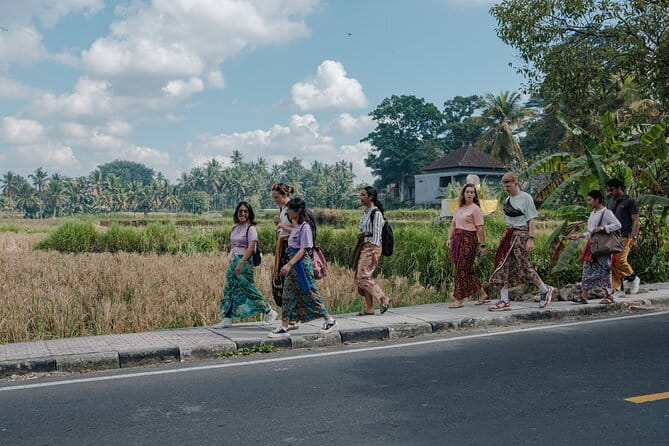
Pejeng’s great surprise is that a short walk outside Ubud takes you from active temples to Bali’s pre-Hindu past. You’ll see the enormous bronze Moon of Pejeng drum, a striking Bhairawa statue, and stone sarcophagi that many first-time Bali visitors never encounter. I like the small maximum of eight and the way the tour connects myths, religion, and archaeology instead of treating each site as a separate photo stop.
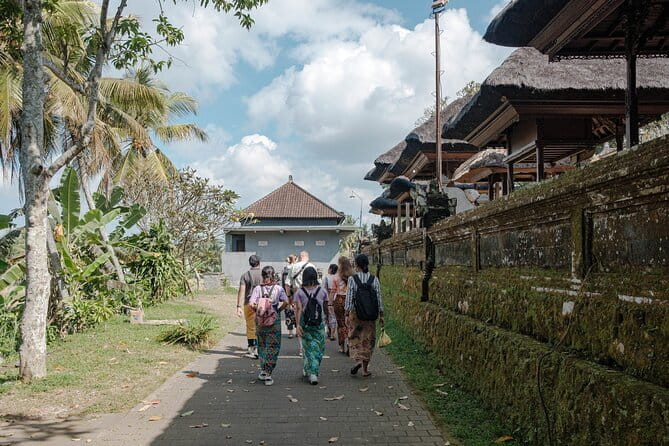
I also like the quiet village setting, which gives you a calmer view of Bali than central Ubud. Guides such as Joe, Bagus, and Win are praised for taking time with complex questions. The main consideration is physical: expect uneven temple steps, sloping roads, patchy sidewalks, and roughly 4,000 or more steps for some groups, though one account described the walk as easy.
What makes this Pejeng walk worth your morning
- The Moon of Pejeng drum: Enter Pura Penataran Sasih to see Southeast Asia’s largest bronze kettle drum and hear the local stories tied to it.
- Four very different stops: The route moves from a living temple to a directional shrine, an unusual Bhairawa image, and an open-air archaeological museum.
- A small group: The tour accepts no more than eight people, leaving room for questions and conversation.
- A quieter side of Ubud: Pejeng offers a less urban walk than central Ubud, with temples and village roads rather than shops and traffic.
- Useful cultural preparation: A sarong and sash are supplied, and temple donations are included in the price.
- A practical early start: Meeting at 8:30 a.m. helps you handle the walk before the day grows hotter, and you can visit the local market before the tour if you arrive early.
Why Pejeng gives you more than a standard Ubud walk
Many Ubud outings focus on rice fields, art shops, cafés, and famous central temples. This one takes a different route. Pejeng, in the Bedulu area of Gianyar Regency, gives you a concentrated look at religious practice and early Balinese culture.
The experience lasts about two hours, though you should allow up to two and a half hours based on the pace and time spent on questions. The walk links four sites, each with a different purpose. That structure is useful because you are not simply looking at carved gates and taking pictures. You are given a way to understand why the objects and buildings matter.
The price is $21.40 per person. For that amount, you receive an English-speaking local guide, temple donations of Rp 60,000, a sarong and sash, Balinese coffee or tea with a snack, and access to a Balinese compound. That is fair value if you want cultural context and do not want to arrange several temple visits yourself.
The group limit matters here. Small religious sites can feel rushed when a large tour arrives, and questions are harder to ask when you are walking behind a crowd. With no more than eight people, you have a better chance to hear the guide and pause when something catches your attention.
More walking tours in Ubud:
- Ubud Guided Walking Tour
★ 5.0 · 79 reviews - Hikaria: Bali’s First Immersive Night Walk
★ 5.0 · 16 reviews - UNESCO Sites Cultural Walking Tour in Bali
★ 5.0 · 4 reviews
Starting at 8:30 a.m. near Bedulu
You meet at the Indomaret on Jalan Raya Dr. Ir. Sukarno in Pejeng. The tour does not include pickup or drop-off, so you need to arrange your own way to the start and from the Archaeological Museum at the end.
The finish point is Museum Arkeologi in Bedulu, not the original meeting point. Plan your onward transport before setting out. This matters if you have a fixed appointment in central Ubud or are relying on a driver who expects to collect you where you began.
The early time is practical. It gives you cooler walking conditions than a late morning start, though Bali weather can still be hot or wet. If you arrive early, one useful suggestion is to visit the local market before the tour begins. That adds a bit of local life to the morning without changing the planned route.
Wear light clothing that allows easy movement, but remember the temple dress rule. Men and women must cover their legs below the knee with a sarong. The operator supplies sarongs and sashes, so you do not need to pack one, but modest clothing will make changing and entering the temples easier.
Pura Penataran Sasih and the Moon of Pejeng
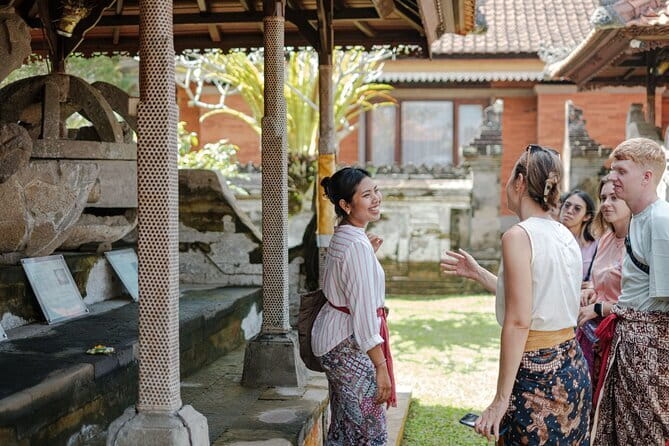
The first stop is Pura Penataran Sasih, one of Bali’s oldest temples. You put on the traditional sarong and sash before entering. The clothing is not just a costume for photographs. It is part of showing respect at an active religious site.
The main object here is the giant bronze kettle drum known as the Moon of Pejeng. The drum is tied to local myths, and the guide explains the stories and beliefs connected with it. The tour description identifies it as the largest bronze kettle drum in Southeast Asia, making this a major reason to choose the walk.
Allow about 20 minutes at the temple. That is enough for a focused explanation, but not enough for a slow architectural study of every shrine. You should listen closely and ask questions as you go. The value is in the story behind the object, not simply in seeing a large piece of metal under a temple structure.
This stop also sets the tone for the morning. Balinese religion is not presented as a display separate from daily life. You are entering a sacred place, learning how local myths shape its meaning, and seeing an object still treated with respect.
Pura Pusering Jagat, a temple at the island’s center

The walk continues to Pura Pusering Jagat, one of Bali’s six main Kahyangan temples. It is believed to sit at the center of the island, which gives the place an important religious role.
You spend about 20 minutes exploring the complex and looking at its detailed carvings. The supplied description refers to intricate carvings but does not specify every image or story, so the guide’s explanation is especially useful here. Joe and Bagus are noted for answering questions, and a guide such as Win may take time with more complicated points about the site.
This is the kind of stop where a guide can make a major difference. Without context, temple carvings can blur into a series of decorative shapes. With an explanation of the temple’s place in Balinese religious thought, you have a clearer reason to look at the details.
Do not expect a grand museum-style presentation. This is a living temple complex, and the experience may include ordinary religious activity around you. That can be rewarding, but it also means you should follow instructions, keep your voice respectful, and accept that access or timing may change during ceremonies.
A completely different kind of day out from Ubud:
- All-Inclusive Ubud Private Tour
★ 5.0 · 14,344 reviews - Best of Ubud Full-Day Tour with Jungle Swing
★ 5.0 · 8,571 reviews - Ubud: Monkey Forest, Jungle Swing, Rice Terrace, and Water Temple
★ 5.0 · 7,160 reviews - Best of Ubud 1-Day Private Tour
★ 5.0 · 4,451 reviews
Kebo Edan and its unusual Bhairawa statue
At Kebo Edan Temple, also called the Temple of the Crazy Buffalo, the focus shifts to a 13th-century Bhairawa statue. The statue was recovered from nearby rice fields and is described as imposing and unusual.
This is a good stop for anyone interested in the parts of Balinese history that do not fit a tidy postcard image. The guide discusses theories about the statue’s origins and meaning, along with the tantric ideas associated with it. The exact interpretation may invite questions rather than a single clear answer, which makes this a more thoughtful part of the walk.
You spend about 20 minutes here. The temple is smaller than some of the other stops, so the value comes from the explanation and the object itself rather than from covering a large complex.
One practical point: stay aware of the ground as you listen. The route includes uneven surfaces and temple steps, and it is easy to focus on a statue while forgetting where you are walking. Comfortable shoes with a secure sole are a sensible choice.
Arca Building Archaeological Museum and pre-Hindu Bali

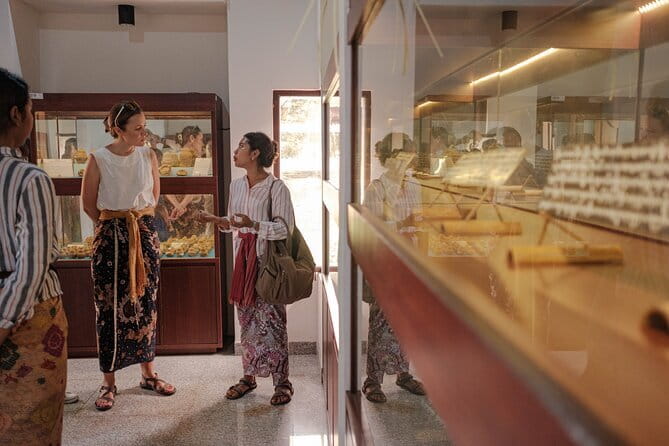
The final stop is the Arca Building Archaeological Museum. Here, the tour steps back before the Hindu period in Bali and introduces you to ancient Balinese life through large stone sarcophagi in an open courtyard.
For many people, this is the most unexpected stop. Bali is often explained through its Hindu temples, ceremonies, and art, but these sarcophagi point to older customs and beliefs. Seeing them in person helps you understand that Balinese culture did not begin with the monuments most visitors see today.
You spend about 30 minutes here, the longest scheduled stop. That extra time suits the subject. Large stone objects need a little space for you to examine their shape, size, and surface while the guide explains what they reveal about early burial practices and local society.
The museum is also the end point, so you can pause after the formal tour and arrange your next ride. Since the tour does not return you to the starting shop, confirm your pickup plan in advance.
What the guide adds to the walk
The guide is the heart of this experience. A list of temples alone would not justify the price or the walking time. You are paying for the link between local myth, sacred practice, archaeology, and the questions that come up along the way.
Joe is mentioned as a warm and informative guide who handled detailed questions well. Bagus is also named as a guide who helped explain the route and local customs. Win is praised for being well prepared and for supplying practical items such as proper temple clothing, sunblock, and insect repellent.
Those details suggest a hands-on approach, but guide assignments can vary. The company also says an Indonesian guide is available. If you have a particular interest in Balinese religion, archaeology, or local stories, ask questions early rather than waiting until the final museum stop.
You may also encounter a local ceremony. If that happens, the temples can be much busier and more active than usual. It may give you a special look at religious life, but you will need to follow the guide’s instructions and accept that the normal pace or access can change.
Walking conditions, weather, and temple manners

This is not a strenuous mountain hike, but it is not a flat, polished city stroll either. Expect uneven temple stairs, steep gradients in places, and patchy sidewalks. One account described the route as an easy 4,000-plus steps with very few stairs, but conditions can feel different depending on weather, footwear, and your own mobility.
Most people can take part, and service animals are allowed. Still, you should be comfortable walking around an urban and village setting for up to two hours and climbing steps. If you need a fully smooth route or frequent seating, ask before booking because the operator cannot alter every historic feature.
The tour operates in rain and sunshine. Severe weather, such as an intense downpour, may affect the start time, and the operator says it will call you if conditions are serious. Bring sun protection and water. The company asks you to carry a reusable bottle so you can refill it and help reduce plastic waste in Bali’s rivers.
At each temple, keep clothing modest and follow the guide’s directions. Do not treat sacred objects as props. The supplied sarong and sash make the dress requirement easy, and temple donations are already included, so you do not need to work out payment at each stop.
Coffee, snacks, and the small extras
The tour includes Balinese coffee, tea, and a snack. This is a modest addition, but it gives the walk a pleasant pause and lets you try a local drink without needing to buy anything along the route.
Personal food and drinks purchased outside the tour are not included. Bring your reusable bottle, especially if the weather is warm. The start time is early enough that eating beforehand may be useful if you prefer a substantial breakfast.
The supplied sarong and sash are practical inclusions, not needless extras. They save you from packing temple clothing and reduce the chance of arriving improperly dressed. The included temple donation also makes the price easier to understand because part of what you pay supports access to the religious sites.
Who should book the Myth of Pejeng walk
I would choose this tour if you have already seen central Ubud and want a quieter morning focused on culture rather than shopping or food. It suits you if you like asking questions, hearing local myths, and comparing active temples with archaeological remains.
It is also a good fit for a family group with older children or adults who can manage a couple of hours on foot. One 83-year-old participant completed the experience with family, but you should judge your own mobility carefully because the route includes slopes, uneven ground, and temple steps.
You may want to skip it if you dislike religious sites, prefer a vehicle-based tour, or need door-to-door transport. The tour begins and ends in different places, and the walking surface is not consistently smooth.
Should you book it?
Book the Myth of Pejeng Walking Tour if you want a compact, well-guided look at Bali beyond the usual Ubud circuit. The strongest reasons are the Moon of Pejeng drum, the rare chance to see pre-Hindu sarcophagi, and the small group size.
At $21.40, the tour offers solid value because guiding, temple donations, dress items, refreshments, and access to four sites are included. Just arrive ready to walk, dress respectfully, and arrange your own transport to the starting point and from the museum. Free cancellation is available if you cancel at least 24 hours before the 8:30 a.m. start.
FAQ
How long does the Myth of Pejeng Walking Tour last?
The tour is listed as approximately two hours. You should allow up to two and a half hours, since the pace and time spent answering questions can vary.
Where does the tour start?
The meeting point is the Indomaret Pejeng at Jl. Raya Dr. Ir. Sukarno No. 552, Bedulu, Blahbatuh, Gianyar, Bali. The start time is 8:30 a.m.
Where does the tour finish?
The tour ends at the Arca Building Archaeological Museum in Bedulu, Gianyar. Pickup and drop-off from your accommodation are not included.
Is a sarong provided?
Yes. A sarong and sash are included, and both men and women must wear a sarong covering the legs below the knee when entering the temples.
What is included in the price?
The price includes a local English-speaking guide, guided walking tour, temple donations of Rp 60,000, Balinese coffee or tea with a snack, access to a Balinese compound, and a sarong and sash. Personal purchases outside the tour are not included.
Can I cancel for a full refund?
Yes. You can cancel for a full refund up to 24 hours before the experience start time. Cancellations or changes made less than 24 hours before the start are not accepted for a refund.
Newly added Ubud trips
- authentic Balinese organic cooking class in Ubud★ 5.0 · 4 reviews
- Farm-to-Table Balinese Cooking Experience★ 4.0 · 3 reviews
- Sunrise Jeep Tour Mount Batur Kintamani Bali★ 5.0 · 24 reviews
- coconut wine and coffee safary tour★ 5.0 · 16 reviews
- Nungnung Waterfall,Jatiluwih Heritage UNESCO and Bedugul Tour★ 5.0 · 5 reviews
- Bali Amazing Cycling Tour★ 5.0 · 4 reviews
- Authentic Balinese Cooking Class with Jewelry Making Class★ 5.0 · 3 reviews
- Bali Rural Village Bike★ 5.0 · 10 reviews
Ubud Walking Tours, compared.


Browse the lists this tour appears in