
Reviewed · BALINESE VILLAGE AND CULTURE TOURS
Bali Traditional Village Experience
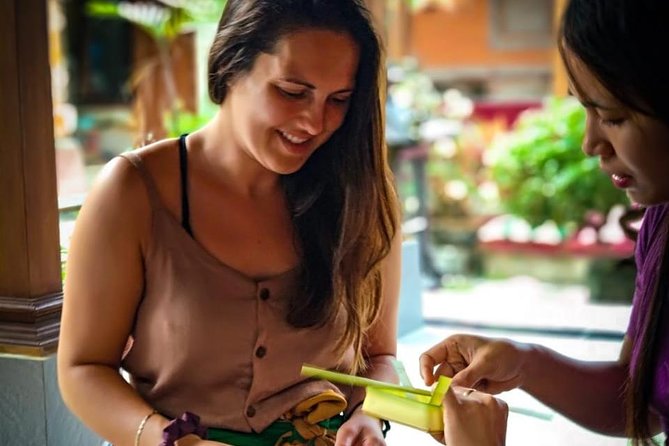
Taro gives you a side of Bali that is easy to miss from Ubud’s busy streets. In this traditional village, you visit a Balinese family compound, learn how household life and Hindu worship fit together, and make your own Canang Sari offerings before using them at a holy water site. I like the personal scale and the chance to take part rather than simply watch. I also like that private transfers from your Ubud-area address are included. The main consideration is time: at about two hours, this is a focused introduction, not a full half-day of village activities.
The visit is especially good if you want a gentle cultural experience without committing to a large group or a long drive. You will have morning tea, Bali cookies, a sarong and sash for the temple visit, and the option to take part in the cleansing ritual. Bring some cash for the temple entrance or donation, and wear clothes that can get wet if you plan to join the water blessing.
Key Points at a Glance
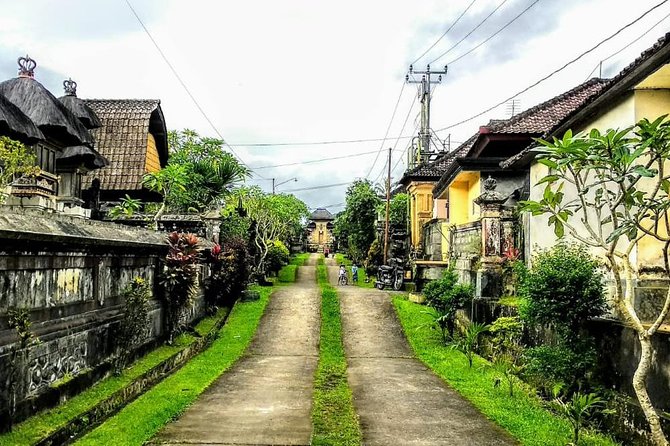
- Traditional family compound: Walk through a working Balinese home and learn where different family members live.
- Canang Sari lesson: Make the small flower offerings used in Balinese Hindu practice.
- Holy water blessing: Bring your handmade offerings to a sacred water site for a traditional blessing.
- Private village visit: Your group participates alone, with transport from the Ubud area included.
- Simple local refreshments: Expect coffee or tea and Bali cookies, not a full meal.
- Extra cost to plan for: The holy water temple entrance or donation is paid separately in cash.
Why Taro Makes a Good Change from Ubud
Taro is about 18 kilometers north of Ubud in the Tegallalang area. That distance is modest on a map, but the village setting feels different from Ubud’s shops, galleries, and restaurant streets. The point here is not a famous monument. It is the chance to see how a traditional Balinese household connects daily life with religious practice.
I like this approach because it gives you a useful framework for understanding Bali. You are not just shown a temple and told it is important. You see the family compound first, hear how it is arranged, make offerings with your own hands, and then take those offerings to a sacred water site.
The experience is private, so you do not have to keep pace with a busload of people. That matters during the offering lesson, when you may want to ask basic questions or take a little extra time with the craft. It also makes the visit a sensible choice for couples, families, or small groups with different levels of interest in religion and local customs.
The tour is described as a half-day local experience, but the stated duration is about two hours. I would plan on a compact morning rather than a long cultural program. That shorter length works well if you have other plans in Ubud, though it may feel brief if you are hoping for a full day of village life.
More village and culture days around Ubud:
- Balinese Life Style Tour
★ 5.0 · 150 reviews - Private Tour to Trunyan Village “Skull Island of Bali”
★ 5.0 · 73 reviews - Trunyan Cemetery, Hot Spring, Penglipuran Village, and Waterfall Tour
★ 5.0 · 65 reviews
Walking Through the Family Compound
Your driver takes you from your Ubud-area address to the village meeting point at Delodsema Traditional Village in Taro. Once there, your local host leads you through the family compound and explains where different members of the family live.
A traditional compound is more than one house. It is a shared family setting with spaces arranged for household life and worship. The family temple is an important part of the visit, and the explanation here helps you see that religion is not kept apart from ordinary routines. It is part of the home.
This is also the most personal part of the experience. You are visiting a real family setting rather than walking through a recreated museum display. You should approach it with the same care you would use when entering any private home: listen, follow local instructions, and dress respectfully.
The description does not promise a long village walk or a set of historical monuments, so do not book this expecting a sightseeing circuit. The appeal is the household setting and the conversation around it. If you prefer cultural activities built around people and customs, this should hold your interest. If you mainly want dramatic scenery or a long list of attractions, it may feel too quiet.
Morning Tea and Bali Cookies
After the compound tour, you sit down for traditional Balinese morning tea with the family. Coffee or tea and Bali cookies are included, giving you a simple break before the offering lesson.
This is not lunch, and the food portion is modest. The included snacks are best understood as a taste of local hospitality rather than a meal. If you arrive hungry or are planning to continue sightseeing afterward, eat beforehand or make separate lunch plans.
Still, the pause has value. Sharing tea gives you time to ask questions and absorb what you have just seen. Food and drink can make a cultural visit feel less formal, and this small stop keeps the morning from becoming a string of explanations and instructions.
The exact snacks are described as Bali cookies, so you should not expect a cooking demonstration or a broad tasting menu. A separate cooking class may be combined with the experience, but that is an add-on rather than part of this basic booking.
Making Canang Sari Offerings
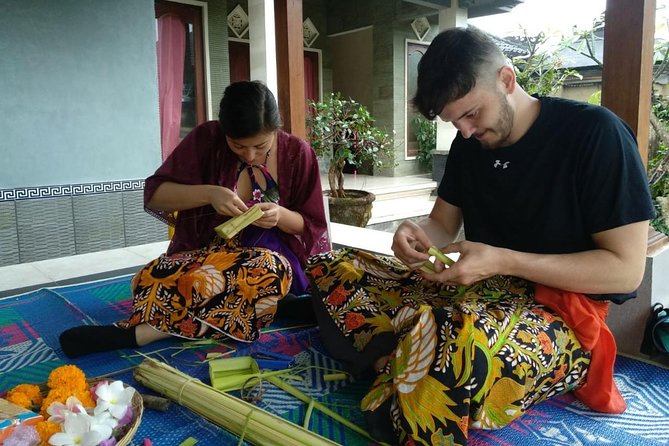
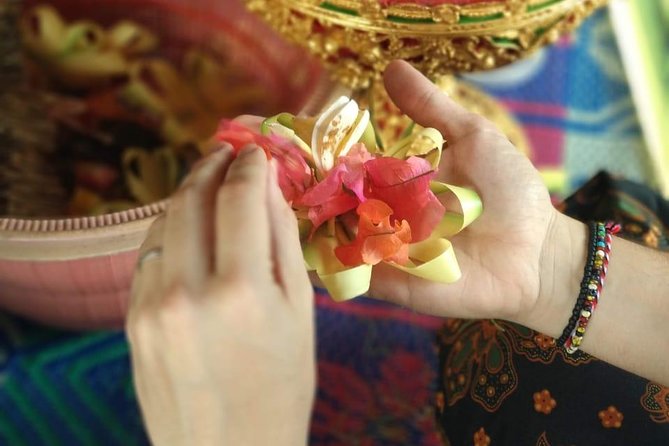
The hands-on centerpiece is the lesson in making Canang Sari, the small offerings used in Balinese Hindu practice. You are taught how to assemble them, and the offerings you make are later used during the blessing ceremony.
This is a useful activity because it turns an unfamiliar religious custom into something you can understand through action. You see that the offering is not simply a decoration placed at a temple. It is prepared with care and used as part of worship.
The supplied details say you will learn to make the offerings, and one description refers to making two different types. That suggests a little variety in the craft lesson, though the exact designs and materials can depend on the day.
I would not judge this activity by how perfect your finished offering looks. The point is to learn the basic meaning and process. You may find the work more delicate than it first appears, so let the host guide you rather than rushing to finish.
This part also gives children and hands-on learners something concrete to do. It is likely less appealing if you want to remain an observer, but the private format means you can take part at your own comfort level.
A completely different kind of day out from Ubud:
- All-Inclusive Ubud Private Tour
★ 5.0 · 14,344 reviews - Best of Ubud Full-Day Tour with Jungle Swing
★ 5.0 · 8,571 reviews - Ubud: Monkey Forest, Jungle Swing, Rice Terrace, and Water Temple
★ 5.0 · 7,160 reviews - Best of Ubud 1-Day Private Tour
★ 5.0 · 4,451 reviews
Preparing for the Sacred Water Site
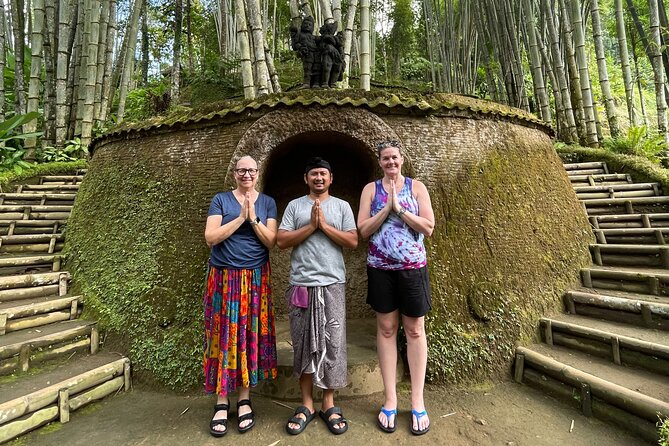
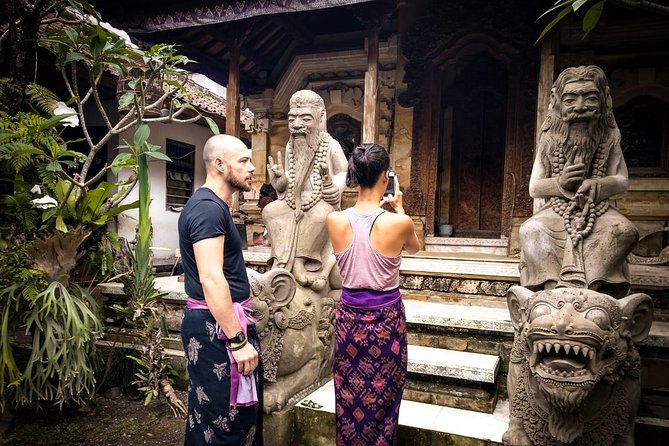
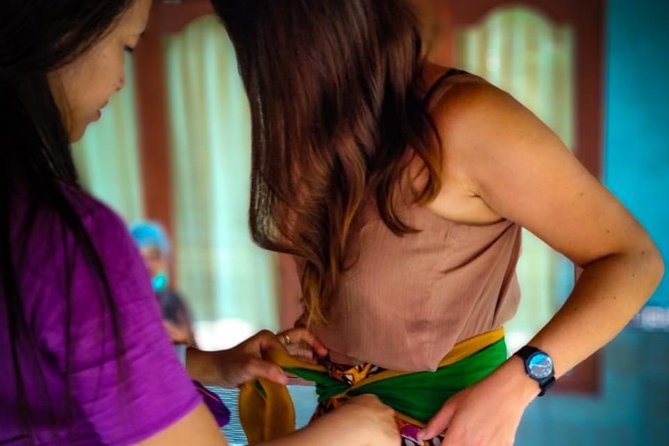
After the family visit and offering lesson, you go to a sacred holy water site. You must wear a sarong and sash to enter, and these are provided as part of the experience.
The clothing requirement is not a costume detail. It is part of showing respect at a Hindu religious site. Your host will dress you appropriately, but choose clothing that is comfortable under a sarong and suitable for changing if needed.
You can change into swimwear or clothes that may get wet if you choose to join the cleansing ritual. This is one of the practical details worth planning around. Bring a change of clothes and a way to keep wet items separate, even though those supplies are not listed as included.
The temple entrance fee or donation is not included. You should carry cash for this cost. The exact amount is not provided, so it is wise to ask your host or driver before arrival rather than arriving without local currency.
The water ceremony is optional in the sense that the description says you can choose to take part in the cleansing ritual. You can still visit the site and receive instructions without assuming that you must get wet. If you have any concern about changing clothes or participating in the water ritual, clarify your preference with the host at the start.
Receiving the Balinese Hindu Blessing
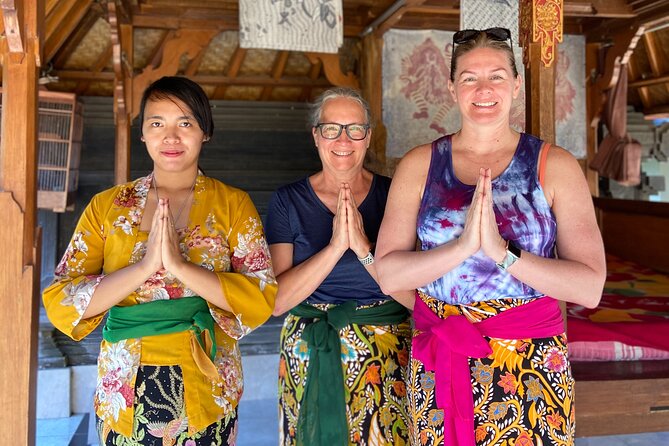
The offerings you made earlier are used in the blessing ceremony. You receive a Hindu blessing with holy water, making the second half of the visit directly connected to the first.
That connection is what gives the experience its shape. You begin in a family home, learn about the family temple, prepare offerings, and then see those offerings used in a sacred setting. It is a clear introduction to the relationship between household practice and temple ritual.
You should treat the ceremony as a religious observance, not a performance staged for photographs. Follow the host’s instructions, keep your clothing respectful, and ask before taking pictures. The provided information does not specify photography rules, so your host is the right person to guide you.
The ceremony may be meaningful even if you are not Hindu, provided you approach it with respect and curiosity. You are being invited to observe and participate in a local tradition, not asked to adopt a belief. That makes the activity a good fit for people who want cultural contact without a long lecture.
What the $35 Price Really Covers
At $35 per person, the price is reasonable if you value a private guide, local transport, and direct access to a family setting. The cost is not just for a temple stop. It includes the transfer from the Ubud area, the compound visit, tea or coffee, Bali cookies, the offering lesson, the provided sarong and sash, and the holy water visit.
The private format improves the value. You are not paying for a large coach tour with a fixed script and limited time for questions. Your group has the host’s attention, and that is particularly useful during the offering lesson and blessing preparation.
The price does not include lunch or the temple entrance fee or donation. Those exclusions are small but important. Add them to your budget, and do not mistake the tea and cookies for a substantial meal.
You can also combine this visit with a cooking class, coconut oil class, silver class, or evening fireflies experience. Those combinations may suit you if you want to build a longer day around Taro, but the basic village experience is best for keeping the morning simple and focused.
Getting There and Planning Your Morning
Two-way private transfers from your Ubud-area address are included, which removes the need to arrange a separate driver to Taro. The activity begins at Delodsema Traditional Village on Tegallalang Road in Taro and ends back at the meeting point, with the included return transfer taking you back to your starting address.
Because the experience is listed at about two hours, confirm the pickup time and expected return when you book. Traffic and the distance north of Ubud can affect the overall morning, even though the activity itself is short.
The ticket is mobile, and confirmation is provided at booking. The experience is private, so only your group participates. Most people can take part, but the visit does include walking through a compound, changing into temple clothing, and an optional water ritual.
Free cancellation is available if you cancel at least 24 hours before the local start time. Changes or cancellations inside that window are not accepted for a refund. Keep that cutoff in mind if your Ubud plans are still shifting.
Who Will Enjoy This Taro Experience
I would choose this for you if you want:
- A short cultural visit that fits around other Ubud plans
- A private setting with time for questions
- A respectful introduction to Balinese Hindu customs
- A family compound rather than a standard sightseeing stop
- A hands-on craft activity
- A blessing ceremony with clear local guidance
Families may appreciate the offering lesson, while couples may like the quiet, personal setting. It also suits first-time visitors who want context for the temples and ceremonies they will see elsewhere in Bali.
I would hesitate to recommend it if your main goal is a full meal, a long nature walk, a cooking class, or an extended village trek. Those are not part of the basic two-hour program. The experience is strongest when you want a close look at household customs and religious practice.
The activity has a 4.9 rating from 18 reviews and a 100 percent recommendation rate. Those figures suggest a consistently strong response, though the sample is small. I would give the greatest weight to the clear itinerary: family compound, local refreshments, offering lesson, and holy water blessing.
Should You Book the Bali Traditional Village Experience?
Book it if you want a compact and personal introduction to Balinese village life. The strongest features are the family compound, the chance to make Canang Sari offerings, and the way those offerings are used in the later blessing ceremony.
The $35 price makes sense for a private experience with Ubud-area transfers and practical extras such as tea, snacks, and temple clothing. Just bring cash for the separate temple donation, plan for no lunch, and pack dry clothes if you want to take part in the water ritual.
Skip it if you want an action-packed excursion or a long food-focused tour. For a calm morning that connects family life, Hindu practice, and a sacred water blessing, Taro offers a thoughtful choice away from Ubud’s main tourist streets.
FAQ
Where does the Bali Traditional Village Experience take place?
It takes place in Taro, Tegallalang, about 18 kilometers north of Ubud. The meeting point is Delodsema Traditional Village on Tegallalang Road.
How long does the experience last?
The activity lasts approximately two hours.
Is transportation from Ubud included?
Yes. Two-way private transfers from an address in the Ubud area are included.
Is this a private tour?
Yes. Only your group participates in the activity.
What will I do at the family compound?
You will tour the traditional family compound, learn where family members live, and hear about the family temple.
Will I learn to make Balinese offerings?
Yes. You will be taught how to make Canang Sari offerings, which are used later during the blessing ceremony.
Is food included?
Coffee or tea and Bali cookies are included. Lunch is not included.
Is temple clothing provided?
Yes. A Balinese sarong and sash are provided for entering the sacred water site.
Do I have to get wet during the blessing?
The cleansing ritual is optional. If you choose to take part, you can change into swimwear or clothing that may get wet.
Is the temple entrance fee included?
No. The entrance ticket or donation at the holy water temple is paid separately, in cash.
Can I cancel for a full refund?
Yes, if you cancel at least 24 hours before the experience start time. Changes or cancellations made less than 24 hours in advance are not accepted for a refund.
Newly added Ubud trips
- authentic Balinese organic cooking class in Ubud★ 5.0 · 4 reviews
- Farm-to-Table Balinese Cooking Experience★ 4.0 · 3 reviews
- Sunrise Jeep Tour Mount Batur Kintamani Bali★ 5.0 · 24 reviews
- coconut wine and coffee safary tour★ 5.0 · 16 reviews
- Nungnung Waterfall,Jatiluwih Heritage UNESCO and Bedugul Tour★ 5.0 · 5 reviews
- Bali Amazing Cycling Tour★ 5.0 · 4 reviews
- Authentic Balinese Cooking Class with Jewelry Making Class★ 5.0 · 3 reviews
- Bali Rural Village Bike★ 5.0 · 10 reviews
Balinese Village and Culture Tours, compared.


Private Tour to Trunyan Village “Skull Island of Bali”
Read our review →
Trunyan Cemetery, Hot Spring, Penglipuran Village, and Waterfall Tour
Read our review →
Besakih Temple Tour – Traditional Bali Village – All Inclusive
Read our review →
Half-Day Ubud Rice Field and Village Cycling Tour
Read our review →
Make Traditional Bali Coconut Oil with a Balinese Family
Read our review →
Private Jatiluwih Rice Terraces Heritage Site and Culture Tour
Read our review →
Traditional Balinese Meal in Ubud in Dewa’s Family Village Home
Read our review →Browse the lists this tour appears in