
Reviewed · BALINESE VILLAGE AND CULTURE TOURS
Day with a Balinese Family in a Village
The heart of this experience is not a temple or a photo stop. It is a morning spent at a Balinese family home, where you walk through rice fields, help make coconut oil, eat a wood-fire lunch, and learn why small leaf offerings matter. Gaia and Ganyar are among the hosts associated with this warm village welcome.
I like the small group size, capped at five people, and the way the day links ordinary work with Balinese customs. You do not just look at rice paddies. You learn how rice is grown, how coconut oil is produced, and how offerings are made by hand. The main consideration is pace: this is a six-hour cultural visit, not a fast-moving sightseeing tour, and some activities take place in a family home rather than a formal attraction.
Key points to know before booking
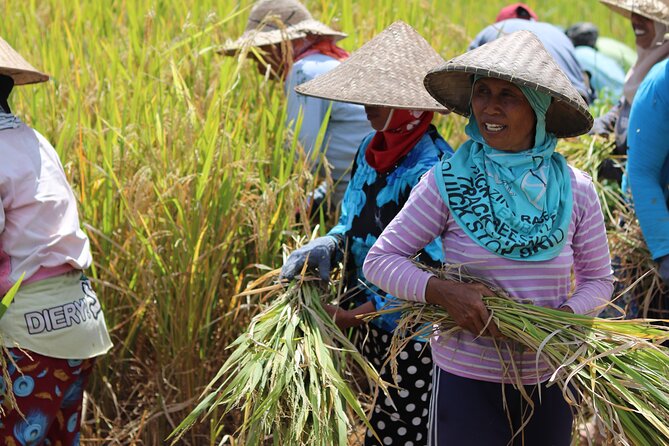
- Walk through working rice fields: See village life and different methods of rice cultivation near Ubud.
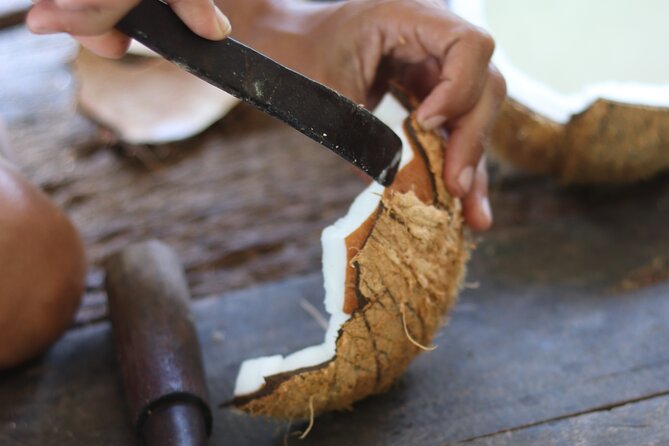
- Make coconut oil by hand: A practical activity with uses in Balinese cooking and massage.
- Eat lunch at a family home: The meal is prepared locally over a wood fire and comes with homemade coffee or tea.
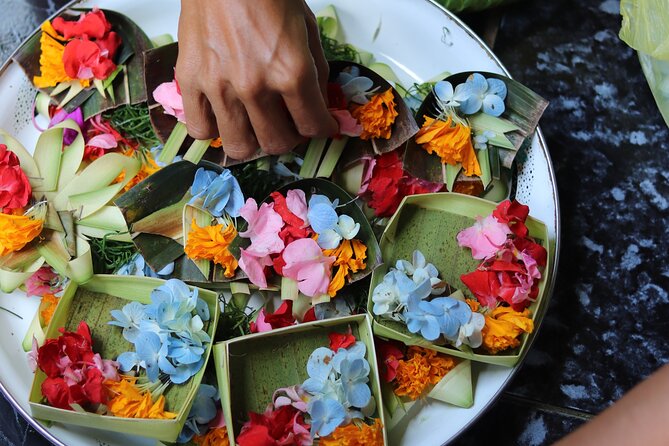
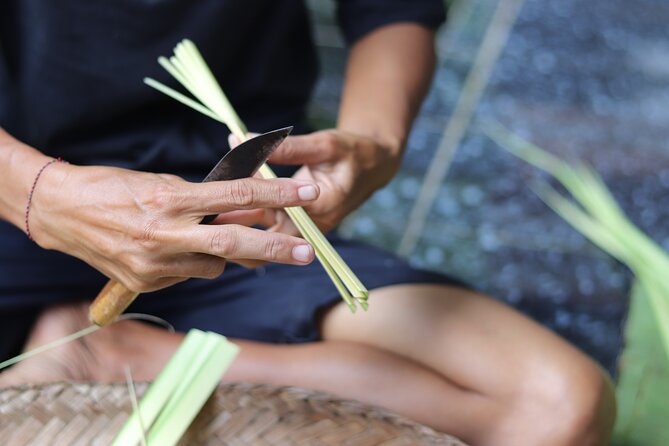
- Learn the meaning of offerings: Weave leaves and plant fibers into colorful forms used in Balinese religious life.
- Travel in a group of no more than five: A useful setup for asking questions and having direct contact with your hosts.
- Start early from Ubud: Meet at Coco Supermarket at 8:30 a.m., with transport included and a return to the same point.
A village morning that gives daily life the spotlight
Many Ubud excursions take you to famous sights. This one asks you to slow down and pay attention to the work behind the scenery. The rice fields are not just a pretty backdrop. They are part of the village economy, and the walk helps you see how farming fits into everyday life.
You may hear about different ways of cultivating rice as you move through the fields and plantations. The description does not promise a long trek, but you should expect to walk outdoors on village paths. Wear light clothes, comfortable shoes, and something that can handle heat or a little dust.
The strongest part of the experience is the connection between what you see outside and what happens at the family home. Rice, coconuts, leaves, cooking, and offerings are presented as parts of one way of life. That gives the day more meaning than a simple countryside stroll.
I also like the small group limit. With a maximum of five participants, you have a better chance to ask questions, hear explanations clearly, and take part in the hands-on work. It is a much better format for a family visit than a large coach group arriving all at once.
More village and culture days around Ubud:
- Balinese Life Style Tour
★ 5.0 · 150 reviews - Private Tour to Trunyan Village “Skull Island of Bali”
★ 5.0 · 73 reviews - Trunyan Cemetery, Hot Spring, Penglipuran Village, and Waterfall Tour
★ 5.0 · 65 reviews
Rice fields near Ubud, with farming in plain view
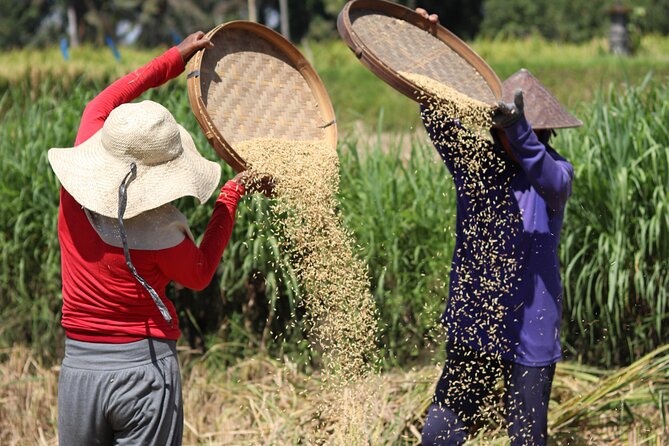
The day begins with a walk through the village rice fields. You observe daily life and the different methods used to grow rice. This is a good fit if you want to understand how rural Bali works rather than simply photograph a field.
Rice cultivation is central to Balinese life, and the guide helps connect farming practices with the rhythm of the village. The activity does not list a separate museum or lecture, so the information comes through what you see and the questions you ask while walking.
That makes your guide important. The experience offers a French or English-speaking guide, and some visits have been led in French by a host such as Gaia. If language matters to you, check the language option when booking. French-speaking visitors have found this especially useful for asking detailed questions about customs and village life.
You should also keep your expectations practical. This is not a private tour of every corner of Ubud, and the rice-field section may feel less structured than a conventional guided attraction. Its value comes from being able to stop, look, and talk rather than ticking off landmarks.
Making coconut oil from a local staple
Back at the family setting, you learn about artisanal coconut oil production. This is one of the day’s most useful activities because it turns a familiar ingredient into a process you can understand with your hands and eyes.
Coconut oil has a place in cooking and massage, and the demonstration shows how local materials become something used at home. You are not only hearing about Balinese traditions. You are involved in the work, which makes the lesson easier to remember.
The activity is also a good break from sightseeing. Instead of standing at the edge of a craft workshop, you are invited to take part. The supplied details do not specify every step or how much oil you take away, so book this for the experience itself, not as a shopping opportunity.
The small group format matters here. Five people or fewer means you can follow the process more easily and ask about the tools, ingredients, and uses. If you like cooking, household crafts, or local production, this may be one of the most rewarding parts of the morning.
A wood-fire lunch at the family home
Lunch is served at the inhabitant’s house, and it is included in the price. The meal is prepared as local home cooking over a wood fire, followed by homemade coffee or tea.
That setting is the point. You are not being sent to a restaurant chosen for tourists. You are eating in the place where the family lives, with the meal tied to the day’s wider look at village life. The available information does not provide a fixed menu, so anyone with allergies or strict dietary needs should ask the operator before booking.
The meal has been especially praised for its homemade quality. That does not mean you should expect a restaurant-style spread or formal service. Think of it as a shared family meal, with the charm and limits that come with eating in someone’s home.
Coffee is another small but welcome detail. Homemade coffee gives the morning a relaxed pause after the walk and activities. Tea is also included, so you have a non-coffee option.
If you are traveling with children, this part can help break up the cultural activities. Families with children aged seven and twelve have found the day engaging, which suggests the hands-on format may work better for young visitors than a long talk or temple tour. Still, children should be comfortable walking and joining a meal in a local home.
A completely different kind of day out from Ubud:
- All-Inclusive Ubud Private Tour
★ 5.0 · 14,344 reviews - Best of Ubud Full-Day Tour with Jungle Swing
★ 5.0 · 8,571 reviews - Ubud: Monkey Forest, Jungle Swing, Rice Terrace, and Water Temple
★ 5.0 · 7,160 reviews - Best of Ubud 1-Day Private Tour
★ 5.0 · 4,451 reviews
Leaves, fibers, and the meaning of Balinese offerings
The offering activity gives you a direct look at Balinese religious practice. Under the guidance of your hosts, you weave leaves and plant fibers into colorful forms and learn what they mean.
The objects are small, but their place in daily life is important. Balinese offerings appear in homes and religious settings, and making one helps you see the care involved in a practice that can otherwise look decorative from a distance.
This is not a craft class designed mainly to produce a perfect souvenir. The focus is on the meaning of the shapes and materials, and on the act of making them. If you are patient with your hands and willing to follow instructions, you should get more from it than someone rushing to finish.
I like that the activity treats local customs as living practices rather than museum pieces. You are invited to ask questions and learn from the family’s explanations. Visitors have especially valued the chance to understand village beliefs through direct conversation, including in French when that language is available.
As with any home visit, approach the activity respectfully. Listen before handling materials, follow the host’s instructions, and remember that these objects have religious meaning beyond their color and form.
What the six-hour schedule means for you
The experience starts at 8:30 a.m. at Coco Supermarket on Jalan Raya Pengosekan in Ubud. The morning start is sensible in Bali, where outdoor walking can become less comfortable later in the day.
An air-conditioned vehicle is included, and the activity ends back at the same meeting point. That makes it fairly easy to fit into an Ubud itinerary, especially if you are staying nearby or can reach the supermarket without trouble.
The total duration is about six hours. That gives enough time for the rice-field walk, coconut oil activity, lunch, and offering lesson without turning each part into a rushed photo stop. You should plan for most of your morning and early afternoon, not a quick two-hour outing.
A driver is included, and specific feedback has praised the punctuality and friendly manner of drivers such as Sywa, also written as Syva. Since the supplied information uses both spellings, confirm the driver’s name and pickup details before departure if you need to contact someone on the day.
Pickup is offered, but the published meeting point is Coco Supermarket. Check your confirmation carefully to see whether your accommodation is covered or whether you need to reach the supermarket yourself. The activity returns to the meeting point, not to a separate end location.
Price, group size, and what you get for $72.08
At $72.08 per person, this is not the cheapest way to spend a morning near Ubud. It is also more than a simple rice-field walk. The price includes transport in an air-conditioned vehicle, a guide, lunch, coffee or tea, the activities, a donation, and all fees and taxes.
The value depends on what you want from Bali. If you only want scenery, you can find less expensive walks. If you want a planned family visit with food, translation, transport, and several hands-on activities in one six-hour program, the price is easier to justify.
The donation is a useful detail. It signals that the visit is intended to support the host community rather than treat the family home as a free backdrop. The exact amount and recipient are not specified, so do not assume the donation replaces a tip.
Tips are not included. You can decide what feels appropriate after the day, especially if your guide or driver has made the experience run smoothly. Bring some local cash if you prefer to tip directly, though the provided information does not state a required amount.
The tour is booked, on average, 36 days ahead. That suggests planning early if the day fits your schedule, particularly because the group limit is five people. Booking far ahead is not a guarantee of quality, but it is a useful sign that the small capacity can fill.
Who will get the most from this experience
I would choose this for a first visit to Bali if you want an introduction to village life without giving up comfort or organization. The air-conditioned vehicle, included meal, and guide keep the day simple, while the family setting gives it a personal focus.
It suits couples, solo visitors, and families. The hands-on work gives people something to do, and the small group makes conversation easier. Children who enjoy making things, walking outdoors, and trying unfamiliar food may have a particularly good time.
It is also a strong choice for French-speaking visitors if a French-speaking guide is available for your date. Language can change the quality of a cultural visit. Being able to ask direct questions about beliefs, farming, food, and family life helps you get beyond a prepared speech.
I would be more cautious if you want a polished attraction with fixed times at every stop, a published menu, or a guaranteed private guide. The day depends on personal exchange and home hospitality. That is its appeal, but it also means the experience may feel less standardized than a major Ubud attraction.
Most participants can take part, and service animals are allowed. The information does not give detailed terrain, restroom, or dietary-access details, so ask the operator about any specific mobility, allergy, or medical concern before paying.
Practical tips for a better morning
Wear comfortable walking shoes. You will be outside in rice fields and plantations, and practical footwear matters more than dressing for photographs.
Bring sun protection and water, even though lunch and drinks are included. The provided details do not state how much time you spend in shade, so prepare for warm conditions.
Dress respectfully for a family and village setting. You do not need formal clothing, but modest, comfortable clothes are a sensible choice for a cultural visit and a shared meal.
Use the small group to ask questions. Ask about the rice-growing methods you see, how the coconut oil is used, and the meaning of the offering forms. The day gives you access to people and practices that a standard sightseeing route may only show from a distance.
The experience offers free cancellation up to 24 hours before the start time. Cancellations made less than 24 hours before the 8:30 a.m. start are not refunded, and late changes are not accepted. If the minimum number of participants is not reached and the operator cancels, you are offered another date or experience, or a full refund.
Should you book this Balinese family visit?
Book it if you want conversation, food, and participation, not just views. The rice-field walk, coconut oil making, family lunch, coffee, and offering craft form a well-balanced six-hour introduction to rural Balinese life.
The strongest reasons to go are the group limit of five, the chance to learn in a real family setting, and the clear link between household work and religious custom. Hosts such as Gaia and Ganyar have helped make the visit personal, while drivers such as Sywa or Syva add practical support on the road.
Skip it if your Bali plans already contain several home visits, cooking sessions, or long cultural workshops, or if you prefer a tightly scheduled sightseeing route. For most visitors who want to see how village life works near Ubud, though, this is a thoughtful use of half a day and a fair value at $72.08.
FAQ
Where does the activity start?
The meeting point is Coco Supermarket on Jalan Raya Pengosekan in Ubud, Bali.
What time does the experience begin?
The start time is 8:30 a.m.
How long does the experience last?
The activity lasts approximately six hours.
Where does the activity end?
It ends back at the meeting point at Coco Supermarket.
Is transportation included?
Yes. An air-conditioned vehicle is included, and pickup is offered.
Is lunch included?
Yes. Lunch at the inhabitant’s house is included, along with coffee or tea.
How many people can join the activity?
The group has a maximum of five participants.
Newly added Ubud trips
- authentic Balinese organic cooking class in Ubud★ 5.0 · 4 reviews
- Farm-to-Table Balinese Cooking Experience★ 4.0 · 3 reviews
- Sunrise Jeep Tour Mount Batur Kintamani Bali★ 5.0 · 24 reviews
- coconut wine and coffee safary tour★ 5.0 · 16 reviews
- Nungnung Waterfall,Jatiluwih Heritage UNESCO and Bedugul Tour★ 5.0 · 5 reviews
- Bali Amazing Cycling Tour★ 5.0 · 4 reviews
- Authentic Balinese Cooking Class with Jewelry Making Class★ 5.0 · 3 reviews
- Bali Rural Village Bike★ 5.0 · 10 reviews
Balinese Village and Culture Tours, compared.


Private Tour to Trunyan Village “Skull Island of Bali”
Read our review →
Trunyan Cemetery, Hot Spring, Penglipuran Village, and Waterfall Tour
Read our review →
Besakih Temple Tour – Traditional Bali Village – All Inclusive
Read our review →
Half-Day Ubud Rice Field and Village Cycling Tour
Read our review →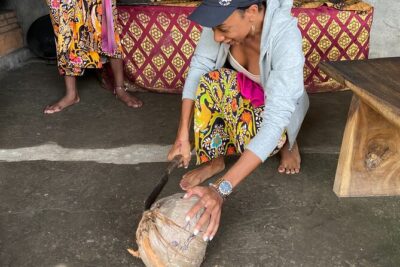
Make Traditional Bali Coconut Oil with a Balinese Family
Read our review →
Private Jatiluwih Rice Terraces Heritage Site and Culture Tour
Read our review →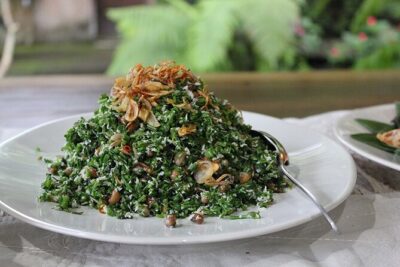
Traditional Balinese Meal in Ubud in Dewa’s Family Village Home
Read our review →Browse the lists this tour appears in