

Reviewed · UBUD WALKING TOURS
Ubud Guided Walking Tour
Ubud’s story makes more sense when you walk it in sequence: temple, colonial bridge, art museum, palace, then a working royal compound. I like that this tour connects Balinese religion and royalty with the Western artists who helped put Ubud on the cultural map. I also like the small group, capped at eight, which gives you room to ask questions rather than trail behind a flag.
The guides, including Ira, Windari, Win, and Ilia, are praised for clear storytelling, humor, patience, and thoughtful answers. The main consideration is physical: uneven temple steps, steep sections, and patchy sidewalks are part of the route, and you’ll walk for about three hours without hotel pickup or drop-off.
Key points to know before booking
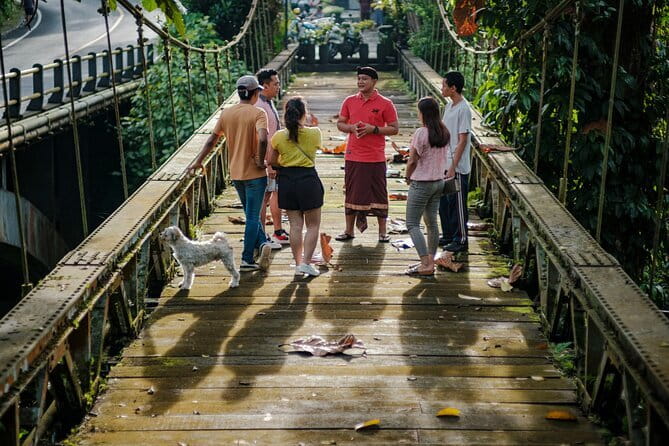
- Five meaningful stops: Visit Gunung Lebah Temple, Campuhan Ridge, Museum Puri Lukisan, Ubud Palace, and Puri Kantor.
- A small-group format: The maximum is eight people, making conversation with the guide easier.
- Museum entry included: The Rp 95,000 admission to Museum Puri Lukisan is covered.
- Special royal-compound access: The final stop offers entry to Puri Kantor, linked to Prince Tjokorde Gede Raka Sukawati.
- A true walking tour: The route includes steps, slopes, and imperfect sidewalks, not just flat streets.
- Bring a refillable bottle: The operator encourages water refills to reduce plastic waste in Bali.
Why this Ubud walk is more than a list of sights
At $28.36 per person, this is priced as an affordable half-day introduction to central Ubud. You are paying for a local English-speaking guide, museum entry, access to a Balinese compound, and three hours of explanation as you move between sites.
I see the value less in the number of stops than in the order. Gunung Lebah Temple gives you a religious starting point. Campuhan brings in the colonial past. Museum Puri Lukisan explains how art shaped Ubud’s international reputation. The palace then shows how royal life still connects with the town, before Puri Kantor gives you a more personal look at that world.
The listed stop times add up to about two hours, so the remaining time is used for walking, transitions, and conversation. That matters because Ubud’s streets can be slow to cross, and the route is not a quick hop between attractions. You should allow the full three hours rather than scheduling a tight appointment afterward.
This is not a food tour, shopping trip, or transportation service. It is a history and culture walk. If you want context for the buildings and ceremonies you see around Bali, the format works well. If you mainly want scenic viewpoints or free time to browse, parts of the tour may feel more structured than you need.
More walking tours in Ubud:
- Hikaria: Bali’s First Immersive Night Walk
★ 5.0 · 16 reviews - Myth of Pejeng Walking Tour
★ 5.0 · 6 reviews - UNESCO Sites Cultural Walking Tour in Bali
★ 5.0 · 4 reviews
Starting at Cantina Rooftop Restaurant
The meeting point is Cantina Rooftop Restaurant in UbudSayan. There is no accommodation pickup or drop-off, so you need to reach the start point yourself and arrange your own way back from Puri Kantor on Jalan Suweta.
That split between start and finish is useful to understand before booking. The tour does not return you to the restaurant, and the final address is different from the meeting point. Keep the end location saved on your phone, especially if you plan to continue sightseeing immediately afterward.
A mobile ticket makes entry simple, and confirmation is provided when you book. The tour is offered in English, with an Indonesian guide available. The small maximum of eight people should help the walk feel personal, though the exact guide depends on the day.
Wear shoes that handle steps and uneven pavement. Ubud is not presented here as a polished, flat pedestrian zone, and the operator is direct about steep gradients and patchy sidewalks. I would also carry a reusable water bottle, both for comfort and because the company encourages refills to cut down on plastic in Bali’s rivers.
Gunung Lebah Temple and Bali’s religious foundations
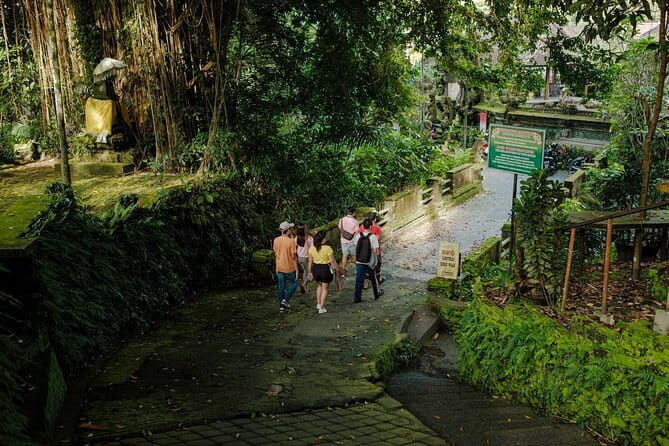
The first stop is Gunung Lebah Temple, described as Ubud’s oldest temple. You spend about 20 minutes outside the temple learning how Hinduism arrived in Bali and examining the features that give Balinese temples their character.
This is a smart opening. Rather than asking you to admire a gateway or courtyard without context, the guide explains the temple’s role in the local community. You’ll hear about architecture and religious practice at the same time, which helps you read later sights with more confidence.
The stop is not simply a photo break. Balinese temples are tied to community life, ceremonies, and family responsibilities, so the guide’s explanation gives physical details a social meaning. That is especially useful if you plan to visit more temples during your stay.
The practical catch is the footing. Historic religious sites can include uneven stairs, and the tour specifically warns that some temple steps cannot be altered. Take your time and use the available handholds if needed. Most people can take part, but this is not the best choice if climbing steps or walking for several hours is difficult.
Campuhan Ridge and the Dutch colonial chapter

The second stop lasts about 20 minutes and takes you to Campuhan Ridge Walk. The itinerary highlights a modest bridge dating from the Dutch colonial era, using it to explain Indonesia’s complicated relationship with colonial rule.
The focus here is not only scenery. You’ll hear about the Dutch East India Company and the way the Dutch encouraged certain forms of development and control. That gives you a wider frame for Ubud, which is often presented only through temples, rice fields, art, and wellness retreats.
This is one of the tour’s useful choices because it interrupts the idea that Bali’s past can be reduced to a simple, timeless tradition. The bridge is modest, but the subject is large. A good guide can connect an ordinary structure with the forces that shaped modern Indonesia, and the tour’s strongest comments describe guides such as Ira and Windari as clear, engaging storytellers.
The Campuhan section may also be where the walk feels most exposed to weather and uneven ground. The operator runs the tour in rain or sunshine, but severe conditions can affect the start time. In an intense downpour, you should expect a phone call before departure rather than assume the original timing is fixed.
A completely different kind of day out from Ubud:
- All-Inclusive Ubud Private Tour
★ 5.0 · 14,344 reviews - Best of Ubud Full-Day Tour with Jungle Swing
★ 5.0 · 8,571 reviews - Ubud: Monkey Forest, Jungle Swing, Rice Terrace, and Water Temple
★ 5.0 · 7,160 reviews - Best of Ubud 1-Day Private Tour
★ 5.0 · 4,451 reviews
Museum Puri Lukisan and the artists who changed Ubud

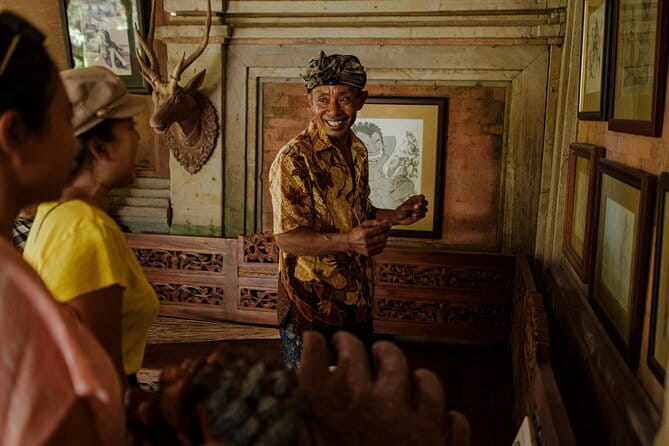
Museum Puri Lukisan receives the longest scheduled visit, about 45 minutes. Entry is included, with the stated admission value of Rp 95,000.
At Ubud’s oldest art museum, the guide explains the relationship between Balinese artists and Western artists during the 20th century. That exchange helped establish Ubud as an international art center, and it gives this stop a clear purpose beyond looking at paintings in quiet rooms.
I like this part because it connects local work with the people and ideas that helped carry it beyond Bali. You’ll get a better sense of why Ubud became associated with painting, patronage, and artistic exchange rather than treating the museum as a detached indoor stop.
Forty-five minutes is enough for an introduction, but not enough for a full museum study. If you already know the collection well, you may wish for more time. If you are new to Balinese art, the guided visit should help you understand what to look for without turning the museum into a lecture.
The museum also provides a break from the street. After temple steps and outdoor walking, an indoor cultural stop gives the pace some variety. Your guide can answer questions in the moment, which is more useful than trying to absorb unfamiliar artistic traditions from labels alone.
Ubud Palace and the public face of royalty

The next stop is Ubud Palace, where you spend about 15 minutes in the outer courtyards. The guide discusses the history and present-day role of Balinese royalty, along with palace architecture and traditional cremation rituals.
The short visit is best understood as an introduction rather than a full palace tour. You will see the outer areas and learn how royal families fit into Bali’s social and ceremonial life. The guide’s explanation is the main attraction here, since the time is limited.
The mention of cremation rituals adds an important layer. In Bali, ceremonies are not just private events hidden from public view, and royal compounds can help explain how family, status, religion, and community intersect. The subject may be unfamiliar, so having a guide frame it carefully is valuable.
Because the palace is a popular central sight, the stop may feel less quiet than the earlier temple or the final compound. Still, it works well in the route. After the museum’s artistic focus, the palace returns you to architecture, ceremony, and public history.
Puri Kantor and access to a Balinese royal compound

The final stop is Puri Kantor on Jalan Suweta, the palace of Tjokorde Gede Raka Sukawati, identified as the Prince of Ubud. The visit lasts about 20 minutes and includes special access to a Balinese compound.
This is the most distinctive part of the tour. A public palace courtyard can show you the formal side of royalty, while a compound visit can offer a closer look at how a royal household and its spaces are presented. The guide also explains Prince Tjokorde Gede Raka Sukawati’s role in shaping modern Ubud and his connection with the Pitamaha Foundation.
The Pitamaha Foundation matters because it ties royal support to the development of Balinese art. That link brings the day’s subjects together: religion, colonial history, artistic exchange, and Ubud’s royal family are not separate stories. They overlap.
The tour finishes here, not back at the starting restaurant. That can be convenient if Puri Kantor fits your next plan, but you need to manage your own onward transport. Check the address before you set out so you know where the walk ends.
What the guide adds to the experience
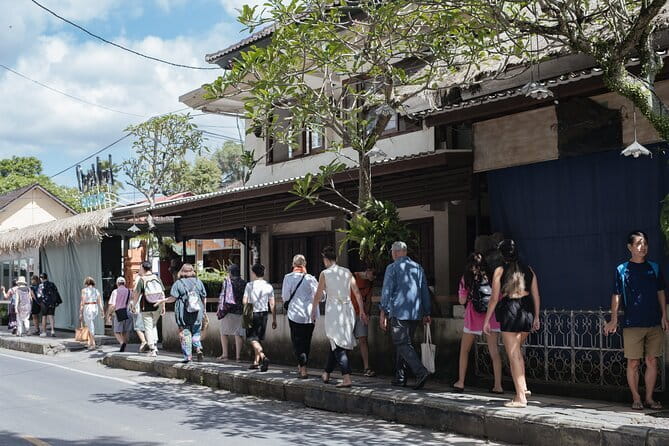
The guide makes or breaks a history walk, and the comments about Ira, Windari, Win, and Ilia point to the qualities you want: clear English, humor, patience, and an ability to answer questions without making the tour feel stiff.
Win is described as an especially warm host, while Windari is praised for an expert and funny style. Ira is noted for thoughtful, well-matched answers in English, and Ilia is remembered for being considerate while explaining important sites. These names do not guarantee who you will receive, but they show the kind of guide the operator aims to provide.
I would use the small group to ask direct questions. If you are curious about temple design, royal roles, colonial influence, or the connection between Ubud and art, this format gives you a better chance to ask than a large coach tour.
The Indonesian guide option may suit you if you prefer that language. The included local guide and guided interpretation are the main reason to choose this experience over walking the same streets alone.
Walking conditions, weather, and group size
You need to be comfortable walking in an urban setting for up to three hours. The route includes uneven temple stairs, steep gradients, and patchy sidewalks. Service animals are allowed, and the operator states that most people can participate, but the physical warnings should be taken seriously.
Rain does not automatically cancel the walk. The tour operates in wet weather, though severe conditions such as an intense downpour can affect the start time. Bring suitable protection and keep your phone available before departure in case the operator calls.
A maximum of eight people is a strong practical feature. It should be easier to hear the guide, easier to stop for questions, and less awkward when moving through narrow or uneven areas. It is still a walking group, not a private tour, so you should not expect the guide to set a completely individual pace.
The tour is near public transportation, but transfers are not included. That means your budget should include the cost of reaching Cantina Rooftop Restaurant and leaving Puri Kantor if you need transport afterward.
Who should book this Ubud experience?
I would choose this walk as one of my first activities in Ubud. It gives you a framework for the town, so later visits to temples, galleries, and royal sites have more meaning. The route suits you if you like history, art, architecture, and local explanation more than a checklist of photo stops.
It is also a good match if you prefer a compact group and want to speak with the guide. The repeated praise for storytelling, humor, and thoughtful answers suggests that the human side of the tour is a major part of its value.
You may want to skip it if three hours on foot sounds tiring, if you need step-free access, or if you want hotel transport included. It may also feel too short for you if your main aim is to study Museum Puri Lukisan in detail, since the museum visit is only one part of a wider route.
At $28.36, I consider it a fair buy for a guided introduction. The included museum ticket and special compound access help justify the price, while the small group keeps it from feeling like a mass sightseeing operation.
Should you book the Ubud Guided Walking Tour?
Book it if you want Ubud explained through its temples, colonial past, art, and royal connections. The strongest reasons are the carefully linked route, the small group of no more than eight, the included museum admission, and access to Puri Kantor.
Before paying, make sure you can handle steps, slopes, patchy sidewalks, and three hours of walking. Plan your own transport to the restaurant and from the final palace, bring a refillable bottle, and keep your schedule flexible in case heavy rain changes the start time.
Free cancellation is available up to 24 hours before the local start time. Inside that window, the amount paid is not refunded, and late changes are not accepted.
FAQ
How long is the Ubud Guided Walking Tour?
The tour lasts approximately three hours, including walking between the listed stops.
How much does the tour cost?
The stated price is $28.36 per person.
Where does the tour begin?
The meeting point is Cantina Rooftop Restaurant in UbudSayan, Ubud, Gianyar Regency, Bali.
Where does the tour end?
The tour ends at Puri Kantor, Jalan Suweta No. 1, Ubud, Kecamatan Ubud, Kabupaten Gianyar, Bali 80571.
Is hotel pickup or drop-off included?
No. You must make your own way to the starting point and arrange your own transport after the tour ends.
How many people can join?
The activity has a maximum of eight participants.
Is museum admission included?
Yes. Admission to Museum Puri Lukisan is included, with a stated value of Rp 95,000.
Is the tour available in Indonesian?
Yes. An Indonesian guide is available. The included local guide is also described as English-speaking.
Can I join if I use a service animal?
Yes. Service animals are allowed.
What happens if it rains?
The tour operates in rain or sunshine. Severe weather, such as an intense downpour, may affect the start time, and the operator will call before the tour if conditions are serious.
Can I cancel for a full refund?
Yes. You can receive a full refund if you cancel at least 24 hours before the experience start time. Cancellations and changes made within 24 hours are not refunded or accepted.
Newly added Ubud trips
- authentic Balinese organic cooking class in Ubud★ 5.0 · 4 reviews
- Farm-to-Table Balinese Cooking Experience★ 4.0 · 3 reviews
- Sunrise Jeep Tour Mount Batur Kintamani Bali★ 5.0 · 24 reviews
- coconut wine and coffee safary tour★ 5.0 · 16 reviews
- Nungnung Waterfall,Jatiluwih Heritage UNESCO and Bedugul Tour★ 5.0 · 5 reviews
- Bali Amazing Cycling Tour★ 5.0 · 4 reviews
- Authentic Balinese Cooking Class with Jewelry Making Class★ 5.0 · 3 reviews
- Bali Rural Village Bike★ 5.0 · 10 reviews
Ubud Walking Tours, compared.




Browse the lists this tour appears in