
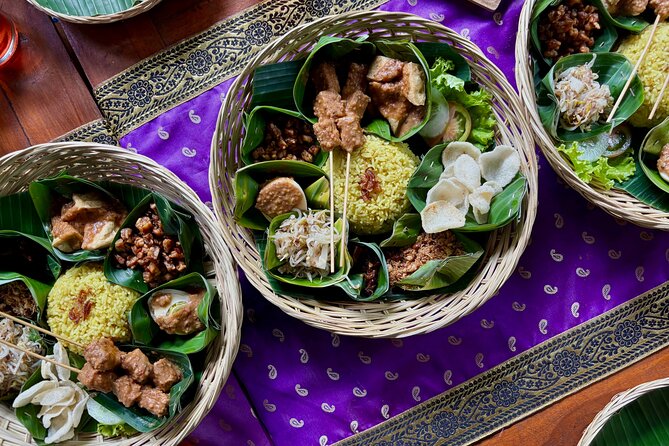
Reviewed · UBUD FOOD TOURS
Ubud Food and Cultural Tour
Ubud’s best food story is told one plate at a time. This three-hour walking tour links six stops and 10 dishes, moving from noodle soup and jackfruit curry to nasi kuning, Asian fusion tacos, cakes, and a tea ceremony. It gives you a quick but broad look at how Balinese cooking meets outside influences.
I like the small maximum of 10 people, which should make it easier to hear the guide and share dishes without feeling lost in a crowd. I also like the unusual range of stops, including a dessert shop that supplies sweets to top restaurants and a tea ceremony at Panda Tea Café. The main drawback is the fixed three-hour format: you get a useful taste of Ubud, but not a slow meal at every stop.
Key points
- Six stops, 10 dishes: You sample a wide spread of Ubud food rather than eating one large meal.
- A mix of old and new: Expect traditional dishes such as jackfruit curry and nasi kuning alongside Asian fusion tacos.
- Central Ubud route: The tour begins at Mudra Cafe on Jalan Goutama and ends at Panda Tea Café in Peliatan.
- Dessert with a story: One stop is a sweets shop that supplies cakes to leading restaurants.
- Tea ceremony finale: The final stop adds a calm cultural note after the food tasting.
- Small group size: The tour accepts no more than 10 people, with food and refreshments included.
What the Ubud food tour is really about
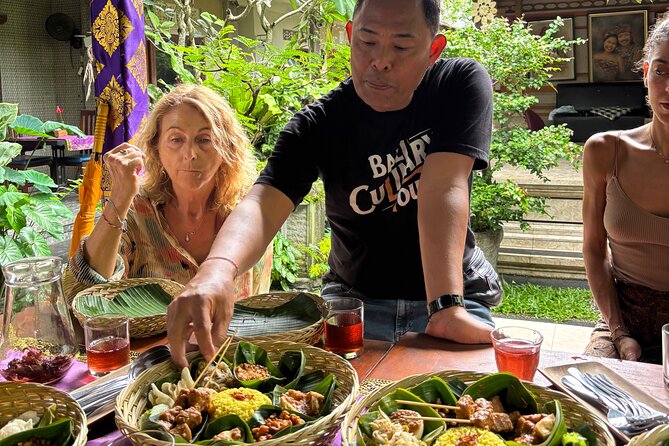
This experience is less about sitting down to one grand Balinese feast and more about understanding Ubud through its food businesses. In three hours, you move among six places, trying 10 dishes that show the town’s mix of local cooking, Asian flavors, modern presentation, and international ideas.
That format works well if you are new to Ubud. Instead of guessing which restaurant deserves your time, you get a guided introduction to several different styles. You can note the places that appeal to you and return later for a full meal.
The tour also gives food a cultural setting. You are not simply handed samples and sent along. Each stop has its own story, and the guide explains local food, culture, and the history of Ubud as you go. Since the group is limited to 10 people, you should have a reasonable chance to ask questions and keep up with the conversation.
There is a useful balance here. Some stops focus on familiar local flavors, while others show how Ubud’s food scene has changed. That makes the tour a good match for curious eaters who want context, not just a list of dishes.
More food tours in Ubud:
- Bali Food Tour: Savor Street Food and Night Market Adventures
★ 5.0 · 46 reviews - Ubud Sunset Mixology Tour by TikiBus
★ 5.0 · 22 reviews - Plant Based Food Tour in Ubud
★ 5.0 · 11 reviews
Starting at Mudra Cafe at 11 a.m.
The meeting point is Mudra Cafe, at Jl. Goutama Sel. No. 21 in central Ubud. The start time is 11 a.m., a practical hour for a food walk. You are not rushing out at dawn, but you still have much of the day left afterward.
Arrive with enough time to find the cafe and settle in. The tour is arranged around several tastings, so a light breakfast makes sense. You do not want to begin completely full, especially with 10 dishes ahead.
The central location is helpful if you are staying near Ubud’s main streets. The supplied details do not promise hotel pickup, so plan to reach Mudra Cafe on your own. A mobile ticket is provided, which makes check-in straightforward once you reach the starting point.
The route ends at Panda Tea Café, at Jl. Sukma Kesuma No. 32 in Peliatan. This is not the same place as the start, so remember that you will need to arrange your return from the end point. The tour provider can help you book a Gojek or call a taxi, which is useful if you are unfamiliar with local transport.
Six stops that show two sides of Ubud cooking
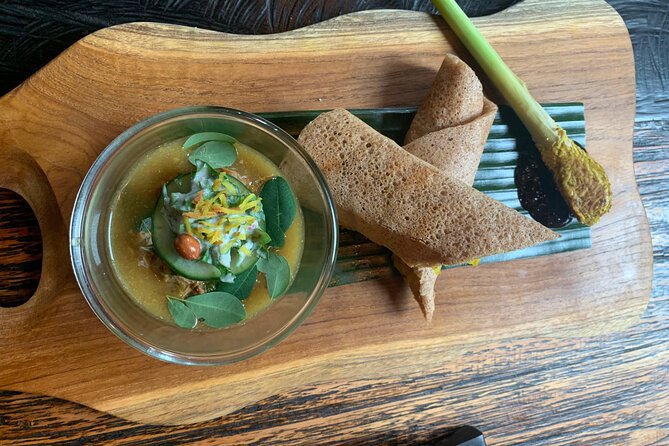
The exact order of every dish is not specified, but the food list gives you a clear sense of the range. You can expect the experience to move between local staples, Asian flavors, and sweets.
Noodle soup for a strong opening
One stop features what the tour presents as the best noodles in town. The important point is not only the bowl itself. Noodle soup gives you a direct introduction to the comfort-food side of Ubud cooking, where broth, noodles, toppings, and seasoning need to work together.
This is also the sort of dish that can help you understand local eating habits better than a carefully styled restaurant plate. Ask the guide what makes the soup special and how it fits into daily food culture. Since the tour is built around tasting rather than full portions, you can enjoy the dish without letting it fill you too early.
The possible limitation is simple: people who dislike soup or noodles may find this stop less exciting. For most diners, though, it offers a solid first taste and a useful point of comparison with the later dishes.
More village and culture days around Ubud:
- Balinese Life Style Tour
★ 5.0 · 150 reviews - Private Tour to Trunyan Village “Skull Island of Bali”
★ 5.0 · 73 reviews - Trunyan Cemetery, Hot Spring, Penglipuran Village, and Waterfall Tour
★ 5.0 · 65 reviews - Besakih Temple Tour – Traditional Bali Village – All Inclusive
★ 5.0 · 46 reviews
Jackfruit curry and traditional Balinese flavor
Jackfruit curry brings the tour closer to traditional Indonesian cooking. Jackfruit is often valued for its texture, especially in dishes where it takes the place of meat, and curry gives the fruit a savory, spiced setting.
This stop matters because it shows how a plant-based ingredient can carry a dish. You are not only trying something sweet or tropical. You are tasting a preparation shaped by seasoning and cooking technique.
The supplied details do not identify the exact spices or recipe, so do not expect a formal cooking lesson. Still, the guide’s explanation of food and culture should help you understand why the dish belongs in a tour of Ubud’s local flavors.
Nasi kuning, a familiar Indonesian classic
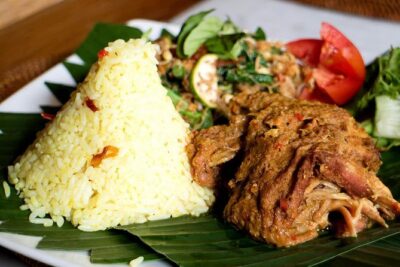
Nasi kuning is another traditional touch. Its yellow color and fragrant preparation make it easy to recognize, but the value of tasting it on this route is the chance to place it beside the more modern dishes.
A food tour can sometimes overwhelm you with unfamiliar items. Nasi kuning provides an anchor. It gives you a recognizable Indonesian rice dish before the route moves into more unusual combinations.
Pay attention to how it is served and what accompanies it. The available information does not list the full preparation or side dishes, so the guide is your best source for the details. This is one reason a small group helps: you can ask about ingredients without holding up a large crowd.
Asian fusion tacos and Ubud’s newer food scene
Asian fusion tacos show the other side of Ubud’s dining culture. They are not presented as an old Balinese specialty. Instead, they reflect the way local cooks and restaurant owners combine ideas from different food traditions.
This stop is useful if you want to see why Ubud appeals to more than fans of traditional Indonesian food. The town’s restaurants also experiment with format, presentation, and international flavors. The tacos give the tour a change of pace and keep the meal from feeling repetitive.
Some people come to Bali hoping every bite will be strictly local. If that is your goal, this stop may feel less important. I see it as a fair part of the story, since the tour openly presents Ubud as a place where tradition and new influences meet.
Cakes from a dessert supplier
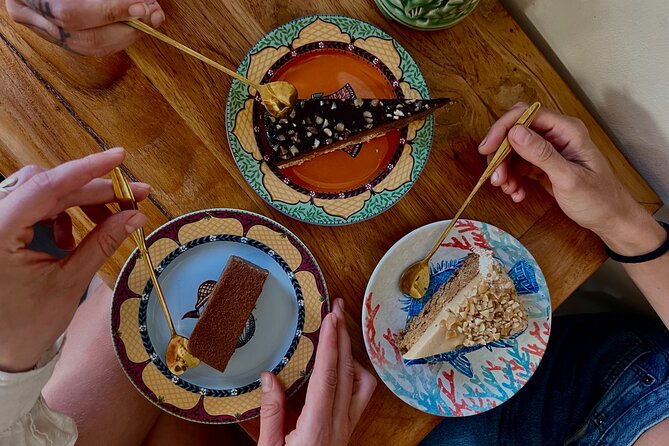
The dessert stop adds an especially interesting detail: this shop supplies cakes to top restaurants. That makes it different from a standard pastry tasting. You are getting a look at the food network behind the dining room, where a specialist may produce sweets that appear elsewhere under another restaurant’s name.
This kind of stop is valuable because it takes you away from the obvious restaurant circuit. You see how a town’s food scene depends on small specialist businesses, not only on the places with the most visible signs.
The available information does not list the exact cakes or flavors, so keep your expectations open. If you have allergies or strict dietary needs, ask the provider before booking. The tour description confirms that food and refreshments are included, but it does not provide an ingredient or allergy menu.
Panda Tea Café and the closing ceremony
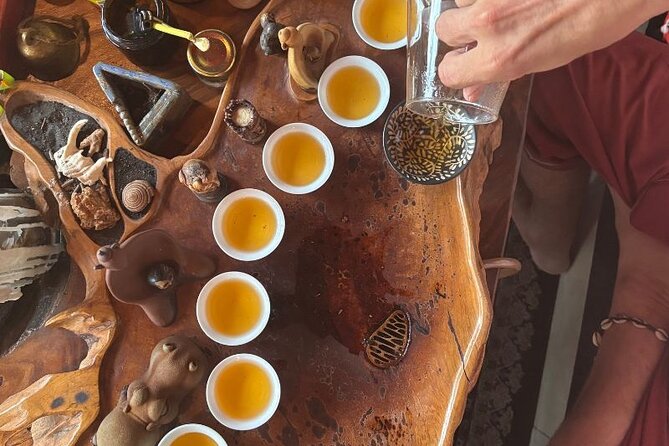
The final stop is Panda Tea Café, where the tour ends with a tea master ceremony. This gives the experience a slower finish after several tastings and walking stops.
A tea ceremony can be easy to dismiss as decoration, but here it serves a useful purpose. Food tours often rush from one bite to the next. Ending with tea gives you time to reflect on the different flavors and on the cultural ideas that have shaped Ubud’s food scene.
The ceremony is also the clearest cultural feature in the schedule. You are not only sampling dishes. You are watching a formal approach to tea preparation and service. The details of the ceremony are not provided, so the guide will need to explain what you are seeing.
Why the small group matters
The maximum group size is 10 people. That is small enough to make a real difference on a walking food tour.
At each stop, you should have a better view of the food and a better chance to hear the guide. Questions are easier to ask, and the group can likely move between places without the awkward stop-and-start rhythm of a large tour.
A small group does not guarantee a private experience. You are still sharing the route with other people, and the tour runs on a set schedule. But the size is a strong feature for anyone who values conversation and personal attention.
The tone described for the experience is friendly and informal, with the guide helping the group feel more like a meal shared with friends. The guide names are not provided, so I would not book this expecting a particular host. Book it for the structure, food selection, and small-group setting.
What the $69 price includes
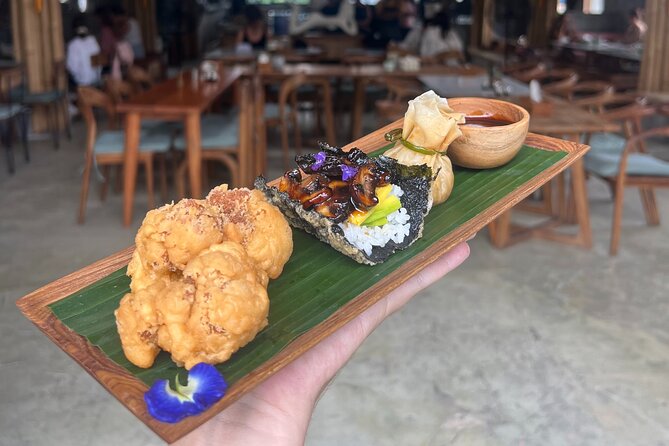
At $69 per person, the tour is not the cheapest way to eat in Ubud. You could order individual dishes for less if you already know where to go. The value comes from having six stops selected for you, receiving 10 tastings, and getting food explanations along the way.
All food and refreshments are included in the ticket price. That matters because you do not have to keep calculating costs at every stop. You are paying for the food, the route, the guide’s local knowledge, and the planning behind the sequence.
The dessert supplier and tea ceremony also add value beyond a simple restaurant crawl. These are the sorts of details that can be hard to find on your own, especially during a short stay.
Still, $69 makes the tour a better choice for people who want variety and guidance than for people focused only on the lowest food cost. If you are a light eater, 10 dishes may be plenty. If you are hoping for one large, leisurely lunch, this is not the right format.
Timing, walking, and practical limits
The full experience lasts about three hours. Because it includes six stops, the pace is likely active. You should expect to walk between food venues in central Ubud, although the exact distances are not provided.
Wear comfortable shoes and avoid arriving overfed. Bring water if you normally need it while walking, even though refreshments are included. Ubud’s streets can make a short route feel slower than it looks on a map, so leave room in your schedule after the tour rather than booking a tight afternoon appointment.
The start and end points are different. Begin at Mudra Cafe and finish at Panda Tea Café in Peliatan. The provider can assist with a Gojek or taxi at the end, but transport to the first cafe and onward travel after the tour are not included in the stated price.
Most people can participate, and the tour is capped at 10 people. The available details do not describe wheelchair access, exact walking distances, dietary substitutions, or specific allergy procedures. If any of those matter to you, contact Bali Culinary Tours before booking.
You receive confirmation when you book, and the ticket is mobile. Cancellation is free if you cancel at least 24 hours before the 11 a.m. start time. A cancellation or change made less than 24 hours ahead is not refundable.
Who should book this Ubud food experience?
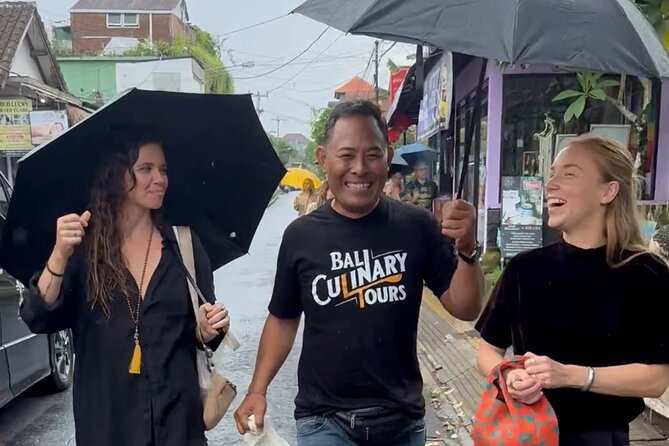
I would choose this tour for a first stay in Ubud, especially if you want a fast introduction to local food without spending days researching restaurants. It also suits people who enjoy trying many small portions and learning why a dish matters.
It is a good pick for couples, friends, and solo diners who like conversation. The limit of 10 people keeps the group from becoming unwieldy, and the range of dishes gives everyone several chances to find something new.
Families may also like the variety, but picky eaters should think carefully. The menu includes noodles, curry, rice, tacos, cakes, and tea, but the exact ingredients and portion sizes are not listed.
I would skip it if you want a private tour, a single long meal, or a strictly traditional Balinese menu. The inclusion of fusion tacos and modern dessert culture is intentional. That mix is a benefit if you want the present-day food scene, but less so if you want only classic dishes.
Should you book the Ubud Food and Cultural Tour?
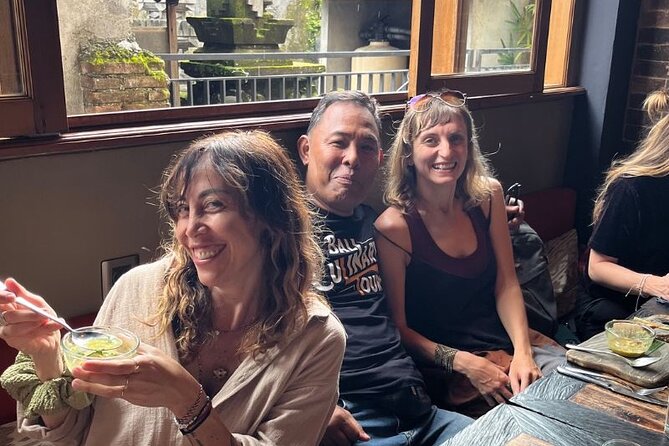
Book it if you want many tastes in a short time, a small group, and a guide who can connect food with Ubud’s culture. The strongest features are the carefully varied six-stop route, the 10 included dishes, the specialist dessert shop, and the tea ceremony finish.
At $69, the price is justified by the amount of food and the planning involved, though it is not a bargain meal. Go in expecting tastings rather than a long lunch, arrive hungry but not stuffed, and plan your ride home from Panda Tea Café.
If those conditions fit your plans, this is a practical way to get your bearings around Ubud’s food scene and find places you may want to revisit on your own.
FAQ
How long does the Ubud Food and Cultural Tour last?
The tour lasts approximately three hours.
What time does the tour start?
It starts at 11 a.m.
Where does the tour begin?
The meeting point is Mudra Cafe, Jl. Goutama Sel. No. 21, Ubud, Bali 80571, Indonesia.
Where does the tour finish?
The tour ends at Panda Tea Café, Jl. Sukma Kesuma No. 32, Peliatan, Ubud, Bali 80571, Indonesia.
How many dishes are included?
The experience includes 10 dishes across six food stops. Food and refreshments are included in the ticket price.
What foods are featured?
The tour includes noodle soup, jackfruit curry, Asian fusion tacos, nasi kuning, cakes, and other dishes. It also ends with a tea ceremony.
How large is the group?
The tour accepts a maximum of 10 people.
Can I cancel for a full refund?
Yes. You can cancel for a full refund up to 24 hours before the experience start time. Cancellations or changes made less than 24 hours before the start are not accepted or refunded.
More heritage and history days around Ubud
- Crafting Heritage Batik Painting Workshops
★ 5.0 · 164 reviews - Ulun Danu Beratan Temple – Tanah Lot Temple Tour by UNESCO World Heritage
★ 5.0 · 74 reviews - BALI ATV Kuber Through Historic Tunnel and Scenic Waterfalls
★ 5.0 · 34 reviews - Royal Karangasem Heritage Tour
★ 4.5 · 29 reviews
Newly added Ubud trips
- authentic Balinese organic cooking class in Ubud★ 5.0 · 4 reviews
- Farm-to-Table Balinese Cooking Experience★ 4.0 · 3 reviews
- Sunrise Jeep Tour Mount Batur Kintamani Bali★ 5.0 · 24 reviews
- coconut wine and coffee safary tour★ 5.0 · 16 reviews
- Nungnung Waterfall,Jatiluwih Heritage UNESCO and Bedugul Tour★ 5.0 · 5 reviews
- Bali Amazing Cycling Tour★ 5.0 · 4 reviews
- Authentic Balinese Cooking Class with Jewelry Making Class★ 5.0 · 3 reviews
- Bali Rural Village Bike★ 5.0 · 10 reviews
Ubud Food Tours, compared.

Bali Food Tour: Savor Street Food and Night Market Adventures
Read our review →

Browse the lists this tour appears in