
Reviewed · UBUD ART AND CRAFT WORKSHOPS
Crafting Heritage Batik Painting Workshops
Batik is not a quick paint-and-go craft. At Five Arts Studio, you sketch a design, apply hot wax by hand, add dye in stages, and accept a few happy accidents along the way. I like the hands-on process and the chance to see a working Balinese artist’s family compound rather than a polished tourist shop. The staff, including instructors such as Dika and Agong, guide beginners without taking over.
I also like the relaxed pace. You can work independently or ask for close help, and tea, coffee, water, and snacks are included. The main consideration is patience: wax can drip, color can spread, and the finished piece may not look exactly like your first sketch. That is part of the craft, but perfection-minded artists may find it frustrating.
Key points to know before you book
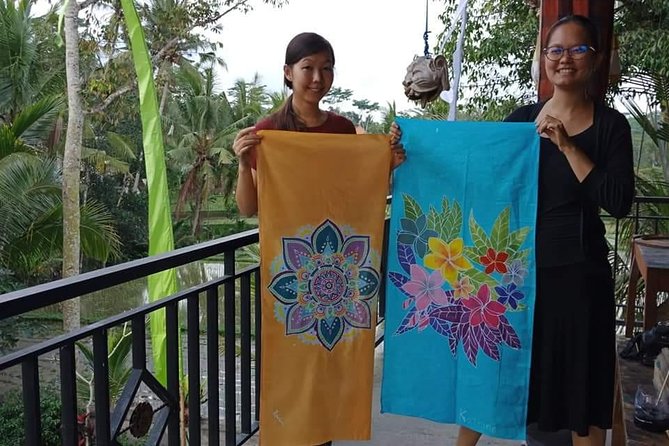
- You make the entire piece yourself: Sketch, wax, dye, and finish your own fabric under guidance.
- The setting is a family compound: Five Arts Studio sits on Jl. Raya Keliki, outside central Ubud, in a casual working studio.
- Beginners are welcome: You do not need drawing experience, and the instructors help children and first-time artists through each stage.
- Plan on about three hours: This is a proper craft session, not a short demonstration.
- The $29 price includes materials and refreshments: You leave with an original batik creation, plus coffee or tea, water, and snacks.
- Cancel for free up to 24 hours ahead: Changes or cancellations inside the final 24 hours are not refundable.
Why this three-hour craft class is worth your time
Ubud has no shortage of art activities, but many leave you with something bought from a shelf. This one gives you a slower connection to the work. You handle the tools, make design choices, and see how a plain piece of cloth becomes a patterned artwork.
Batik is made by using wax as a barrier. The wax keeps dye from reaching selected sections of the fabric. Once the wax is removed, the covered lines or areas remain in their earlier color, creating the familiar outlined effect.
That simple explanation becomes much clearer when you try it yourself. The wax has to be applied with care, and a small drip can change a design. The dyes also need a light touch. This is why the class is more rewarding when you stop trying to make a perfect copy of your original plan.
I see the workshop as a good balance between instruction and freedom. The team can help you choose or adapt a design, but you still make the important decisions. You can work from one of the studio’s suggestions or bring your own idea and add your personal touches.
More craft workshops in Ubud:
- Ubud Monkey Forest Silver Class – Craft Your Own Silver Jewelry
★ 5.0 · 254 reviews - Threads of Tradition Miniature Keliki Painting Workshops
★ 5.0 · 46 reviews - Exclusive Ubud Jewelry Making: Craft with a Pro Silversmith!
★ 5.0 · 37 reviews
Arriving at Five Arts Studio outside Ubud
The meeting point is Five Arts Studio on Jl. Raya Keliki in Keliki, Tegallalang, Gianyar. The activity begins and ends there, so you need to arrange your own way to the studio unless your wider Bali plans already place you nearby.
The studio is described as a casual but comfortable space within a family home compound. That setting matters. You are not simply sitting in a classroom designed for short tourist sessions. You get a glimpse of how an artist works within a Balinese family environment, with the studio functioning as both a creative workspace and a place of daily life.
The atmosphere is relaxed rather than formal. If you arrive early, the team can offer tea while you wait. The setting is suited to a quiet afternoon, especially if you want a break from Ubud’s busy center.
The group limit is 30 people. That is a fairly large maximum, though the actual feel of the class can depend on the day. A small class may give you more one-to-one help. One solo participant received individual instruction, while family groups and mixed-age sessions also fit comfortably into the workshop’s style.
The first stage: choosing and sketching your design
The class starts with an introduction to batik and the basic process. You then select a design or sketch your own. The available patterns range from simple outlines to more detailed motifs, so you can choose a project that matches your patience and confidence.
This is a useful point to be honest with yourself. If you are new to drawing, a simpler design will give you more room to focus on the wax and dye. If you already enjoy art, you can bring a stronger personal idea and make the piece your own.
The studio team is happy to suggest motifs. You are not left staring at a blank cloth with no idea where to begin. At the same time, the process does not force everyone into an identical design.
Young artists can take part, too. Agong has helped a six-year-old through the process, which gives you a good sense of the class’s family-friendly approach. Children will still need attention around hot wax and dyes, but the activity can work well for a family afternoon.
Applying hot wax, the part that requires patience
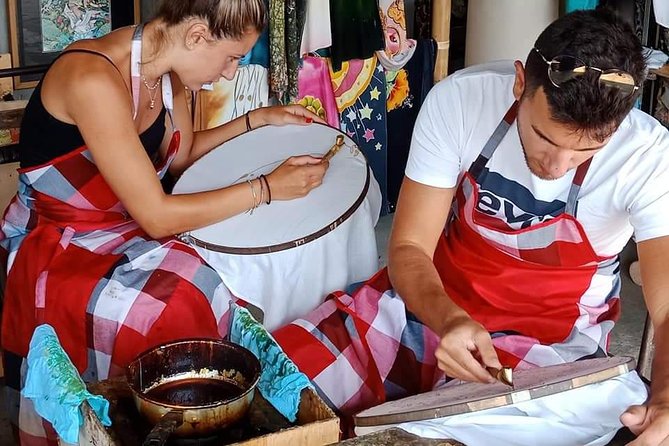
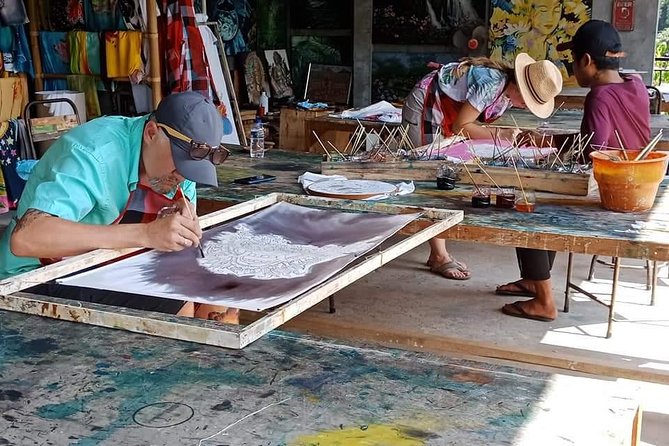
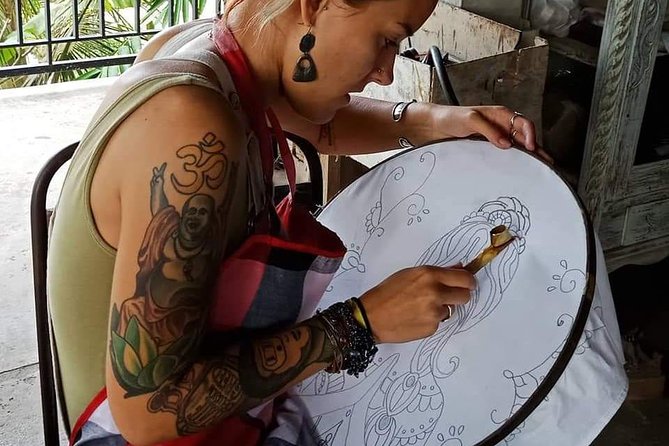
After you have a design, you trace it onto the fabric with hot wax. This is the technical heart of the workshop. The wax forms the lines that block later color, so careful application helps keep the design clear.
It is also where the class becomes more difficult than it first appears. A wax drop in the wrong place cannot always be ignored, and steady hands help. You should expect a learning curve instead of a flawless first attempt.
The instructors demonstrate the method and then let you try. They can correct your technique, point out where more wax is needed, and help you recover when a line goes astray. The best approach is to accept guidance without giving up control of the artwork.
I like that the teaching style leaves room for mistakes. The staff encourages you to keep going rather than treating every error as a failure. The finished cloth is meant to be your work, not a sample produced by the instructor while you watch.
More heritage and history days around Ubud:
- Ulun Danu Beratan Temple – Tanah Lot Temple Tour by UNESCO World Heritage
★ 5.0 · 74 reviews - BALI ATV Kuber Through Historic Tunnel and Scenic Waterfalls
★ 5.0 · 34 reviews - Royal Karangasem Heritage Tour
★ 4.5 · 29 reviews - Private Jatiluwih Rice Terraces Heritage Site and Culture Tour
★ 5.0 · 21 reviews
Adding dye and watching the pattern take shape
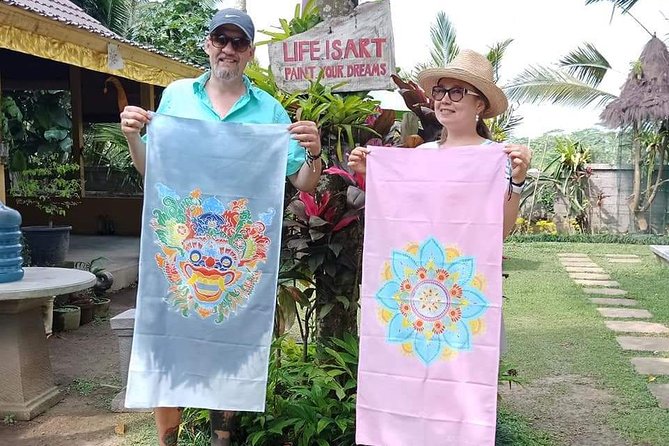
Once the wax is in place, you add colorful dyes to selected areas. This is where the artwork starts to show personality. You can use the suggested color ideas or make your own choices, including blended colors.
Color blending gives you a little more creative freedom, but it also adds another layer of uncertainty. Dye can spread differently from what you expect, particularly if you are aiming for crisp areas. A calm hand and a willingness to adjust the plan will serve you better than trying to control every millimeter.
The studio team guides you through the stages, so you are not expected to know the order of operations in advance. The experience is suitable for a beginner precisely because the complicated parts are broken into manageable steps.
The process also helps explain why handmade batik takes time. You see how a design depends on several careful actions, not just the final splash of color. Even a small piece represents planning, tracing, waxing, dyeing, and finishing.
What you take home at the end
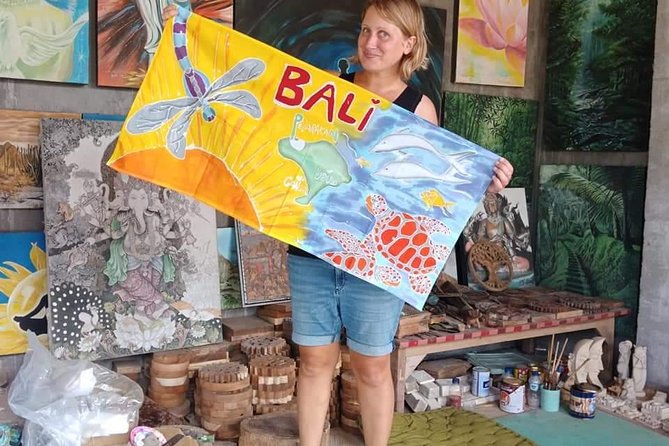
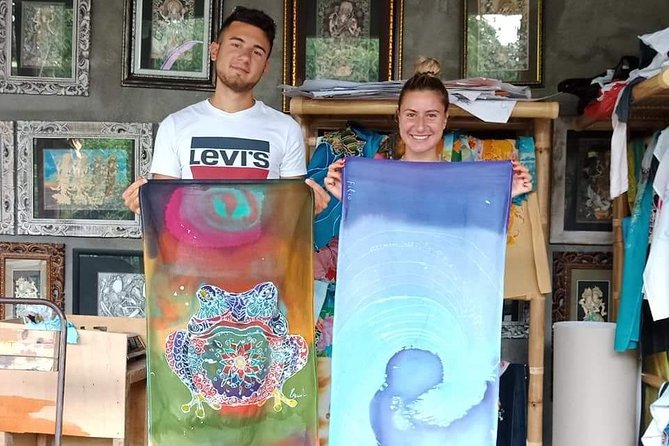
The strongest practical benefit is that you leave with your own fabric artwork. It is not a generic souvenir from a market stall. Its uneven lines, color choices, and small surprises record the afternoon you spent making it.
You should not expect a museum-quality textile after one three-hour class. The point is to learn the method and produce something personal. A slightly imperfect line may be the part that reminds you how hot wax behaved or where you changed your plan.
The finished piece is also easier to value because you understand the labor behind it. After trying batik, you are likely to look differently at larger, more detailed examples in Bali’s galleries and shops.
The class supplies the materials you need. Drinks and snacks are included, with coffee, tea, and mineral water available during the session. Local food can be ordered for an additional cost if you want something more substantial, while alcohol is available to purchase but is not included.
The instructors and the tone of the teaching
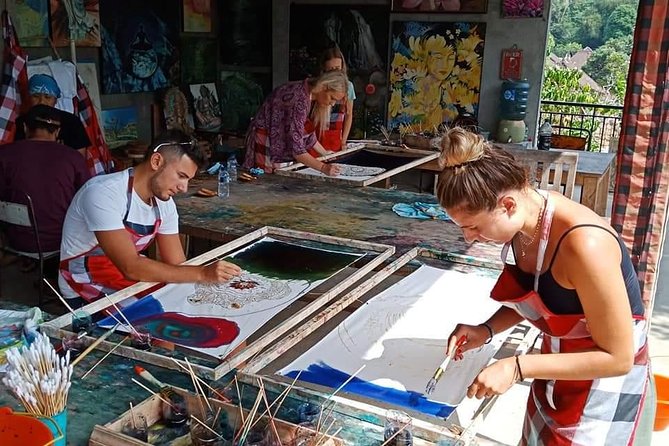
The experience is run by a master artist and a small team of instructors. Dika and Agong are names connected with the hands-on teaching, and the class style is patient, friendly, and practical.
You can choose how much help you want. If you prefer to work alone after the demonstration, you have that freedom. If you want someone beside you for each stage, ask. This flexibility is important because a confident adult artist and a nervous beginner need different kinds of support.
The instructors also explain the cultural background of batik rather than treating it as a random painting exercise. The introduction is brief, but it gives the craft a useful context before you begin.
English-language instruction is available. One participant specifically found the teacher’s English clear and the directions easy to follow. Still, the work itself is visual, so you can learn by watching as well as listening.
Is $29 good value?
At $29 per person, I consider this a strong value if you want an activity rather than a passive sightseeing stop. The fee covers the class, art materials, guidance, refreshments, and a handmade souvenir. You also get about three hours of structured creative time.
The value is less about the retail price of the finished cloth and more about the experience of making it. If you only want a cheap souvenir, a market purchase will take less time and effort. If you want to understand a traditional technique and create something tied to your Bali visit, the workshop offers more.
The price also compares well with the amount of personal help available. You can work independently, but the instructors step in when you need them. Families may find the cost worthwhile because several age groups can take part in one shared activity.
Lunch is not included. You can order local food at the studio, but plan for that as an extra expense. Alcohol is also separate.
Who will enjoy this most?
I would recommend the class to adults, families, couples, and solo visitors who enjoy making things with their hands. You do not need to call yourself an artist. In fact, the session works well for people who want a creative activity but feel unsure about their drawing ability.
It is especially suited to you if:
- You want an original souvenir rather than a store-bought object.
- You enjoy learning a traditional craft through practice.
- You like a peaceful studio setting.
- You are happy to accept a few imperfect lines.
- You are visiting Ubud with children who can follow guidance around hot wax.
- You want a slower half-day activity with refreshments included.
It may not suit you if you want a polished finished product with no effort, or if you dislike activities that require steady attention. The class is relaxing, but it is not completely passive.
The activity notes recommend a strong level of physical fitness. You should also remember that service animals are allowed and the site is near public transportation. Those details may help with planning, although the experience itself remains a seated, hands-on art activity.
Timing, group size, and planning advice
Set aside roughly three hours. Do not book this as a rushed stop between tightly timed activities. Waxing and dyeing are the main event, and the class works best when you allow the process to unfold.
Because the maximum group size is 30, ask yourself how much personal help you prefer. The studio can handle families and larger groups, while a quieter day may feel more personal. If you are especially nervous about the technique, tell the instructor early that you want close guidance.
The meeting point is also worth checking carefully. Five Arts Studio is outside central Ubud in Keliki, not in the middle of the main town streets. Build in enough time to reach Jl. Raya Keliki and return to your accommodation or next stop.
Mobile tickets are supported, and confirmation is provided when you book. Free cancellation applies if you cancel at least 24 hours before the local start time. Inside that window, the payment is not refunded, and changes are not accepted.
My verdict: should you book it?
Book this workshop if you want to spend part of your Bali visit making something rather than only looking at things. The family-compound setting, patient instructors, flexible level of help, and finished batik piece give the experience a personal feel.
Go in with realistic expectations. Your cloth may include a wayward wax mark or an unexpected color blend. That is not a flaw in the experience. It is the visible record of learning a demanding craft in one afternoon.
At $29, the combination of instruction, materials, refreshments, and a personal souvenir is convincing. I would choose it for a relaxed Ubud day, especially for families, first-time artists, and anyone who wants a practical connection to Indonesian culture.
FAQ
Where does the batik workshop take place?
The class takes place at Five Arts Studio, Jl. Raya Keliki, Keliki, Tegallalang, Gianyar, Bali 80561, Indonesia.
How long does the experience last?
The workshop lasts approximately three hours.
Does the activity begin and end at the same place?
Yes. The activity ends back at the Five Arts Studio meeting point.
What will I make during the class?
You will create your own batik fabric art by sketching a design, applying hot wax, and adding colorful dyes.
Are materials included?
Yes. The materials needed to make your batik piece are included.
Are food and drinks included?
Coffee, tea, mineral water, and snacks are included. Lunch can be ordered separately, and alcohol is available to purchase.
Do I need previous art experience?
No. The class is suitable for beginners as well as people with more artistic experience.
Can children take part?
Yes. The class can work for families, and the instructors have helped young children through the process. Hot wax means children need suitable adult supervision.
How many people can join the activity?
The maximum group size is 30 people.
Can I cancel for a full refund?
Yes, if you cancel at least 24 hours before the experience start time. Cancellations or changes made less than 24 hours before the start time are not refunded.
Newly added Ubud trips
- authentic Balinese organic cooking class in Ubud★ 5.0 · 4 reviews
- Farm-to-Table Balinese Cooking Experience★ 4.0 · 3 reviews
- Sunrise Jeep Tour Mount Batur Kintamani Bali★ 5.0 · 24 reviews
- Bali Amazing Cycling Tour★ 5.0 · 4 reviews
- coconut wine and coffee safary tour★ 5.0 · 16 reviews
- Nungnung Waterfall,Jatiluwih Heritage UNESCO and Bedugul Tour★ 5.0 · 5 reviews
- Authentic Balinese Cooking Class with Jewelry Making Class★ 5.0 · 3 reviews
- Bali Rural Village Bike★ 5.0 · 10 reviews
Ubud Art and Craft Workshops, compared.
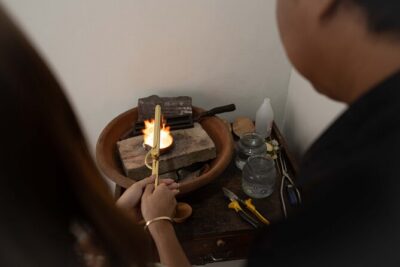
Ubud Monkey Forest Silver Class – Craft Your Own Silver Jewelry
Read our review →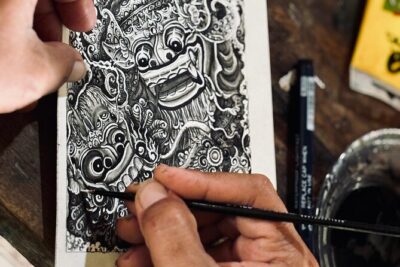
Threads of Tradition Miniature Keliki Painting Workshops
Read our review →
Exclusive Ubud Jewelry Making: Craft with a Pro Silversmith!
Read our review →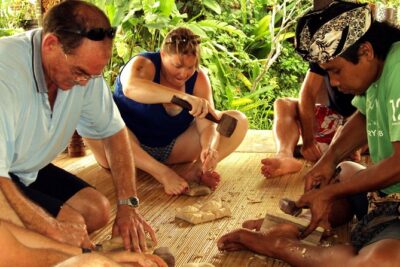
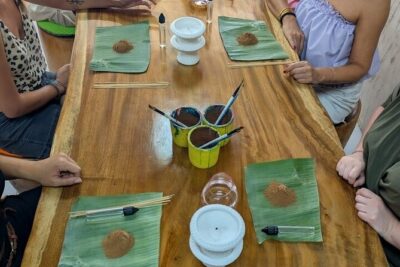
Incense Making Workshop. Create Incense From Scratch!
Read our review →

Browse the lists this tour appears in