
Reviewed · UBUD FOOD TOURS
Half-Day Ubud Heritage Food Tour
The best part of this Ubud food tour is the link between market ingredients and the finished dish. You start near Ubud Palace, see the seasonings and produce used in Balinese cooking, then head toward the countryside where farming helps put those ingredients in context.
I like the small group of eight or fewer, and I like that the food is not treated as a parade of random bites. You get stories about religion, tradition, spices, and preparation while sampling seven or eight types of food. The main caution is practical: the meeting point is Ubud Palace, and the details about hotel transport conflict, so confirm pickup before you book.
Key points to know
- Seven to eight food tastings: Expect enough food to function as breakfast, not just a few samples.
- Ubud Palace meeting point: The stated start is 8 am at Jl. Raya Ubud No. 8.
- Market to countryside route: You see local seasonings, traditional foods, farming areas, and paddy fields in one morning.
- Small-group format: The maximum is eight people, which leaves more room for questions.
- Vegetarian and vegan choices: Tell the provider about food restrictions before the tour.
- Transport needs checking: Shared transportation is included between food stops, but hotel pickup and drop-off are listed inconsistently.
Starting at Ubud Palace for a Balinese breakfast
This is a five-hour morning outing, beginning at 8 am at Ubud Palace. The early start makes sense for a food tour. You can eat through the morning, see the market before the day gets too hot, and still have much of the afternoon free.
You should plan to arrive at the palace meeting point with a little time to spare. The tour ends back at the meeting point, so it is easy to pair with other plans in central Ubud. The stated duration does not include pickup or drop-off time, which matters if transport is arranged separately.
The tour is built around breakfast-time eating rather than a formal cooking class. You are not simply shown a plate and sent on your way. The guide explains how Balinese food connects with Hindu beliefs, household customs, seasonings, and daily life. That wider setting gives each tasting more meaning.
The group limit is eight people. That is small enough for you to ask about unfamiliar ingredients or request clarification when a dish is strongly seasoned. It also helps when moving through a market, where a large group can become awkward quickly.
More food tours in Ubud:
- Bali Food Tour: Savor Street Food and Night Market Adventures
★ 5.0 · 46 reviews - Ubud Sunset Mixology Tour by TikiBus
★ 5.0 · 22 reviews - Ubud Food and Cultural Tour
★ 5.0 · 12 reviews
Reading Balinese food at the local market
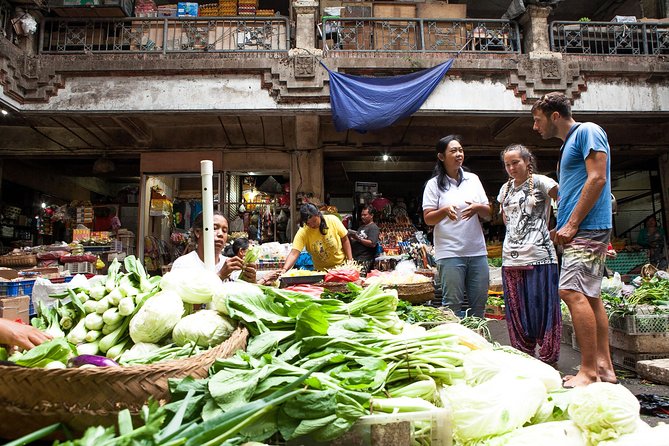
The market is the first important stop because it introduces the building blocks of the meal. You learn about Balinese food seasonings traded there and how those ingredients are combined to create the strong flavors found in local cooking.
The useful point here is not just identifying a spice. Your guide helps connect the ingredient to preparation and eating. You can see how a seasoning moves from a market stall into a dish, then learn why it suits the food served with it.
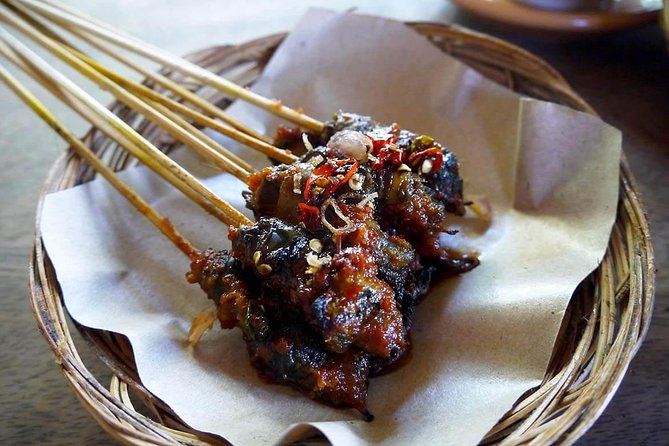
Expect tastings at or around the market, including traditional cakes and satay. The exact selection can vary, but the experience is designed to show more than one side of Balinese food. There are savory bites, sweet items, and dishes that rely on spice blends rather than a single dominant ingredient.
The satay is described as a rare traditional tasting, which gives this part of the tour extra interest for anyone who has already tried standard tourist versions of Indonesian food. Still, you should keep your expectations sensible. The tour provides samples and meals, but it is not presented as a survey of every regional dish in Bali.
Markets can also be busy, warm, and crowded. Comfortable clothing is recommended, and relaxed clothes are the sensible choice for a morning that includes walking, eating, and shared transport. Bring an open mind, especially if you normally prefer mild food or familiar textures.
From seasoning stalls to rice-field views
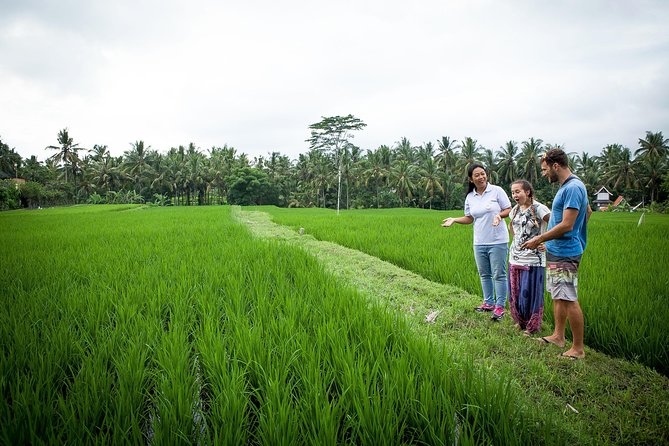
After the market, the route heads into the countryside. This shift is one of the tour’s strongest features because you get to see the setting where some of the ingredients originate instead of treating food as something that appears only in restaurants.
The countryside portion includes views of paddy fields and an introduction to local farming. The information provided does not promise a hands-on farm activity, so think of this as a food-focused visit with farming context rather than a working agricultural tour.
That distinction matters. If you want to plant rice, cook over a traditional fire, or spend a full day on a farm, this is not the right format. If you want to understand how rural surroundings connect with the food served in Ubud, the countryside stop adds useful context without taking over the morning.
The paddy-field views also give the tour a welcome change of pace. You move from market ingredients and food stalls to open scenery, then continue with tastings. For many people, that combination will feel more complete than a food crawl confined to city streets.
Shared transportation is included for visiting one eatery and another. The wording suggests that transport helps connect the food stops, but it does not provide a detailed vehicle description or a fixed route. You should be prepared for a shared ride rather than private transportation.
Seven or eight dishes, with enough for a real meal
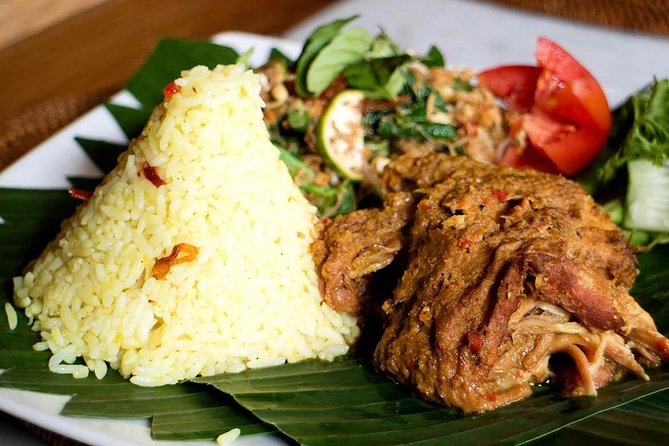
The tour includes seven to eight types of food over five hours. That is the difference between a meal-based food tour and a quick tasting walk. You should arrive hungry, but not starved. Eating several dishes early in the day can be filling, especially when the food includes rice, noodles, meat, cakes, and satay.
Examples named for the experience include savory shredded chicken and stir-fried noodles. These give you a useful contrast: one dish shows how seasoned meat can be prepared and served, while the noodles offer a familiar format with Balinese flavor.
You may also taste traditional cakes and satay at the market. The point is variety. You get to compare sweet and savory foods, market snacks and prepared dishes, and the ingredients you have seen with the food placed in front of you.
The guide explains how the ingredients, spices, and preparation come together. This is where the tour earns much of its value. A plate of noodles is easy to photograph and eat. Understanding why the seasoning is strong, which ingredients are combined, and how food fits into Balinese tradition gives the dish a longer life in your memory.
Alcohol is not included, though it can be purchased. Other drinks, extra meals, shopping, and expenses not clearly listed as included are also your responsibility. The included food should be substantial, but you should not assume every drink or market purchase is covered.
More heritage and history days around Ubud:
- Crafting Heritage Batik Painting Workshops
★ 5.0 · 164 reviews - Ulun Danu Beratan Temple – Tanah Lot Temple Tour by UNESCO World Heritage
★ 5.0 · 74 reviews - BALI ATV Kuber Through Historic Tunnel and Scenic Waterfalls
★ 5.0 · 34 reviews - Royal Karangasem Heritage Tour
★ 4.5 · 29 reviews
Hindu tradition at the table
Balinese food is closely linked with Hindu customs and daily traditions. The tour uses food as a way to explain that connection, rather than presenting cuisine as a separate subject.
You will hear about the importance of religion and tradition in Balinese life, then see how those ideas relate to ingredients, preparation, and domestic food. The exact depth will depend on the guide and the questions you ask, but the tour is clearly designed to provide cultural explanation along with tasting.
This is a good fit if you want food to act as a doorway into local life. It is less useful if you only want a list of the best places to eat in Ubud. The focus is not on restaurant rankings or fine dining. It is on traditional food, local merchants, markets, and the connection between rural production and the meal.
One strong feature is that the food is described as genuinely Balinese rather than merely Indonesian in a broad sense. That distinction matters in Ubud, where menus can easily be shaped for international visitors. The tour gives you a chance to try dishes and flavors with a more local focus.
Still, food preferences can affect the experience. Strong seasoning is part of the appeal, and unfamiliar ingredients may appear. Vegetarian and vegan options are available, but you need to inform the provider about restrictions in advance. Do not wait until the morning of the tour if you have allergies or strict dietary needs.
Why the small group matters
A maximum of eight people is a useful middle ground. You get the social feel of a group outing without the crowd of a large coach tour.
At a market, this size allows you to stay close to the guide and hear explanations. At a food stop, it should be easier to ask what you are eating, how it was prepared, and how the dish fits into local custom. If you are curious about spices or unfamiliar foods, that personal exchange can matter more than the number of stops.
The small group also makes shared transportation more manageable. You are still traveling with other people, so the morning will not move at your own private pace. But the maximum size limits the amount of waiting and organizing that often slows down larger excursions.
The tradeoff is that a small group does not guarantee a private experience. You share the guide, vehicle, and timing with the rest of the group. If you want to stop at every stall or spend extra time photographing the rice fields, the fixed schedule may feel brisk.
The guide is described as a local foodie guide. No guide name is provided, so you should not book expecting a particular person. What you can reasonably expect is a guide who explains the food and cultural background while moving between market, countryside, and eateries.
The real value of the $69.75 price
At $69.75 per person, this is not the cheapest way to grab breakfast in Ubud. You can spend far less on one dish at a local eatery. The price needs to be judged against what is included across five hours.
You are paying for a guide, seven or eight food types, shared transportation between stops, market interpretation, countryside views, and the convenience of a planned route. For someone new to Balinese food, that can be good value because you do not need to guess what to order or arrange several stops yourself.
The value is strongest if you care about context. You are not only buying food. You are buying an explanation of how seasonings, farming, local merchants, religion, and household cooking relate to one another.
The price is less attractive if you already know Ubud’s food scene, prefer to eat at your own pace, or want a private vehicle. It is also worth checking the transportation details before booking because the information is not fully consistent. The highlights refer to hotel pickup and drop-off, while the included and excluded details point to shared transportation and a meeting point at Ubud Palace.
That inconsistency should not be ignored. If you are staying outside central Ubud, ask specifically if pickup and return are included for your hotel. If not, budget time and money to reach Ubud Palace for the 8 am start and return there at the end.
Who should book this Ubud food tour?
I would recommend it to first-time visitors who want an organized introduction to Balinese food without giving up the countryside setting. It also suits couples, families with children accompanied by an adult, and solo visitors who prefer a small group to eating alone.
It is a practical choice if you want food and culture in one morning. You get market food, traditional cakes, satay, noodles, shredded chicken, field views, and cultural explanation in a five-hour format.
Vegetarians and vegans can also consider it, provided they give advance notice. People with food restrictions should be more careful and confirm exactly what can be served.
I would be less quick to recommend it to serious food specialists looking for a tightly defined menu or a hands-on cooking lesson. The experience offers tastings and explanation, not a detailed cooking workshop. It may also disappoint anyone expecting hotel pickup as a certainty, since the transport information needs clarification.
The published rating is 3.7 from three reviews, so there is not a large body of feedback to use as a firm guide. The strongest praise focuses on the authentic local flavor and the stories behind the food. That matches the tour’s design: its appeal lies in learning why the food tastes the way it does, not just eating a succession of dishes.
Should you book it?
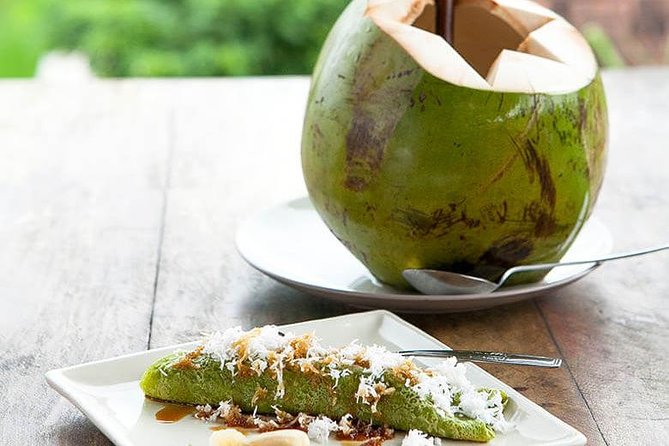
Book this tour if you want a small-group introduction to Ubud’s food culture with enough food to replace breakfast, a local market, countryside scenery, and explanations of Balinese tradition.
Before paying, confirm the pickup question and give advance notice of any dietary restrictions. If you do that, the $69.75 price is reasonable for a guided five-hour route with seven or eight tastings and shared transport. If you prefer complete freedom, private transportation, or a cooking class, spend your money elsewhere.
FAQ
Where does the tour start?
The tour starts at Ubud Palace, Jl. Raya Ubud No. 8, Ubud, at 8 am.
Where does the tour end?
The activity ends back at the meeting point at Ubud Palace.
How long does the tour last?
The tour lasts approximately five hours. Pickup and drop-off time, if arranged, is not included in that duration.
How many people can join the tour?
The maximum group size is eight travelers.
How many foods are included?
The tour includes seven to eight types of food during the five-hour experience.
Are vegetarian and vegan options available?
Yes. Vegetarian and vegan options are available, but you should inform the provider about food restrictions.
Is transportation included?
Shared transportation is included for visits between eateries. The information about hotel pickup and drop-off is inconsistent, so you should confirm whether service is available from your accommodation.
Are drinks included?
Alcoholic drinks are not included but can be purchased. Other drinks and expenses not specifically included are also your responsibility.
Can I cancel for a full refund?
Yes. You can cancel at least 24 hours before the experience start time for a full refund. Changes or cancellations made less than 24 hours before the start time are not accepted for a refund.
More half-day trips from Ubud
- Half-Day Ubud Electric Cycling Tour to Tirta Empul Water Temple
★ 5.0 · 315 reviews - Half-Day Tour: Uluwatu Temple and Kecak Fire Dance Show
★ 5.0 · 63 reviews - Half-Day Electric Fat Bike Tour of Ubud
★ 5.0 · 51 reviews - Half-Day Ubud Rice Field and Village Cycling Tour
★ 5.0 · 41 reviews
Newly added Ubud trips
- authentic Balinese organic cooking class in Ubud★ 5.0 · 4 reviews
- Farm-to-Table Balinese Cooking Experience★ 4.0 · 3 reviews
- Sunrise Jeep Tour Mount Batur Kintamani Bali★ 5.0 · 24 reviews
- coconut wine and coffee safary tour★ 5.0 · 16 reviews
- Nungnung Waterfall,Jatiluwih Heritage UNESCO and Bedugul Tour★ 5.0 · 5 reviews
- Bali Amazing Cycling Tour★ 5.0 · 4 reviews
- Authentic Balinese Cooking Class with Jewelry Making Class★ 5.0 · 3 reviews
- Bali Rural Village Bike★ 5.0 · 10 reviews
Ubud Food Tours, compared.

Bali Food Tour: Savor Street Food and Night Market Adventures
Read our review →

Browse the lists this tour appears in