
Reviewed · UBUD ART AND CRAFT WORKSHOPS
3 Hours Wheel Throwing Basic Ceramic Class
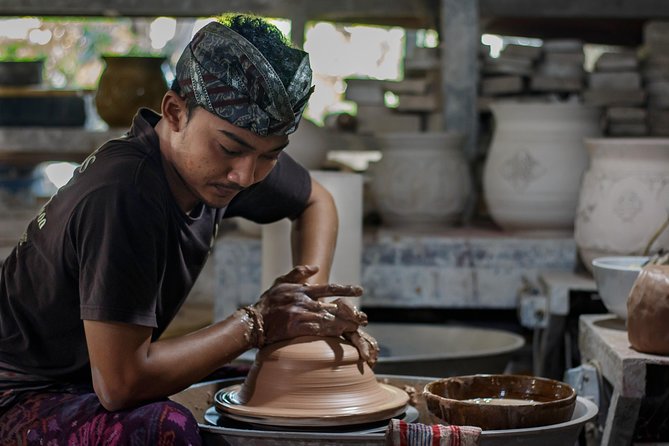
The most interesting part of this Ubud class is that you work inside a functioning pottery factory, not a polished hotel activity room. You’ll see the tools, machinery, clay, and finishing materials used in the daily business, then sit at a wheel and turn a lump of clay into cups, bowls, or whatever your hands can manage. I like the hands-on factory setting and the chance to make several attempts rather than betting everything on one perfect pot.
I also like that the class is private for your group and includes clay, wheel use, coloring materials, water, and an apron. The staff are described as friendly and willing to help, which matters when your clay starts wobbling. The main caution is that the firing and glazing arrangement is not fully clear. One part of the information says those processes are included for up to three pieces, while another says combustion is not included, and the provider notes that baking fees may apply.
Key points to know before booking
- Work with roughly 2 to 3 kilograms of clay: The information gives both figures, so confirm the exact amount when you book.
- Make several pieces, then keep your best three: This gives you room to learn through failed or uneven attempts.
- Learn in a working pottery factory: You can see the equipment and materials used in the local ceramic business.
- Expect a private session: Only your group participates, rather than a large shared class.
- Plan ahead for finished pottery: Glazing and firing can take from one to four weeks.
- Bring patience for the instruction style: Staff assistance is available, but one review felt the teachers did too much of the work.
What the three-hour Ubud pottery class is really like
This is a practical introduction to wheel throwing, the method of shaping clay on a rotating wheel. The class begins with the clay itself, including the basic source and types of ceramic material. You then weigh and knead it before placing it on the wheel.
That opening step may sound simple, but it is where the class earns its keep. Clay needs to be prepared and balanced before you try to raise its walls. If the clay is not centered, the wheel will magnify every small error. You’ll learn how to use your hands to steady the clay while the machine turns beneath it.
The advertised duration is about three hours. That should give you time to make several attempts, especially since the clay allowance is generous. The description says you can create as many shapes as you wish during the session, then select your three best pieces to take through the finishing process.
One important point: you may not spend the full three hours actively shaping clay. A previous participant finished roughly two hours early and felt that the instructors handled too much of the work. I would treat this as a possible teaching-style issue rather than a guarantee. If you want to learn, ask the instructor to let you try each step before taking over.
More craft workshops in Ubud:
- Ubud Monkey Forest Silver Class – Craft Your Own Silver Jewelry
★ 5.0 · 254 reviews - Crafting Heritage Batik Painting Workshops
★ 5.0 · 164 reviews - Threads of Tradition Miniature Keliki Painting Workshops
★ 5.0 · 46 reviews
Starting with clay, kneading, and balance
The first stage covers scaling and kneading. You’ll work with clay measured for the session, listed as 3 kilograms in one section and 2,000 grams in another. Since those amounts differ, confirm the allowance at the start. Either amount should provide enough material for practice and multiple small pieces, but the difference is worth clarifying.
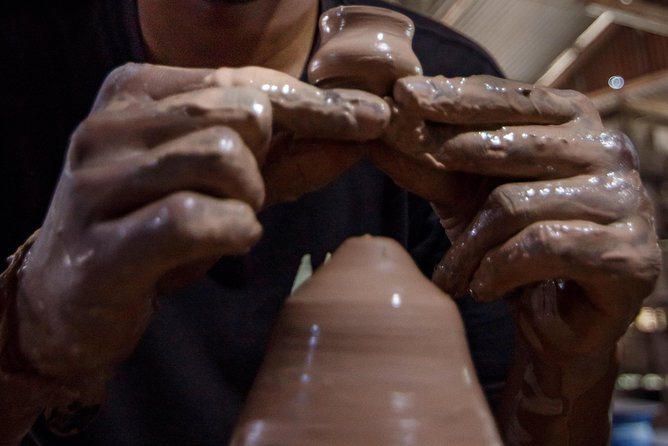
Kneading prepares the clay and helps remove uneven pockets before it reaches the wheel. You’ll also get a basic introduction to the clay source and ceramic types. This is useful because pottery is not just wet mud shaped by a machine. Different clays behave differently, and understanding the material makes the rest of the class easier to follow.
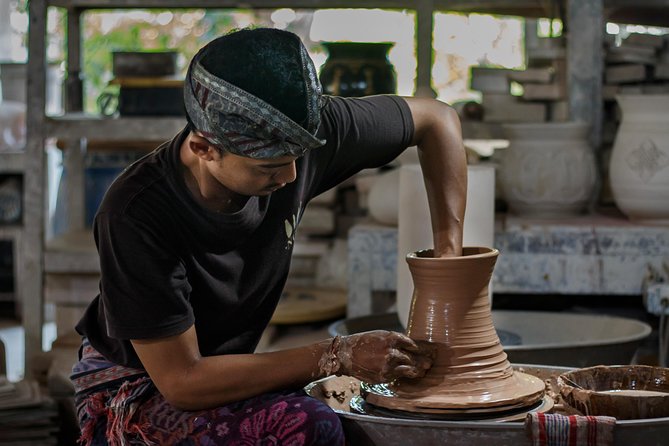
The staff then show you how to place the clay on the wheel and begin centering it. This is usually the hardest part for a beginner. You need to keep steady pressure with both hands while the wheel spins, without squeezing the clay out of shape.
I like that this class includes the hand technique rather than treating the wheel as a push-button tool. The machine provides the rotation, but your hands control the result. You’ll learn to feel when the clay is balanced and when it is starting to pull away from your intended shape.
Using the wheel to form your own shapes
Once the clay is centered, you begin opening the middle and raising the sides. The description keeps the goal open: you can form the shape you want. That may mean a small bowl, cup, vase, or an experimental form that only becomes clear once the clay starts moving.
For a first class, I recommend aiming for simple shapes. A broad, low bowl is often more forgiving than a tall, narrow vessel. You can also make several versions and choose the most successful three later. The chance to practice is a major benefit here, since a single failed piece does not end the session.
The staff will help with wheel technique, balancing the clay, and shaping the walls. Assistance is important, but you should make sure you remain involved. Tell the instructor clearly that you want to try the correction yourself. That small request could make the difference between watching a demonstration and actually learning the skill.
The coloring materials are included if you want to vary your designs. The available information does not specify a set palette, decoration method, or particular patterns, so ask what colors and finishing choices are available before you begin. Keep in mind that color applied during the class may not be the same as a final glaze.
Choosing three pieces to keep
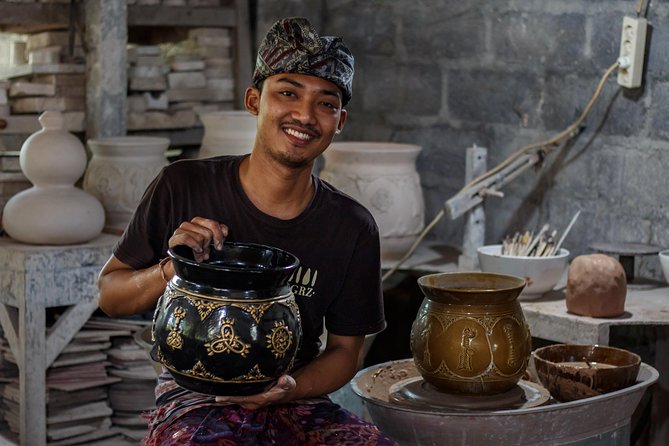
After the making stage, you select your three best creations. You can produce more than three forms, but only three are included in the final selection according to the class description.
This limit is sensible. Pottery needs room, careful handling, firing time, and finishing work. It also encourages you to judge your own pieces. Look for cracks, leaning walls, thin spots, and shapes that feel stable. The piece you like most may not be the one that looks most dramatic. A slightly uneven bowl can still be a satisfying souvenir if it survives the next stages.
I would not expect every object you make to come home. Wheel throwing takes practice, and early pieces may collapse or become too thin. That is part of the class, not wasted material. The extra clay gives you permission to experiment instead of guarding one precious attempt.
The factory setting adds useful context at this point. You can see where the raw materials, tools, and machinery fit into the wider pottery process. The class is not only about making a souvenir. It also gives you a glimpse of the work behind ceramic production in Bali.
A completely different kind of day out from Ubud:
- All-Inclusive Ubud Private Tour
★ 5.0 · 14,344 reviews - Best of Ubud Full-Day Tour with Jungle Swing
★ 5.0 · 8,571 reviews - Ubud: Monkey Forest, Jungle Swing, Rice Terrace, and Water Temple
★ 5.0 · 7,160 reviews - Best of Ubud 1-Day Private Tour
★ 5.0 · 4,451 reviews
Glazing, firing, and the wait after class
Your pieces are not necessarily finished when you leave. They need drying, firing, and possibly glazing before they become durable ceramics. The information says this process can take from one week to four weeks, so you should not expect to collect finished work the same day.
Here is the part I would clarify before paying. The inclusion list says the class includes the combustion and glaze process for up to three creations. The exclusion list says the combustion process for the final product is not included. A response from the provider also explains that baking fees are not included in the class price, although one piece may be provided free of charge.
Those statements do not line up neatly. Ask these questions at the beginning:
- Is glazing included for all three selected pieces?
- Is firing included, or is one piece free and the others charged?
- How much will additional pieces cost?
- Where and how will you collect the finished pottery?
- Can the pieces be shipped if you leave Bali before the four-week period ends?
The stated completion window is one to four weeks. That makes this activity easier for visitors with a longer stay in Bali. If you are leaving soon, arrange collection carefully. The supplied information does not promise shipping, so do not assume your pottery can be sent to your home.
The factory setting near Guwang
The meeting point is at Jl. Nakula No. 511, Guwang, in Sukawati, Gianyar, Bali. This is outside central Ubud, so transportation is not included. You’ll need to arrange your own way there and back.
The end point is the same meeting point. That makes the logistics simple once you arrive, but you should allow extra time to find the property. One participant had serious trouble communicating with the booking company and needed help from a local person to locate the place. I would save the address offline, confirm the meeting instructions ahead of time, and keep the local contact details available.
The factory environment is a good reason to choose this class over a basic craft demonstration. You can see the equipment used in daily ceramic production and understand that pottery requires several stages beyond shaping wet clay. At the same time, this is a working business, not necessarily a quiet studio built only for visitors. Expect a practical setting with tools and machinery around you.
Because the class is private, you do not have to match the pace of a large group. Your own party participates together. That is helpful if one person wants more instruction or if your group has mixed experience levels. It also makes this a better choice for a couple, family, or small group that wants a shared activity.
What the $50 price includes
At $50 per person, the class is not the cheapest way to spend three hours in Bali. Its value depends on how much hands-on instruction you receive and what happens to the finished pottery afterward.
The price includes the clay supplied for the session, use of the wheel, coloring materials if you want to vary your work, bottled water, and an apron. It also covers the private class format, which means you are paying for an activity reserved for your group rather than a large shared workshop.
Those inclusions make the price reasonable for someone who wants to try wheel throwing without buying materials or finding equipment independently. The opportunity to make several pieces is also useful. You are paying for practice time, not simply one quick souvenir.
The value becomes less certain if glazing and firing add fees. A finished ceramic object is a large part of the appeal, so confirm the final cost before booking. If only one piece receives complimentary baking and the remaining pieces require payment, the advertised price is better understood as the cost of the class plus possible finishing charges.
Lunch, snacks, and private transportation are not included. Bring water if you need more than the provided bottle, and plan a separate meal. The session lasts about three hours, but the information does not promise food or a break.
Who will enjoy this class most
I would recommend this experience to anyone curious about pottery and willing to accept imperfect results. It suits couples, families, and small private groups who want to make something together instead of simply looking at finished crafts.
It is also a good match for creative people who like learning through their hands. The process rewards patience more than artistic training. You do not need to arrive with a design plan, since the class lets you shape the clay into forms of your choice.
This may not suit you if you want a polished, tightly timed workshop with guaranteed finished pieces. The instruction may be fairly hands-on from the staff, and the reported early finish suggests the three-hour duration is approximate. It is also a poor fit if you are leaving Bali immediately and have no plan for collecting or receiving the pottery.
Most people can participate, according to the activity details. No special experience is required. The class does involve working with clay and using a wheel, so wear something you can comfortably get dirty, even though an apron is provided.
Booking, communication, and cancellation details
Confirmation is provided at the time of booking, and the activity is offered as a private experience for your group. Since transportation is not included, confirm the address and arrival instructions before the day of the class.
Free cancellation is available up to 24 hours before the local start time. Cancellations made less than 24 hours ahead are not refunded, and late changes are not accepted. The activity also has a good-weather condition. If poor weather causes cancellation, you can choose another date or receive a full refund.
The weather rule is worth noting even though the class takes place at a factory. Keep your schedule flexible if heavy rain could affect getting to the meeting point.
Should you book the Ubud wheel-throwing class?
Book it if you want a private, practical pottery session and like the idea of making several attempts before choosing your best three. The factory setting, included materials, friendly assistance, and chance to see professional tools make this more useful than a quick decorative craft stop.
I would book only after confirming the clay allowance and the exact firing and glazing fees. The mixed information about finishing costs is the biggest weakness, and the communication problem reported by one participant means you should save the address and ask clear questions before arrival.
If you are patient, flexible, and staying in Bali long enough to collect the finished work, this can be a memorable three-hour activity for $50. If you need a guaranteed full session, a polished teaching format, or same-day souvenirs, choose another craft experience.
FAQ
How long does the pottery class last?
The class lasts approximately three hours, although the actual session may finish earlier depending on the instruction and your group’s progress.
Where does the class begin and end?
It begins at Jl. Nakula No. 511, Guwang, Sukawati, Gianyar, Bali 80582. The activity ends back at the same meeting point.
How much clay is included?
The information lists 3 kilograms of clay in one section and 2,000 grams in another. Confirm the exact amount with the provider before starting.
How many pottery pieces can I take home?
You can make as many shapes as you wish during the session, then choose your best three creations for the finishing process.
Are glazing and firing included?
The details are inconsistent. One section says glazing and combustion are included for up to three pieces, while another says combustion is not included. The provider has also stated that baking fees may apply, with one piece possibly offered free. Confirm the final charges before booking.
How long does glazing and firing take?
The finishing process can take from one week to four weeks. The activity details do not state that shipping is available, so arrange collection before leaving Bali.
More three-hour experiences in Ubud
- Telaga Waja Rafting Adventure: 3 Hours Rafting and All Inclusive
★ 4.5 · 10 reviews
Newly added Ubud trips
- authentic Balinese organic cooking class in Ubud★ 5.0 · 4 reviews
- Farm-to-Table Balinese Cooking Experience★ 4.0 · 3 reviews
- Sunrise Jeep Tour Mount Batur Kintamani Bali★ 5.0 · 24 reviews
- coconut wine and coffee safary tour★ 5.0 · 16 reviews
- Nungnung Waterfall,Jatiluwih Heritage UNESCO and Bedugul Tour★ 5.0 · 5 reviews
- Bali Amazing Cycling Tour★ 5.0 · 4 reviews
- Authentic Balinese Cooking Class with Jewelry Making Class★ 5.0 · 3 reviews
- Bali Rural Village Bike★ 5.0 · 10 reviews
Ubud Art and Craft Workshops, compared.
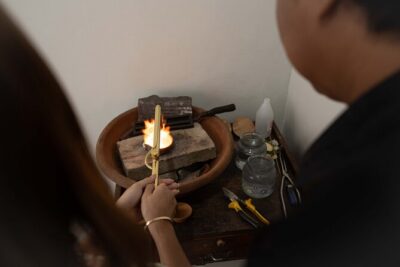
Ubud Monkey Forest Silver Class – Craft Your Own Silver Jewelry
Read our review →

Threads of Tradition Miniature Keliki Painting Workshops
Read our review →
Exclusive Ubud Jewelry Making: Craft with a Pro Silversmith!
Read our review →
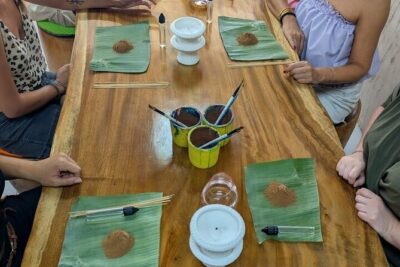
Incense Making Workshop. Create Incense From Scratch!
Read our review →

Browse the lists this tour appears in