
Reviewed · UBUD ART AND CRAFT WORKSHOPS
Bali Fruit Carving Class
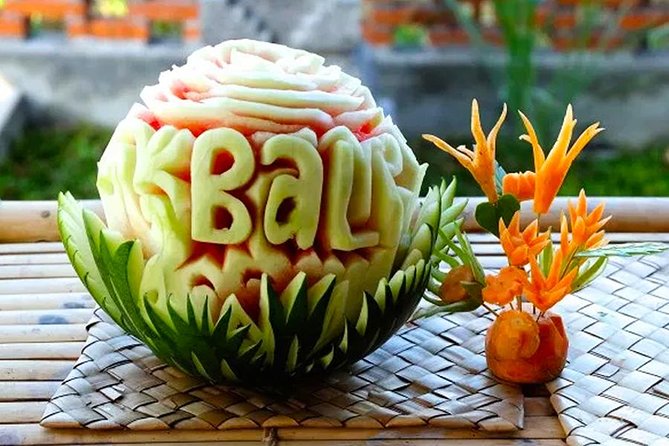
Fruit carving turns a simple melon or papaya into a flower, insect, animal, or even your name. At WS Art Studio in Lodtunduh, you learn the basic cuts from an instructor, then practice with the tools and fruit provided. It is part craft class, part edible souvenir, and a pleasant change from Bali’s usual sightseeing circuit.
I like the small group limit of 10, which gives the instructor room to help with careful cuts. I also like the calm setting, with rice-field views mentioned as part of the experience, plus the welcome drink and traditional snack. The main drawback is practical: transport is not included, and the booking is non-refundable, so you need to be sure of your plans.
Key points to know before you book
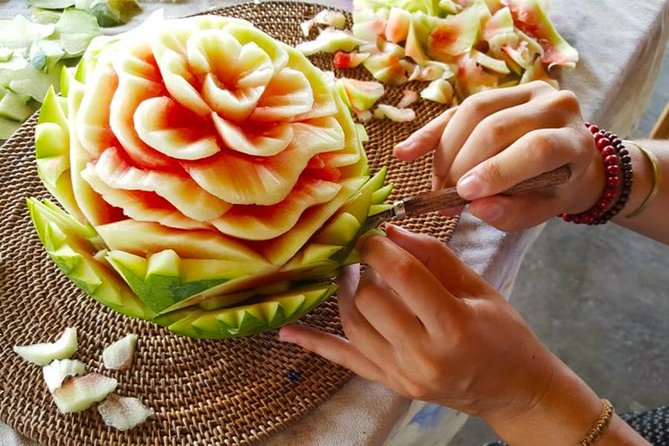
- A hands-on two-hour class: You spend the session making the cuts yourself rather than simply watching a demonstration.
- Fruit becomes edible decoration: Practice with watermelon, papaya, carrots, and similar produce to create flowers, insects, animals, or lettering.
- Small groups help with precision: A maximum of 10 participants makes it easier to follow the technique and ask for help.
- Lodtunduh is the meeting point: You go to WS Art Studio Balinese Handicrafts, not a hotel pickup location.
- Your booking includes useful extras: Equipment, carving materials, a welcome drink, a traditional snack, and a certificate are included.
- Plan carefully around the rules: The class begins at 10:00 am, and cancellations or changes do not receive a refund.
Why fruit carving makes a good Bali morning
Many Bali activities ask you to look, listen, or follow a guide. This one puts a knife and a piece of fruit in your hands, then asks you to slow down. The work is simple to understand but not always easy to do well. A clean petal or curved leaf takes patience.
That is the appeal. You are not trying to produce a museum piece. You are learning how small cuts change the shape of food. A watermelon can become a flower. A carrot can become an insect or another small decoration. The finished piece is both a craft project and something you can eat.
I especially like this for families and couples who want a quiet activity between temple visits and meals. Children from age 4 can take part, and the listed upper age is 65. The class is not presented as a professional culinary course, so you do not need an art background or special kitchen skills.
The pace also gives you a different view of Bali. Rather than rushing from one sight to another, you spend two hours focused on a local craft setting in Lodtunduh. The rice-field outlook adds to that slower mood. It is a modest experience, but it can leave you with a skill you can try again at home.
More craft workshops in Ubud:
- Ubud Monkey Forest Silver Class – Craft Your Own Silver Jewelry
★ 5.0 · 254 reviews - Crafting Heritage Batik Painting Workshops
★ 5.0 · 164 reviews - Threads of Tradition Miniature Keliki Painting Workshops
★ 5.0 · 46 reviews
Arriving at WS Art Studio in Lodtunduh
The class meets at WS Art Studio Balinese Handicrafts in Lodtunduh, Ubud, at C7X4+JFP, Lodtunduh, Ubud, Gianyar Regency, Bali 80571, Indonesia. The meeting point is described as easy to locate and near public transportation, but the tour does not provide transport service.
That detail matters. You need to arrange your own way to the studio and allow enough time to reach the 10:00 am start. The activity ends back at the same meeting point, so you do not need to work out a separate return location.
The studio is also associated with other crafts, including wood carving and jewelry craft. The fruit class itself is the focus, but the setting may interest you if you want to see a broader craft atmosphere in addition to your food project.
Bring your mobile ticket and arrive ready to work. The booking is confirmed within 48 hours, subject to availability, so check that confirmation before setting your morning plans in stone.
The first lesson: patience, tools, and basic cuts
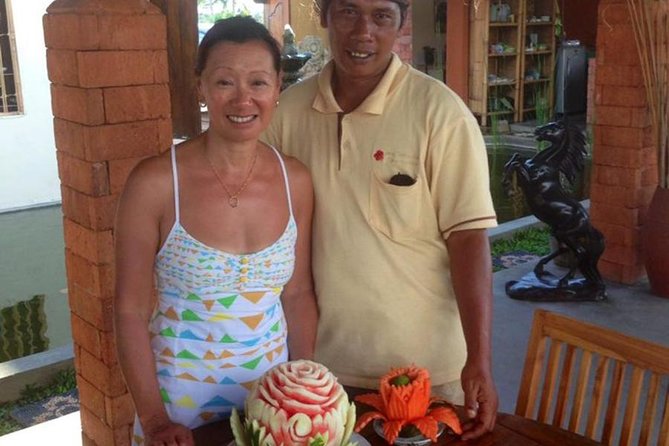
The instructor begins by showing you the technique. The supplied information does not name the instructor, but the class is designed around direct guidance rather than a lecture. You watch the method, then repeat it on your own fruit.
This is where patience matters most. Fruit carving is controlled work. You need to make deliberate cuts instead of trying to force a shape into place. The instructor can show you how to handle the equipment and how to build a flower, animal, insect, or name from a basic piece of produce.
All equipment and materials are included. That is useful if you are packing light or simply do not want to bring carving tools on holiday. You can arrive empty-handed and concentrate on the class.
The session is suitable for most participants, but it is still a hands-on activity involving cutting tools. Younger children may need close help from an accompanying adult. The age range begins at 4, so families can decide how much independence makes sense for each child.
Choosing between flowers, animals, insects, and lettering
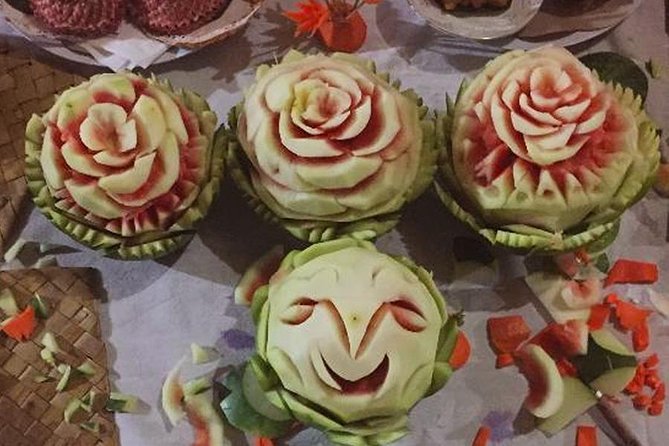
The most appealing part of the class is the choice of what to make. Flowers are a natural starting point because layered petals show how repeated cuts can create a recognizable form. If you prefer something playful, you can work toward an animal or insect.
Carving your name gives the activity a more personal finish. It may also be the best choice if you want a clear souvenir photograph. The available fruit includes watermelons, papaya, and carrots, although the exact selection for your session is not specified.
Do not expect every design to look perfect on the first attempt. The class description itself emphasizes patience and precision, which is a useful warning. You are learning a craft, not ordering a finished centerpiece. The reward is understanding how the design is made.
I would choose a design that matches your time and comfort level. A simple flower may be more satisfying than an ambitious animal if you are new to carving. If the instructor offers a choice at the start, ask which design suits your skill level.
A completely different kind of day out from Ubud:
- All-Inclusive Ubud Private Tour
★ 5.0 · 14,344 reviews - Best of Ubud Full-Day Tour with Jungle Swing
★ 5.0 · 8,571 reviews - Ubud: Monkey Forest, Jungle Swing, Rice Terrace, and Water Temple
★ 5.0 · 7,160 reviews - Best of Ubud 1-Day Private Tour
★ 5.0 · 4,451 reviews
A calm setting with a drink and traditional snack
The rice-field outlook is one of the class’s nicest touches. You are still in the Ubud area, but the activity gives you a calmer visual setting than a crowded market or a busy road. The view does not replace a major sightseeing stop, yet it makes the two-hour class feel more pleasant.
A welcome drink and traditional snack are included. These are small additions, but they help break up the concentration required for carving. The snack also gives the class a local food connection, even though the main lesson is about presentation and cutting rather than cooking.
The timing works well for a morning plan. You begin at 10:00 am and spend roughly two hours at the studio. Afterward, you can continue your day in Ubud or return to your accommodation, but you will need to arrange that transport yourself.
What the $39 price really covers
At $39 per person, this is not the cheapest way to spend two hours in Bali. The value depends on how much you want a guided, hands-on craft activity rather than a free sightseeing stop.
The price includes the instructor’s guidance, equipment, fruit and other materials, a welcome drink, a traditional snack, and a certificate. Those inclusions make the cost easier to understand. You are paying for the teaching and setup as well as the raw ingredients.
The small group size is also part of the value. With no more than 10 people, the instructor has a better chance of seeing your work and correcting your technique. That matters more here than it would in a simple demonstration because your result depends on careful hand movements.
The certificate is a pleasant keepsake, though it should not be the reason to book. The real value is the chance to learn a practical decorative skill and try it with proper materials. If you mainly want a finished fruit display, this may feel expensive. If you enjoy making something yourself, the price is more reasonable.
Who will enjoy this class most
This class suits families, couples, small groups of friends, and solo participants who like creative work. The broad age range makes it a useful option when not everyone in your party wants a strenuous outing or a long cultural lecture.
It also suits people who want an activity with a clear result. At the end, you have a carved piece of fruit, a certificate, and a technique you can attempt again with produce at home. The skill has practical reach because decorative cuts can be used for meals, parties, and desserts.
The class may be less suitable if you dislike slow, careful work. Fruit carving is not a fast craft. You might find the repeated cuts relaxing, or you might find them frustrating. The small group helps, but it does not remove the need for patience.
It is also not the right pick if you need hotel pickup. Transport is not included, even though the studio is near public transportation. Check your route before booking, especially if you are staying outside central Ubud.
How the two-hour session may feel
The session follows a simple rhythm. You arrive at the studio, receive the welcome drink, and meet the instructor. The instructor demonstrates the technique, then you begin working with the provided fruit and equipment.
After the first cuts, the class becomes more individual. Some people may focus on a flower, while others choose an animal, insect, or their name. The instructor can guide the process, but your pace will depend on your design and comfort with the tools.
A traditional snack provides a short pause. The setting, including the rice-field outlook, gives you a chance to look up from the work. Then you can continue refining the piece and finish with the certificate.
The exact order of every step is not specified, so think of this as a guided workshop rather than a fixed stage show. That is a good thing for a hands-on craft. You have room to practice instead of racing through a strict schedule.
A few practical cautions
The class has a five-star rating from three submitted scores, which points to a consistently positive small sample. The praise centers on the useful skill, the calm rice-field view, the morning snack, and the courteous instruction. Those are the features I would weigh most heavily when deciding.
Do not read the perfect score as a promise that every carving will look polished. Your result depends on your design, your patience, and the time you spend practicing. The class teaches you how to work, but it cannot do the cutting for you.
The cancellation policy deserves attention. The experience is non-refundable and cannot be changed for any reason. If you cancel or request an amendment, the amount paid is not returned. Since confirmation can take up to 48 hours and is subject to availability, leave enough flexibility in your schedule before booking.
You should also remember that the listed price is per person. If you are booking for a family, calculate the full cost before comparing it with other Ubud activities. The included materials and refreshments help, but they do not make this a low-cost stop.
Should you book the Bali Fruit Carving Class?
Book it if you want a quiet, creative morning and like the idea of learning a skill you can repeat at home. The small group, included materials, rice-field outlook, drink, snack, and certificate give the $39 price a clear purpose.
I would especially recommend it for families with children old enough to follow careful instructions, couples looking for something beyond temples and cafés, and anyone who enjoys food presentation. Make sure you can reach Lodtunduh for the 10:00 am start, and only book once your plans are firm because the payment cannot be refunded.
Skip it if you want hotel pickup, a fast-paced tour, or a finished artwork with no effort on your part. Fruit carving rewards patience. For the right person, that is exactly what makes this small Ubud workshop worthwhile.
FAQ
Where does the Bali Fruit Carving Class take place?
The class takes place at WS Art Studio Balinese Handicrafts in Lodtunduh, Ubud, Gianyar Regency, Bali 80571, Indonesia.
What time does the class start?
The activity starts at 10:00 am.
How long does the class last?
Plan on approximately two hours.
What age range can participate?
The class is listed for ages 4 to 65.
What will I learn to carve?
You can learn to carve flowers, animals, insects, or your name using fruit such as watermelon, papaya, carrots, and other produce.
Are equipment and materials included?
Yes. Equipment and materials are provided as part of the experience.
Are food and drinks included?
Yes. The booking includes a welcome drink and a traditional snack.
Is transportation included?
No. Transport service is not included. You meet at the studio, and the activity ends back at the same meeting point.
Newly added Ubud trips
- authentic Balinese organic cooking class in Ubud★ 5.0 · 4 reviews
- Farm-to-Table Balinese Cooking Experience★ 4.0 · 3 reviews
- Sunrise Jeep Tour Mount Batur Kintamani Bali★ 5.0 · 24 reviews
- coconut wine and coffee safary tour★ 5.0 · 16 reviews
- Nungnung Waterfall,Jatiluwih Heritage UNESCO and Bedugul Tour★ 5.0 · 5 reviews
- Bali Amazing Cycling Tour★ 5.0 · 4 reviews
- Authentic Balinese Cooking Class with Jewelry Making Class★ 5.0 · 3 reviews
- Bali Rural Village Bike★ 5.0 · 10 reviews
Ubud Art and Craft Workshops, compared.
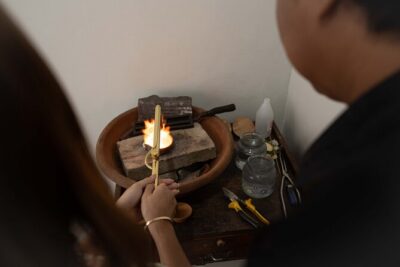
Ubud Monkey Forest Silver Class – Craft Your Own Silver Jewelry
Read our review →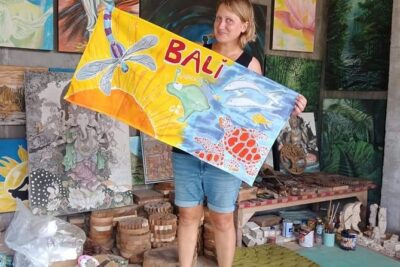

Threads of Tradition Miniature Keliki Painting Workshops
Read our review →
Exclusive Ubud Jewelry Making: Craft with a Pro Silversmith!
Read our review →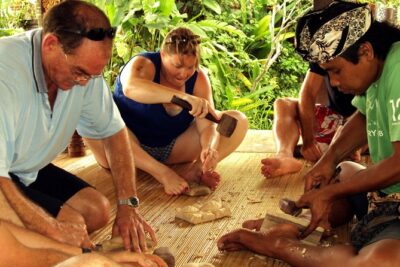
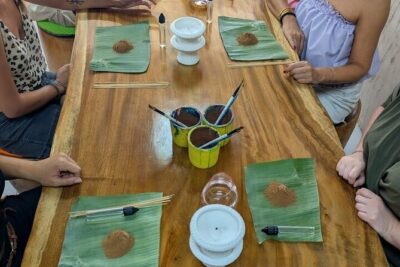
Incense Making Workshop. Create Incense From Scratch!
Read our review →
Browse the lists this tour appears in