
Reviewed · UBUD BALINESE COOKING CLASSES
Exclusive Authentic Balinese Cooking Class at Family home
The most interesting part of this Ubud cooking class happens before anyone starts chopping. You visit Payangan Market, then enter a Balinese family compound and cook in its open-air kitchen. The food matters, but so does seeing how a family prepares it, shares it, and explains the customs around it. The market visit and hands-on spice work are the two strongest reasons to book.
I like that you do the work yourself, from chopping on a wooden block to grinding spice paste in a stone mortar. I also like the small scale: one to 12 people, with your own cooking station. The main caution is the six-hour length, plus the extra transfer charge if you stay outside the Ubud and Payangan areas.
Key points to know before booking
- Payangan Market comes first: Morning sessions visit a traditional farmer market, while afternoon sessions visit a night market.
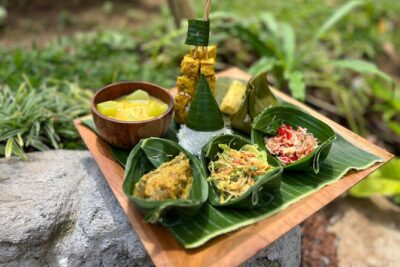
- You cook five Balinese dishes: The menu can include jukut urab, sate lilit, chayote soup, tahu mesanten, and dadar gulung.
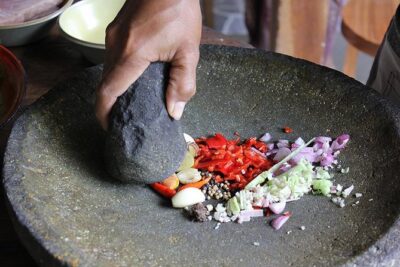
- The spice paste is the heart of the lesson: You learn both chopping and mortar-and-pestle methods.
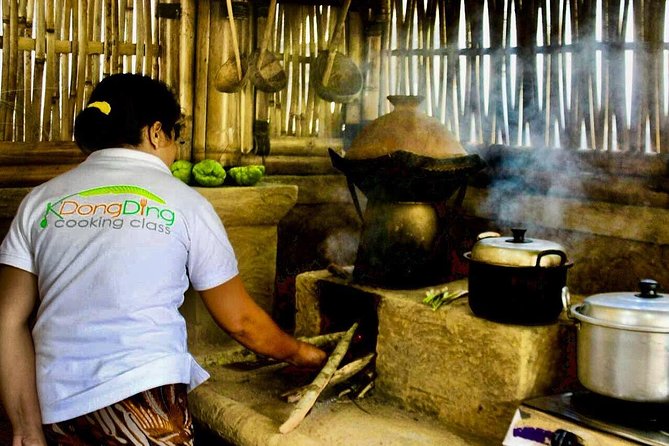
- The setting is a working family compound: You see an open kitchen and learn about everyday Balinese life.
- Vegetarian cooking is available: Tell the provider when booking so the ingredients can be prepared correctly.
- Pickup is included in Ubud and Payangan: Transfers from Sanur, Kuta, Seminyak, Legian, Nusa Dua, and Jimbaran cost extra.
A market morning or an evening among local stalls
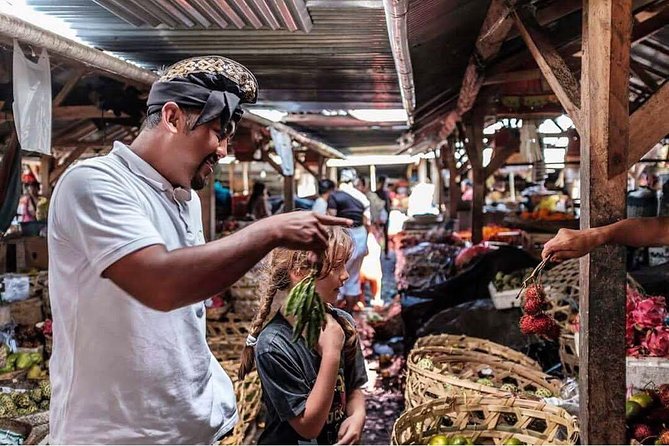
The class begins at Payangan Market, in the village area north of Ubud. The timing changes what you see. A morning class visits the traditional farmer market, while an afternoon class visits the night market.
This is not just a quick walk past food stalls. Your guide explains the spices, vegetables, and other ingredients used in Balinese cooking. You might see foods that are easy to miss when shopping in central Ubud, where menus and displays are aimed more at visitors.
The market gives the cooking lesson a useful starting point. You see the raw ingredients before they become sauces, fillings, and finished dishes. That connection matters. Balinese food can look simple on the plate, but its flavor often comes from the careful balance of shallots, garlic, chilies, herbs, and other seasonings ground into a paste.
The market is also the most public part of the experience, so expect noise, movement, and ordinary commerce rather than a polished food tour. If you want a quiet, air-conditioned activity, this is not it. If you want to see where local ingredients are bought, it adds real value.
More Balinese cooking classes in Ubud:
- Ubud Cooking Class Bali with Balinese Chef
★ 5.0 · 1,609 reviews - PRIVATE Authentic Balinese Cooking Class in Ubud at Putu’s Home
★ 5.0 · 644 reviews - Balinese Ubud cooking school (9 Dish Cooking and Market Tour)
★ 5.0 · 540 reviews
Entering a Balinese family compound near Ubud
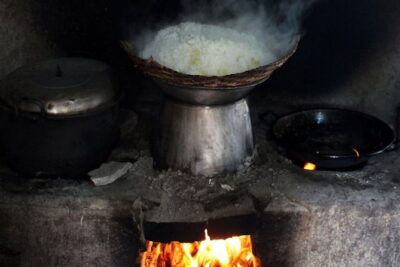
After the market, you go to the family home and cooking school. The class takes place in a traditional Balinese compound with an open-air kitchen. The home setting is what separates this experience from a standard cooking studio.
You may be shown around the grounds and introduced to members of the family. Past sessions have been led by chefs named Nyoman Mahendra and Wayan, and the teaching style described for the class is friendly, personal, and practical. One especially memorable detail is the family’s rescued pet monkey. Another is the family’s connection to native-bee honey.
You are welcomed with Bali coffee or tea and a Balinese cake before cooking begins. Seasonal snacks are also included. This pause helps you settle in, and it gives the chef time to explain the plan for the meal.
The compound is not presented as a museum. You are seeing a family home that also functions as a cooking school, so the experience has a lived-in feel. That can mean more character than a purpose-built classroom, but it also means the atmosphere is informal. The focus is on learning and sharing food, not on a staged performance.
Why the spice paste matters more than the finished dish
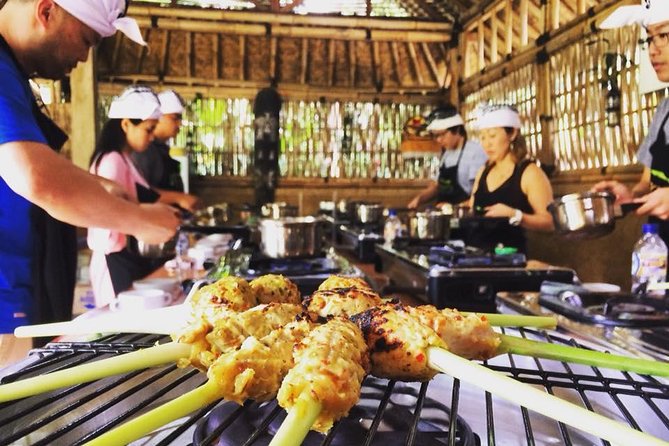
Balinese cooking depends heavily on its spice preparations. The class teaches two basic approaches: chopping ingredients on a wooden chopping block and grinding them in a stone mortar.
You get to test the ingredients before working with them, then process them by hand. This is the part I would pay close attention to. The taste of a prepared paste is different from the taste of the same ingredients simply mixed together, and the method gives you a better sense of how texture affects the final dish.
You also learn how the paste is used in different cooking methods. Some dishes are cooked, some grilled, and others combined with fresh ingredients. The class covers chopping, pounding, pestling, grilling, and other preparation steps, so you are not simply watching a chef cook lunch.
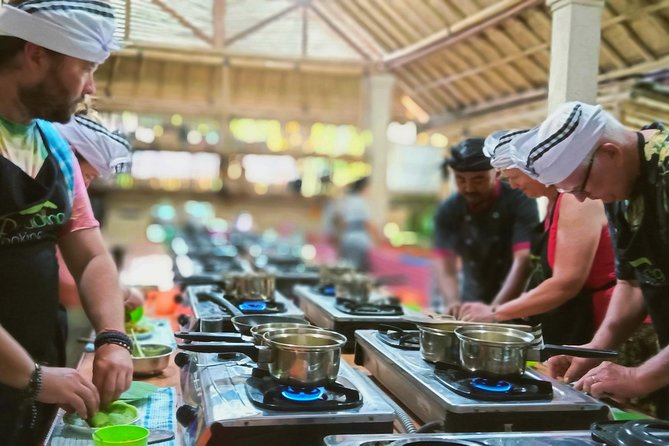
Every participant has an individual cooking station and uses the supplied kitchen tools and ingredients. With a maximum of 12 people, the class should remain manageable, though the amount of personal attention will naturally depend on the size of your group. A solo booking or small family group will have more direct time with the chef than a full class.
Five dishes, from sate lilit to dadar gulung
The exact menu is built around several classic Balinese preparations. The listed dishes include:
- Jukut urab, a vegetable dish
- Sate lilit ayam, with a tofu option
- Calon be siap with chayote soup, with a tofu option
- Tahu mesanten
- Dadar gulung, a Balinese rolled dessert
The menu includes meat and vegetarian paths. The wording around sate lilit and the soup indicates that tofu substitutions are available, but you should still give your dietary requirements when booking. Vegetarian cooking is not something to leave until the day of the class, because the ingredients need to be prepared in advance.
Jukut urab gives you a look at the vegetable side of Balinese cooking, while sate lilit shows how seasoned mixtures are shaped and cooked. The chayote soup adds a lighter, brothy element to the meal. Tahu mesanten brings tofu into the menu, and dadar gulung provides the sweet finish.
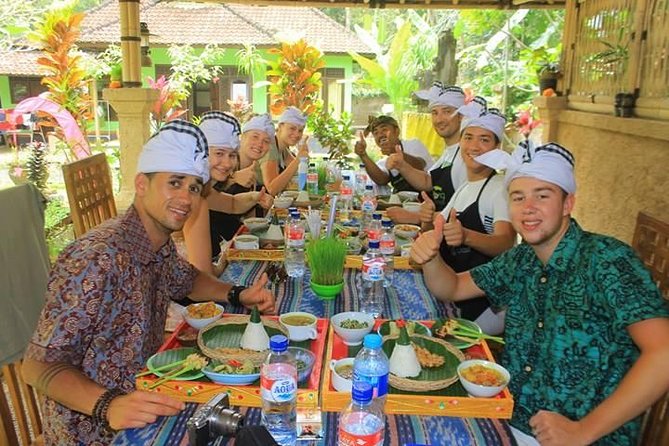
You are not promised a restaurant tasting menu. You are promised something more useful for a cooking class: a meal made from the techniques you just learned. The dishes are prepared by your hands, then served for lunch in the morning session or dinner in the afternoon session.
That arrangement gives the class a satisfying purpose. You are not cooking a token sample and then moving on. You prepare enough food to make a full meal, and the meal is part of the price.
A completely different kind of day out from Ubud:
- All-Inclusive Ubud Private Tour
★ 5.0 · 14,344 reviews - Best of Ubud Full-Day Tour with Jungle Swing
★ 5.0 · 8,571 reviews - Ubud: Monkey Forest, Jungle Swing, Rice Terrace, and Water Temple
★ 5.0 · 7,160 reviews - Best of Ubud 1-Day Private Tour
★ 5.0 · 4,451 reviews
A six-hour lesson that takes its time
Plan for about six hours from start to finish. That includes transport where offered, the market visit, the compound tour, welcome refreshments, cooking instruction, and the meal.
This is a long activity by cooking-class standards, but the schedule makes sense. A short class might show you how to mix a few ingredients. This one gives you time to visit the market, understand the raw materials, work through several dishes, and sit down to eat.
I would avoid booking it on a day when you also have a tightly timed temple visit or airport transfer. The class is meant to be relaxed and hands-on, and rushing through the final meal would undercut the best part.
The class accepts one person and up to 12 people per booking. It is also a private activity, meaning only your own group participates. There is a small inconsistency in the transfer details: the supplied information says the vehicle holds up to six passengers, with an added charge for people seven through 12. If you are booking a larger group, confirm the transport arrangement before paying.
Children must be accompanied by an adult, and the minimum age is 12. That age limit makes sense because the class involves knives, hot cooking surfaces, and a long stretch of focused preparation.
What the $75 price includes
At $75, this is not the cheapest food activity around Ubud. The value comes from what is bundled into the six hours.
You get the market visit, family-compound setting, chef instruction, ingredients, cooking tools, your own station, coffee or tea, snacks, the meal, a recipe book, a cooking certificate, and pickup and drop-off in the Ubud or Payangan area. An air-conditioned vehicle is also included for the transport portion.
If you compare the price with a basic two-hour cooking demonstration, it may look high. If you compare it with a private market visit, a family-home experience, a full meal, and extended instruction, the figure is more reasonable.
The recipe book matters. You can recreate the meal at home rather than leaving Bali with only photographs. The certificate is a small souvenir, but the recipes and spice techniques are the useful takeaways.
Pickup adds value if you are staying within the included zone. Hotels in Sanur require an extra IDR 350,000 per booking, listed as about $30. Hotels in Kuta, Seminyak, Legian, Nusa Dua, and Jimbaran require an extra IDR 500,000 per booking, listed as about $35 to $40. Personal expenses and bottled water are not included.
Bring your own refillable bottle. The class provides free refills and asks visitors to reduce single-use plastic. That is a practical detail, especially during a six-hour activity.
The parts that deserve your full attention
The chef does not simply prepare the dishes in front of you. The plan is for you to process the food and cook it yourself, with guidance at each step.
Pay attention when the chef explains paste and sauce preparation. This is where the class offers more than a list of recipes. You learn how ingredients are cut, ground, combined, and cooked in ways that shape the final flavor.
Ask questions as you work. The class is designed for interaction, and the chefs named in past sessions, including Nyoman Mahendra, have been described as willing to discuss ingredients, food traditions, and the role of each dish. One solo participant especially valued being able to ask about the origins of foods and their place in Balinese culture.
You do not need professional cooking experience. The class is structured for beginners, and the teaching is hands-on. Still, you should be comfortable standing, chopping, grinding, and working in an open-air kitchen for a good part of the day.
The food is the reward at the end, but the method is the lasting souvenir. Once you understand how the paste is built, you can adapt the lesson at home with ingredients available in your own kitchen.
Who will get the most from this class
I would recommend this experience to you if food is one of your main ways to understand a place. It suits curious cooks, couples, families with older children, and solo visitors who want more conversation than a large group tour usually allows.
It is also a good choice if you have already seen Ubud’s temples and rice fields and want a closer look at ordinary home life. The family compound, market shopping, and cooking station put you in contact with local routines rather than simply showing you another scenic viewpoint.
Vegetarians should contact the provider in advance. The class can prepare a vegetarian menu, with tofu options listed for some dishes, but the kitchen needs notice.
I would hesitate to recommend it to you if you dislike long activities, open-air cooking, market crowds, or hands-on work. This is not a passive food tasting. You will spend time chopping, pounding, stirring, grilling, and cleaning up the steps involved in a real meal.
The class has a five-star rating from 57 reviews and is listed as recommended by 100 percent of participants. Those figures point to a consistently well-liked experience, but the practical details still matter more for your decision: six hours, age 12 and up, a required advance notice for dietary needs, and extra fees for distant transfers.
Booking details worth checking first
Pickup and drop-off are free in the Ubud and Payangan areas. The stated meeting point is Payangan Market, and the activity ends back at the meeting point, although hotel transport is offered for eligible locations.
Confirmation is sent within 48 hours, subject to availability. The experience requires good weather and a minimum number of participants. If poor weather or low numbers force cancellation, you are offered another date or a full refund.
Your own cancellation terms are less flexible. The experience is non-refundable and cannot be changed for any reason after booking. Check your plans carefully before committing, especially during Bali’s wet season.
Tell the provider about food allergies or special dietary needs at the time of booking. Also confirm the class time, because the market visit differs between the morning and afternoon versions.
Should you book this Balinese cooking class?
Book it if you want a full cultural activity rather than a quick recipe lesson. The strongest combination is the local market, family compound, traditional spice work, and meal you make yourself. Those elements give the day a clear sense of place.
The $75 price is fair when you use the included pickup, meal, ingredients, recipes, and instruction. It is less appealing if you are paying a large transfer supplement or mainly want to sample food without cooking it.
For the best fit, choose it on a day when you have plenty of time, bring a refillable bottle, notify the kitchen about dietary needs, and expect to get your hands dirty. If that sounds like a good day in Bali, this is a solid choice near Ubud.
FAQ
How long does the Balinese cooking class last?
The experience lasts approximately six hours, including the market visit, family compound visit, cooking lesson, and meal.
Where does the class take place?
The class takes place near Ubud in a Balinese family compound with an open-air kitchen. The meeting point is Payangan Market in Melinggih, Payangan.
Is hotel pickup included?
Free pickup and drop-off are available in the Ubud and Payangan areas. Transfers from Sanur and from Kuta, Seminyak, Legian, Nusa Dua, and Jimbaran cost extra.
Can I request a vegetarian menu?
Yes. Vegetarian options are available, but you must tell the provider in advance so the ingredients can be prepared appropriately.
What dishes will I learn to cook?
The menu can include jukut urab, sate lilit ayam with a tofu option, calon be siap with chayote soup and a tofu option, tahu mesanten, and dadar gulung.
What is the minimum age for the activity?
The minimum age is 12. Children must be accompanied by an adult.
Can I cancel or change my booking?
The experience is non-refundable and cannot be changed for any reason. If the provider cancels because of poor weather or an insufficient number of participants, you are offered another date or a full refund.
More craft workshops in Ubud
- Ubud Silver Class Jewelry making in bali
★ 5.0 · 978 reviews - Balinese Farm Cooking Class by Pemulan Bali
★ 5.0 · 410 reviews - Ubud Monkey Forest Silver Class – Craft Your Own Silver Jewelry
★ 5.0 · 254 reviews - Balinese Authentic Cooking Class in Ubud
★ 5.0 · 239 reviews
Newly added Ubud trips
- authentic Balinese organic cooking class in Ubud★ 5.0 · 4 reviews
- Farm-to-Table Balinese Cooking Experience★ 4.0 · 3 reviews
- Sunrise Jeep Tour Mount Batur Kintamani Bali★ 5.0 · 24 reviews
- coconut wine and coffee safary tour★ 5.0 · 16 reviews
- Nungnung Waterfall,Jatiluwih Heritage UNESCO and Bedugul Tour★ 5.0 · 5 reviews
- Bali Amazing Cycling Tour★ 5.0 · 4 reviews
- Authentic Balinese Cooking Class with Jewelry Making Class★ 5.0 · 3 reviews
- Bali Rural Village Bike★ 5.0 · 10 reviews
Ubud Balinese Cooking Classes, compared.
PRIVATE Authentic Balinese Cooking Class in Ubud at Putu’s Home
Read our review →
PRIVATE Balinese Cooking Class in Ubud with Dewa with Transfers
Read our review →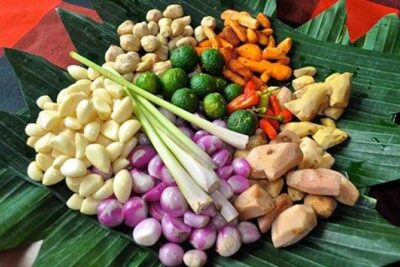
Balinese Cooking class with traditional morning market visit
Read our review →
PRIVATE Ubud Market Tour & Balinese Cooking Class with Putu
Read our review →Browse the lists this tour appears in