
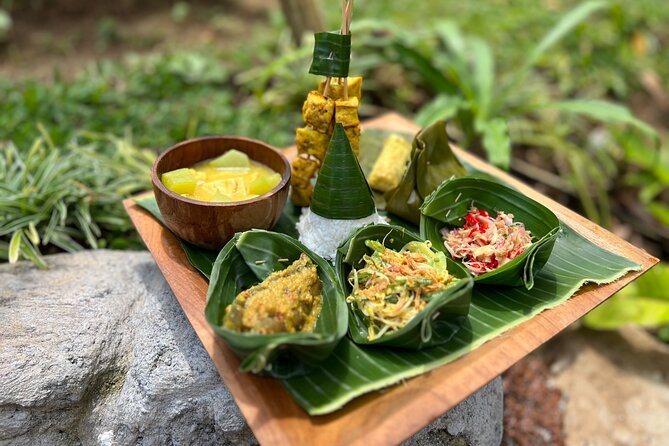
Reviewed · UBUD BALINESE COOKING CLASSES
Balinese Authentic Cooking Class in Ubud
The best part of this Ubud cooking class is that the food lesson begins long before you pick up a knife. You may visit a traditional market, see a Balinese family compound, and harvest spices from the farm before preparing a six-dish meal. Morning, afternoon, and evening sessions give you some useful scheduling freedom.
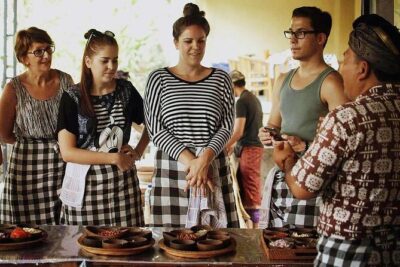
I like the small-group format, which gives you room to chop, pound, stir, and ask questions rather than simply watch a demonstration. I also like the cultural setting: coffee and a local cake at a home, a walk through the garden, and a look at how Balinese cooking fits into daily life. The main consideration is that the morning market visit is only part of the morning class, and some hands-on steps can feel a little brisk.
Key points to know before booking
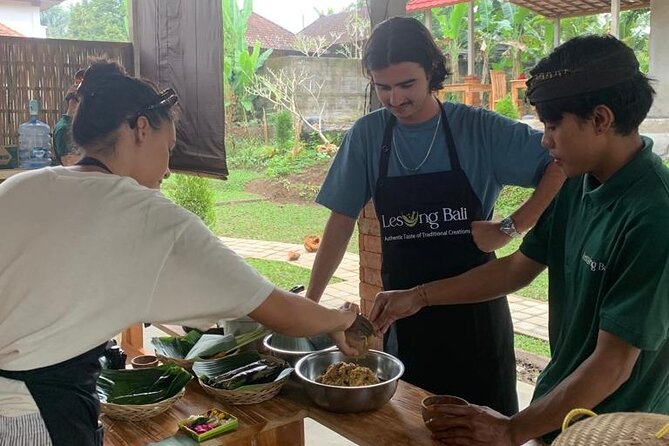
- Six dishes and dessert: You prepare a full meal, with regular, vegetarian, and vegan menus available.
- Market visit included in the morning class: You can see local produce and spices before cooking, while afternoon and evening classes begin later in the day.
- Cooking takes place on a farm near west Ubud: Ingredients are picked from the garden for the recipes.
- Cultural stops add real context: The class includes a traditional Balinese house, family compound details, coffee, tea, and a local snack.
- Several instructors lead the sessions: Ron, Putri, Don, Gusti, and Begul are named in the experience feedback, with a reputation for humor, patience, and clear guidance.
- Ubud pickup is included: Transport outside Ubud costs extra, so check your hotel location before booking.
A cooking class that begins at the market
This is not a class where you arrive at a kitchen, watch a chef cook, and leave with a printed recipe. The day is designed to connect ingredients, place, culture, and cooking technique.
The morning option usually begins with a visit to a local market. You can see the spices, vegetables, fruit, and other ingredients used in Balinese cooking, and you may have the chance to sample local fruit. It is a useful introduction because many ingredients look familiar only after someone explains how they are used.
The market is also a cultural stop, not just a shopping errand. You get a sense of how food enters everyday Balinese life before returning to the cooking school. If you choose an afternoon or evening session, you should expect to miss this market visit, so book the morning departure if this is important to you.
The market can be lively and sensory, but it is not the main event. The real value comes from learning how the ingredients are combined later. I would treat this portion as a short orientation rather than a full market tour.
More Balinese cooking classes in Ubud:
- Ubud Cooking Class Bali with Balinese Chef
★ 5.0 · 1,609 reviews - PRIVATE Authentic Balinese Cooking Class in Ubud at Putu’s Home
★ 5.0 · 644 reviews - Balinese Ubud cooking school (9 Dish Cooking and Market Tour)
★ 5.0 · 540 reviews
Inside a traditional Balinese family compound
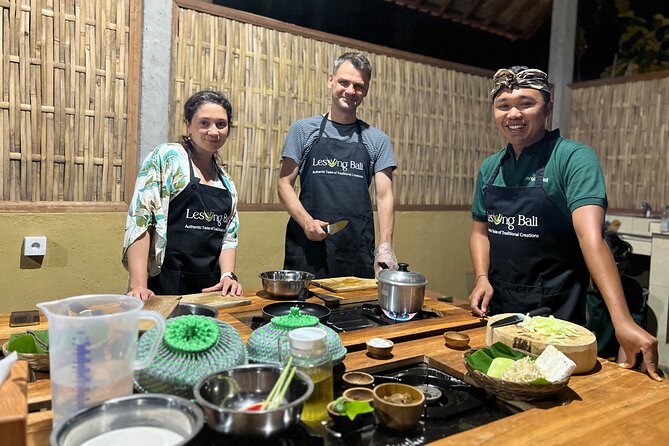
After the market, the experience continues at a local Balinese home. You are shown around the grounds and learn how a family compound is arranged, along with details about Balinese life, customs, and daily routines.
Several parts of this stop make it more than a quick photo pause. You may sit with coffee or tea, taste a Balinese cake or other local snack, and talk with the host before cooking. Some sessions include time with the guide’s family, and one account describes trying native foods and fruit at the home.
The house visit is especially useful if you are curious about the connection between food and family life. Balinese cooking is not presented as an isolated restaurant skill. It is tied to gardens, household traditions, shared meals, and the way a family compound works.
Keep your expectations sensible. The home visit may focus on the grounds and compound layout rather than a detailed tour of every interior room. One account specifically noted that the inside of the house was not shown. Still, seeing the setting and hearing the explanations gives the cooking class a stronger local frame.
From farm garden to cooking table
The cooking school sits on the west side of Ubud, in a countryside setting surrounded by green space. After the cultural visits, you go to the farm and decide which menu you will prepare.
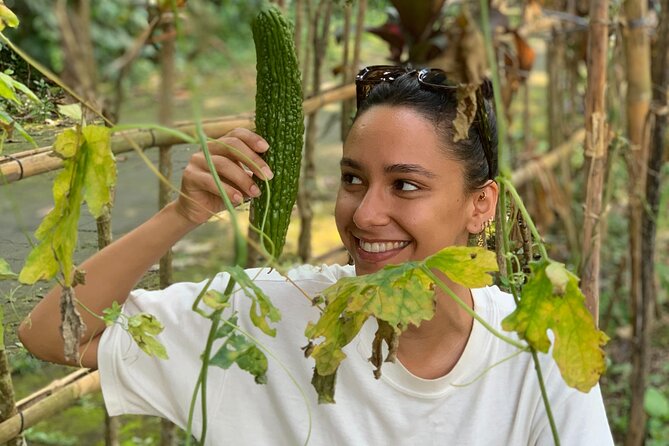
The garden visit helps explain the class’s fresh-food focus. You can see and harvest some of the spices used in the dishes, rather than meeting them only after they have been chopped and measured. This simple step makes the recipes easier to remember when you try them at home.
The setting also changes the pace. You are not working in a busy restaurant kitchen. The grounds are described as beautiful, relaxed, and clean, with a separate cooking area and the tools needed for the class.
There is a practical limit here. The information does not promise that every ingredient comes from the farm, so you should not assume the entire meal is garden-grown. The useful point is that the garden lets you connect several herbs and spices to the finished dishes.
What you actually cook during the class
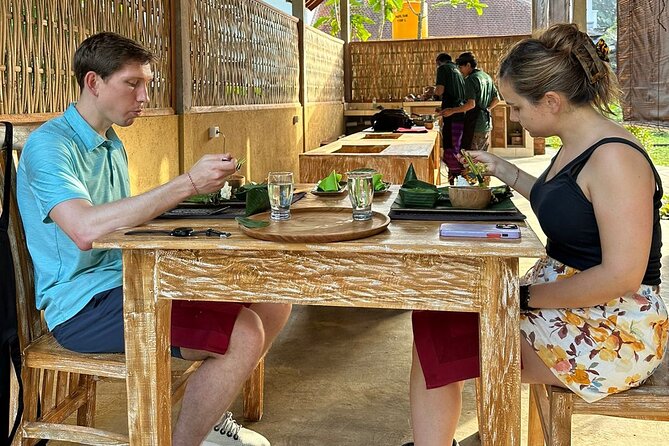
The exact menu can vary, but the experience is built around six authentic Balinese dishes, including dessert. You choose among regular, vegetarian, and vegan options, which makes the class workable for different diets.
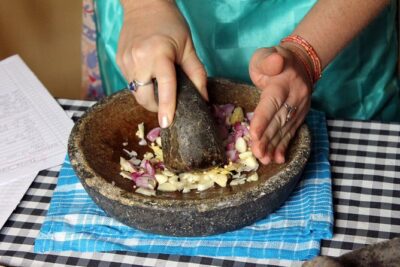
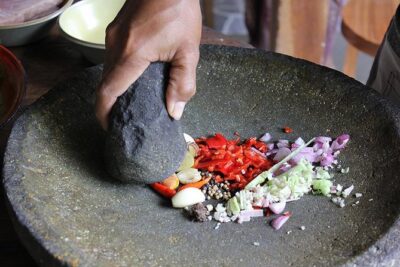
The emphasis is hands-on. You chop ingredients, prepare spices, and cook your own portion with help from the chef and assistants. One especially memorable task is using a lesung, a large mortar and pestle, to pound the spice mixture in the traditional Balinese way.
That technique is worth paying attention to. It shows how texture and aroma develop before the ingredients reach the pan. You also learn how much of each ingredient to use, how the cooking process works, and what additions a particular dish needs.
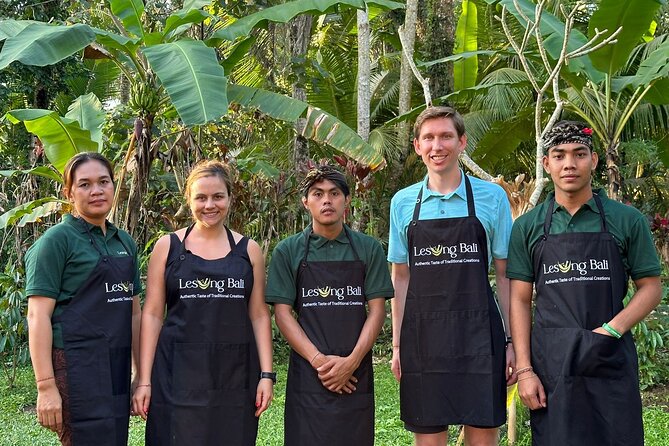
You should not expect to work alone without supervision. The instructor demonstrates each step, then helps you carry it out. Putri is described as patient and detailed, while Ron is known for an entertaining style and clear instruction. Don is praised for explaining Balinese homes and cooking traditions, and Gusti is described as sharing cultural details during the drive and at the family home.
The teaching styles may differ by session. One person found that the chef added small spices without always explaining them first, and at times the class felt rushed. That is a fair reminder to ask questions as you go. If a spice or technique is unclear, stop and ask before the dish moves to the next stage.
A completely different kind of day out from Ubud:
- All-Inclusive Ubud Private Tour
★ 5.0 · 14,344 reviews - Best of Ubud Full-Day Tour with Jungle Swing
★ 5.0 · 8,571 reviews - Ubud: Monkey Forest, Jungle Swing, Rice Terrace, and Water Temple
★ 5.0 · 7,160 reviews - Best of Ubud 1-Day Private Tour
★ 5.0 · 4,451 reviews
The meal is the reward
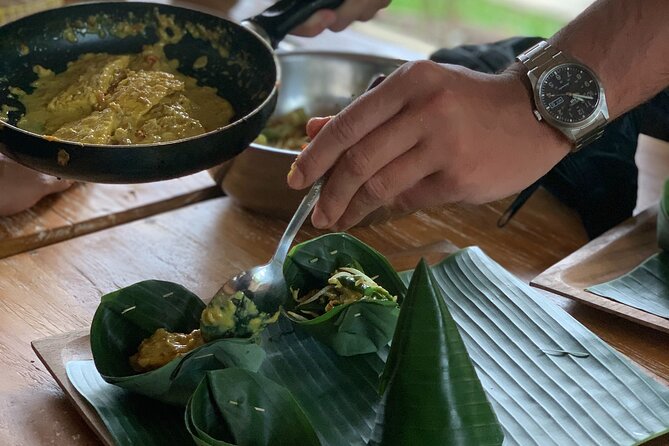
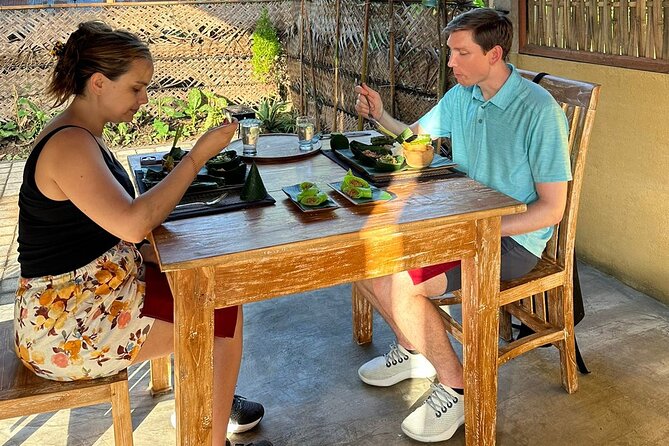
After about two hours of cooking, you sit down and eat what you prepared. The class produces a generous amount of food, so arrive hungry. The meal may include six dishes and dessert, and some people have found there was more than they could finish.
This is where the class proves its value. You are not simply handed a plate of Balinese food. You have handled the ingredients, pounded the spices, and watched the separate parts come together. The final meal gives you an immediate test of what you learned.
The food is designed around fresh ingredients and traditional flavors. The regular menu may include meat, while vegetarian and vegan versions are available. If your diet matters to you, select the right option when booking and confirm it with the instructor at the start.
Coffee, tea, mineral water, and a Balinese cake are included. The class also covers fees and taxes, so you do not need to budget separately for those basic items.
Morning, afternoon, or evening?
The choice of session affects the shape of the experience.
The morning class is the fullest option because it includes the traditional market visit. It is the best pick if you want the strongest connection between shopping, local ingredients, the home visit, garden, and cooking.
The afternoon class may suit you if you prefer a slower start or have another morning plan. You still get the home, farm, and cooking elements, but the market visit is reserved for the morning schedule.
The evening class works well for a cooking-and-dinner plan. You can prepare and eat the meal later in the day, though you should not expect the morning market portion. The class lasts about five hours in total, so allow enough time around it rather than squeezing in a tight appointment afterward.
Pickup makes the day easier
Free shuttle service is offered within the Ubud area. An air-conditioned vehicle and mineral water are included, and several accounts describe prompt hotel pickup and clear communication.
This matters in Ubud, where a trip that looks short on a map can take longer than expected. A pickup removes the need to arrange a separate ride to a countryside location. It also makes the experience easier for solo participants and couples who do not have their own driver.
The free service is limited to Ubud. Transfers from Nusa Dua and Jimbaran cost IDR 500,000 per car, Uluwatu costs IDR 550,000 per car, and Kuta, Seminyak, Sanur, and Canggu cost IDR 450,000 per car. These are additional transportation charges, not part of the listed price.
Before paying, check that your hotel is considered part of the Ubud pickup area. If it is not, the class price may look less attractive once the transfer fee is added.
Is $39.71 a fair price?
At $39.71 per person, this is good value if you want more than a short demonstration. The price covers roughly five hours, transport within Ubud, the cultural visits, garden tour, ingredients, instruction, a full meal, drinks, taxes, and a local cake.
The strongest value comes from the amount of activity packed into one half-day. You get a market or home visit, a farm walk, a cooking lesson, and lunch or dinner. A restaurant meal alone would give you the food but none of the practical knowledge or cultural background.
Group size is capped at 15 people. That is small enough to feel personal compared with a large demonstration class, though the experience will be more intimate when fewer people book. One session had only one participant, turning the class into a private-style market visit and lesson.
The trade-off is that a group of 15 can still mean waiting for tools or instructor attention at busy moments. If you want every step explained slowly, ask questions and stay close to the chef. The class is hands-on, but it is still a shared activity rather than a private lesson by default.
Who will enjoy this most?
You do not need cooking experience. The instructors guide beginners through the recipes, and several accounts describe patient help for people with little or no kitchen skill.
This is a good choice for:
- Couples who want a shared activity beyond sightseeing
- Solo visitors looking for a social but practical half-day
- Families with older children who can take part in chopping and mixing
- Vegetarians and vegans who want a local meal adapted to their diet
- Food lovers who want to understand Balinese spices
- Anyone interested in household customs as well as recipes
It is less suitable if you want a short, tightly timed activity or a polished restaurant-style demonstration with no cultural stops. The day moves through several locations and includes conversation, garden time, and a substantial meal. That relaxed format is part of the appeal, but it takes most of a morning, afternoon, or evening.
Small details that improve the experience
Wear comfortable clothes that can handle a little mess. The information does not list a formal dress code, but you will be working with spices and food, so practical clothing makes sense.
Bring an appetite. Six dishes plus dessert can be a lot of food, and the point is to sit down and enjoy the results.
If you are taking the morning class, protect enough time for the market. Do not schedule a second activity immediately afterward. Pickup, local traffic, the home visit, garden walk, cooking, and the meal all form one continuous half-day.
Ask the chef about every ingredient you do not recognize. The class is meant to teach technique, and a quick question can turn an unfamiliar spice into something you can use at home.
The experience is dependent on good weather and a minimum number of participants. If poor weather or low numbers force a cancellation, you are offered another date or experience, or a full refund.
You can cancel for a full refund up to 24 hours before the start time. Changes or cancellations made within 24 hours are not refunded, so keep the local cut-off time in mind.
Should you book the Lesung Bali class?
I would book this if you want an active half-day that combines food with a real look at Balinese home life. The strongest version is the morning class, since the market adds useful context before the home, garden, and cooking session.
The best features are the hands-on work, the traditional mortar and pestle, the fresh garden spices, and the chance to eat a meal you helped prepare. Instructors such as Ron, Putri, Don, and Gusti bring different styles, but the experience consistently centers on friendly guidance and cultural explanation.
Choose another activity if your schedule is tight, you dislike group cooking, or your accommodation is far outside Ubud and the added transfer cost weakens the value. For most food-curious visitors staying in Ubud, though, $39.71 buys a full and unusually personal introduction to Balinese cooking.
FAQ
How long does the Balinese cooking class last?
The experience lasts approximately five hours, including the cultural visits, farm stop, cooking lesson, and meal.
Where does the class take place?
The class is located on the west side of Ubud, in a countryside setting surrounded by green space.
Is hotel pickup included?
Free shuttle pickup is included within the Ubud area. Pickup and drop-off outside Ubud require an additional transportation charge.
Does every session include a market visit?
No. The traditional market visit is offered with the morning class only.
Can I choose a vegetarian or vegan menu?
Yes. Regular, vegetarian, and vegan menu options are available.
How many people can join the class?
The activity accepts a maximum of 15 participants.
What food and drinks are included?
The experience includes the food prepared during the class, coffee or tea, mineral water, and a Balinese cake.
Are taxes and entry fees included?
Yes. All fees and taxes are included in the listed experience.
What transport charges apply outside Ubud?
Transport costs IDR 500,000 per car from Nusa Dua or Jimbaran, IDR 550,000 per car from Uluwatu, and IDR 450,000 per car from Kuta, Seminyak, Sanur, or Canggu.
What is the cancellation policy?
You receive a full refund if you cancel at least 24 hours before the start time. Cancellations or changes within 24 hours are not refunded. If weather or low numbers cancel the class, you are offered another date, another experience, or a full refund.
More craft workshops in Ubud
- Ubud Silver Class Jewelry making in bali
★ 5.0 · 978 reviews - Balinese Farm Cooking Class by Pemulan Bali
★ 5.0 · 410 reviews - Ubud Monkey Forest Silver Class – Craft Your Own Silver Jewelry
★ 5.0 · 254 reviews - PRIVATE Balinese Cooking Class in Ubud with Dewa with Transfers
★ 5.0 · 213 reviews
Newly added Ubud trips
- authentic Balinese organic cooking class in Ubud★ 5.0 · 4 reviews
- Farm-to-Table Balinese Cooking Experience★ 4.0 · 3 reviews
- Sunrise Jeep Tour Mount Batur Kintamani Bali★ 5.0 · 24 reviews
- coconut wine and coffee safary tour★ 5.0 · 16 reviews
- Nungnung Waterfall,Jatiluwih Heritage UNESCO and Bedugul Tour★ 5.0 · 5 reviews
- Bali Amazing Cycling Tour★ 5.0 · 4 reviews
- Authentic Balinese Cooking Class with Jewelry Making Class★ 5.0 · 3 reviews
- Bali Rural Village Bike★ 5.0 · 10 reviews
Ubud Balinese Cooking Classes, compared.
PRIVATE Authentic Balinese Cooking Class in Ubud at Putu’s Home
Read our review →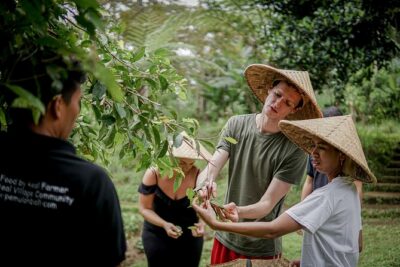
PRIVATE Balinese Cooking Class in Ubud with Dewa with Transfers
Read our review →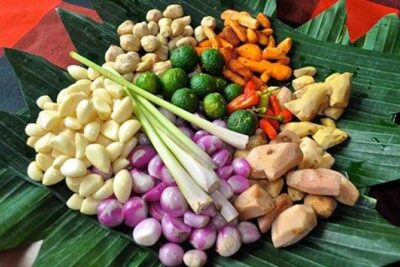
Balinese Cooking class with traditional morning market visit
Read our review →
PRIVATE Ubud Market Tour & Balinese Cooking Class with Putu
Read our review →
Authentic Bali Farm Cooking School & Organic Farm
Read our review →Browse the lists this tour appears in