
Reviewed · UBUD BALINESE COOKING CLASSES
Bali Cooking Class with Culture Experience
Ubud’s Lobong Culinary Experience begins where Balinese cooking begins: at the morning market. You’ll shop for fresh herbs, spices, fruit, and vegetables with a family host, then carry those ingredients into a Balinese home for a hands-on cooking class. I like the market visit and the chance to see how everyday food connects with family life, home shrines, and local customs.
I also like the generous shape of the day. You get a hot drink and banana fritters, a full meal you prepare yourself, cultural conversation with Dewa and the family, and a recipe booklet for home cooking. The main consideration is the early start: pickup or meeting time is 7:30 a.m., and six hours is a substantial block of your Ubud day.
Key points to know before booking
- The morning market comes first: You help select and learn about the ingredients used in the class.
- Dewa welcomes you at the family compound: Coffee, tea, mineral water, and fresh banana fritters begin the home visit.
- You cook a full Balinese menu: Expect an appetizer, several traditional entrees, side dishes, and dessert.
- The cultural part is built into the meal: Conversation covers Balinese families, home shrines, and daily life.
- The class stays fairly small: No more than 12 people are included.
- The $62 price covers a full half-day experience: Pickup from central Ubud hotels, food, instruction, and a recipe booklet are included.
Starting at the market before breakfast
The early start is part of the point. At 7:30 a.m., you begin with a visit to a local morning market, where your family host buys the ingredients needed for the cooking class. This is not just a quick stop for photo opportunities. You learn what the herbs, spices, fruits, and vegetables are, and how they fit into Balinese cooking.
That first stop gives the rest of the day some purpose. Instead of seeing a prepared pile of ingredients at the cooking pavilion, you have watched the shopping process that leads to it. You can ask about unfamiliar produce, smell the herbs, and see the raw materials before they become lunch.
The market is also a useful window into ordinary Ubud life. The class is built around food, but it begins with shopping as a local family might do it. I like this better than a class that starts in a polished kitchen with every ingredient already measured and arranged.
You should be ready for a morning market rather than a quiet, private shopping trip. The information provided does not specify the market’s exact name or layout, so you should not expect a fixed set of sights beyond the ingredient shopping and explanations. Still, this is one of the strongest parts of the experience for anyone who wants context with their cooking lesson.
More Balinese cooking classes in Ubud:
- Ubud Cooking Class Bali with Balinese Chef
★ 5.0 · 1,609 reviews - PRIVATE Authentic Balinese Cooking Class in Ubud at Putu’s Home
★ 5.0 · 644 reviews - Balinese Ubud cooking school (9 Dish Cooking and Market Tour)
★ 5.0 · 540 reviews
Entering the Balinese family compound
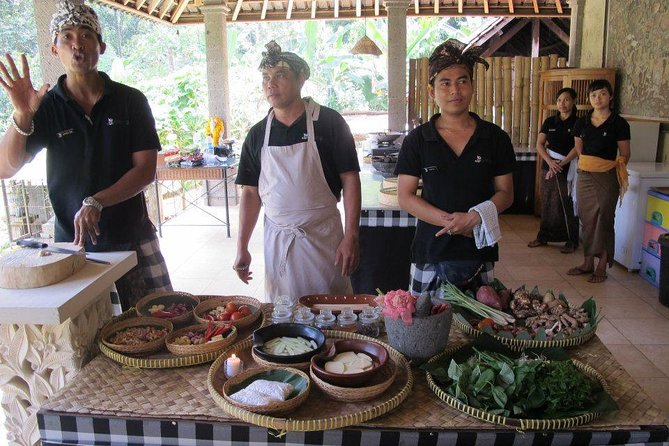
After the market, you go to the family home and cooking pavilion. Dewa greets you with coffee, tea, or mineral water, along with his fresh, crisp banana fritters, known locally as pisang goreng. This snack is a small detail, but it helps the visit feel like a welcome into someone’s home rather than a standard restaurant class.
While you eat, the hosts explain parts of Balinese life, including family customs and home shrines. That conversation matters because Balinese food is not presented as a detached list of recipes. It is linked to the household and the setting in which meals are prepared and shared.
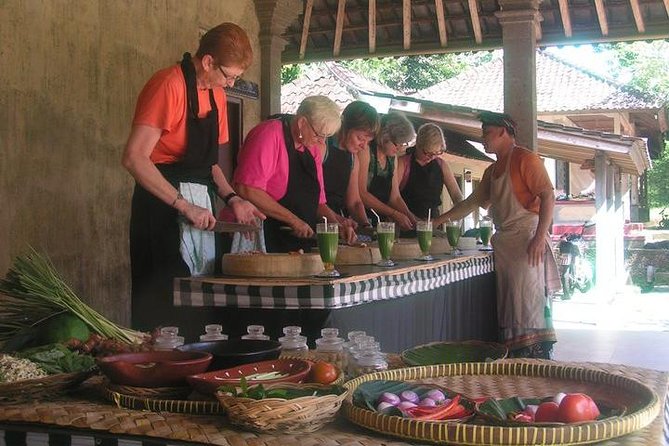
The home itself is a major part of the appeal. You are cooking in a Balinese family compound, not simply attending a lesson in a commercial studio. The supplied details describe a beautiful home and a cooking pavilion, with the staff preparing the space while you settle in with your drink and snack.
There is also a quieter cultural rhythm here. One account of the experience describes a ritual of gratitude after the meal, which fits the class’s focus on food, family, and tradition. The exact ritual may depend on the day and the hosts, so I would treat it as a possible part of the cultural experience rather than a guaranteed scheduled performance.
Learning from a professional chef
Once the pavilion is ready, a professional chef guides you through the menu. You receive an illustrated recipe booklet with the menu, directions, photographs, tips, and room for notes. That is important if you want this experience to continue after you leave Bali.
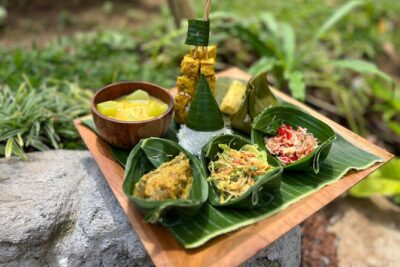
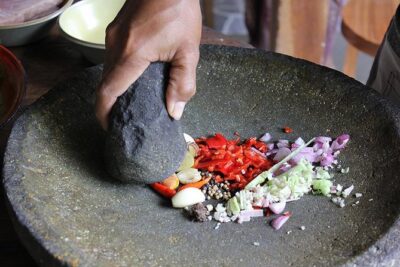
The class is not limited to one famous dish. You prepare a complete meal with an appetizer, several traditional main dishes, accompanying side dishes, and dessert. The variety gives you a better feel for how a Balinese meal works as a whole: different textures, flavors, and preparations sharing the same table.
I like this format because it gives you more than a single recipe to copy. You learn how several dishes fit together, which can help you plan a meal at home. The booklet also gives you a practical record, since ingredients used in Bali may be difficult to identify or replace once you return home.
The menu itself is not specified in the available information, so you should not book expecting a particular dish unless the operator confirms it before your visit. The useful promise is the format: a full Balinese spread, taught in a hands-on setting, with written instructions to take away.
The class is capped at 12 people. That is small enough to feel more personal than a large demonstration, though it is not a private lesson. If you want one-on-one attention at every step, ask about the group arrangement before booking. If you enjoy meeting other people while cooking, the group size should feel manageable.
Why the food lesson has real value
The best cooking classes help you understand why ingredients are used, not just what order to put them in. This experience gives special attention to herbs, spices, fruits, and vegetables at the market, then carries that knowledge into the kitchen.
That link is useful for you at home. A recipe booklet can tell you measurements, but the market visit may help you recognize the ingredients and understand their role. You also get the chance to write your own notes, which is handy if you need to make substitutions later.
The class appears designed to be approachable. The description stresses that you will be able to recreate the dishes for family and friends, and the instruction includes photographs and tips. Still, you should expect to participate rather than simply watch. Wear something comfortable for a hands-on cooking session, though no special clothing requirement is provided.
The food also gives the class a practical finish. You do not prepare dishes and then leave them behind. You eat the lunch you made, including the dessert. That makes the meal part of the lesson and gives you a clear sense of how the separate preparations work together.
A completely different kind of day out from Ubud:
- All-Inclusive Ubud Private Tour
★ 5.0 · 14,344 reviews - Best of Ubud Full-Day Tour with Jungle Swing
★ 5.0 · 8,571 reviews - Ubud: Monkey Forest, Jungle Swing, Rice Terrace, and Water Temple
★ 5.0 · 7,160 reviews - Best of Ubud 1-Day Private Tour
★ 5.0 · 4,451 reviews
Lunch in the pavilion
The final meal is the reward for the morning’s work. You sit down to eat the appetizer, entrees, side dishes, and dessert you have helped prepare. The setting in the family compound gives lunch a personal feel that a busy restaurant may not provide.
This is also where the value of the experience becomes easiest to judge. For $62, you are not paying only for food. The price includes a market visit, cultural explanation, instruction from a professional chef, food and drinks, lunch, a recipe booklet, and round-trip transfers from central Ubud hotels.
That is a fair package for a six-hour activity, especially if you value both food and cultural background. It may feel less attractive if you want a quick, inexpensive lesson or if you already have several cooking classes planned during your trip. The time commitment is real, and the experience uses most of a morning and early afternoon.
The description also points to a closing moment of gratitude after the meal. That helps frame the lunch as part of a cultural exchange rather than simply a tasting session. You leave with the meal finished, the recipes in hand, and a clearer sense of the family setting behind the food.
Timing, pickup, and group size
The stated start time is 7:30 a.m. Pickup is offered from central Ubud hotels, and the experience includes a mobile ticket. If you are staying outside central Ubud, confirm the pickup area before you book, since the included transfer detail is specifically tied to central Ubud hotels.
The total duration is about six hours. Plan around it rather than trying to squeeze in another fixed morning tour. The early departure is useful for the market visit, but it may not suit you if you prefer late starts or have jet lag.
The group maximum is 12 people. That keeps the class from becoming a huge production, while still allowing a social atmosphere. A group of this size can also affect how much individual help you receive, especially during busy cooking stages, so direct any dietary or participation questions to the provider before arrival.
The meeting point is Lobong Bali Cooking Class. Public transportation is available nearby, though pickup may be simpler if you are staying in central Ubud. Confirmation is sent within 48 hours of booking, subject to availability, so do not assume the reservation is final until it is confirmed.
Who will enjoy this experience most
I would choose this class if you want your cooking lesson tied to real local life. The market, family compound, home shrine discussion, and shared meal give it more depth than a kitchen-only class.
It is a particularly good fit for:
- First-time visitors to Bali: You get food, family customs, a market, and a home setting in one morning.
- People who cook at home: The illustrated booklet and space for notes make the experience useful after your trip.
- Couples and small groups: The six-hour format leaves plenty of time for conversation and shared work.
- Visitors seeking a gentle cultural introduction: You learn through food rather than through a formal lecture.
- Anyone who values a full meal: You prepare and eat a broad menu instead of sampling one or two items.
I would think twice if you dislike early starts, prefer a private lesson, or want a class with a fixed published menu. The available information does not name the dishes, and the group can include up to 12 people.
Booking and cancellation details
Free cancellation is available if you cancel at least 24 hours before the local start time. Cancellations or changes made within 24 hours are not refunded, so check your plans before the deadline.
The experience requires a minimum number of participants. If that minimum is not met and the class is canceled, you are offered another date or experience, or a full refund. Confirmation arrives within 48 hours of booking, subject to availability.
Should you book the Lobong Culinary Experience?
Book it if you want a complete Balinese food experience, not just a recipe demonstration. The market visit gives the class a useful beginning, Dewa’s welcome makes the home setting personal, and the meal and booklet give you something practical to carry home.
At $62, the value is strongest for people who will use the cultural and cooking parts equally. You get roughly six hours, food from breakfast snack through dessert, professional instruction, a small group, and pickup from central Ubud hotels. Skip it if your schedule cannot handle a 7:30 a.m. start or if you need a guaranteed menu in advance.
For most food-minded visitors staying in Ubud, this is a thoughtful choice. You leave with a full stomach, a handful of recipes, and a better understanding of how Balinese cooking fits into family life.
FAQ
Where does the cooking class take place?
The experience takes place at Lobong Bali Cooking Class in Ubud, with the cooking portion held at a Balinese family home and cooking pavilion.
What time does the experience start?
The stated start time is 7:30 a.m.
Is hotel pickup available?
Yes. Round-trip transfers are offered from central Ubud hotels.
How long does the experience last?
The experience lasts approximately six hours.
How many people can join the class?
The activity has a maximum group size of 12 people.
What food and drinks are included?
You receive coffee, tea, or mineral water and fresh banana fritters at the family home. You also prepare and eat a full meal with an appetizer, several entrees, side dishes, and dessert.
Can I cancel for a refund?
Yes. You can cancel at least 24 hours before the local start time for a full refund. Cancellations and changes made less than 24 hours before the start are not refunded.
More craft workshops in Ubud
- Ubud Silver Class Jewelry making in bali
★ 5.0 · 978 reviews - Balinese Farm Cooking Class by Pemulan Bali
★ 5.0 · 410 reviews - Ubud Monkey Forest Silver Class – Craft Your Own Silver Jewelry
★ 5.0 · 254 reviews - Balinese Authentic Cooking Class in Ubud
★ 5.0 · 239 reviews
Newly added Ubud trips
- authentic Balinese organic cooking class in Ubud★ 5.0 · 4 reviews
- Farm-to-Table Balinese Cooking Experience★ 4.0 · 3 reviews
- Sunrise Jeep Tour Mount Batur Kintamani Bali★ 5.0 · 24 reviews
- coconut wine and coffee safary tour★ 5.0 · 16 reviews
- Nungnung Waterfall,Jatiluwih Heritage UNESCO and Bedugul Tour★ 5.0 · 5 reviews
- Bali Amazing Cycling Tour★ 5.0 · 4 reviews
- Authentic Balinese Cooking Class with Jewelry Making Class★ 5.0 · 3 reviews
- Bali Rural Village Bike★ 5.0 · 10 reviews
Ubud Balinese Cooking Classes, compared.
PRIVATE Authentic Balinese Cooking Class in Ubud at Putu’s Home
Read our review →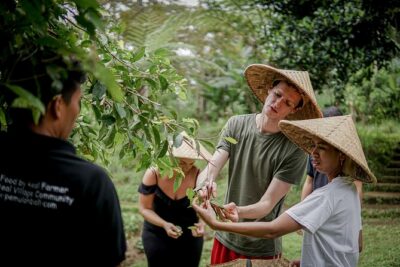
PRIVATE Balinese Cooking Class in Ubud with Dewa with Transfers
Read our review →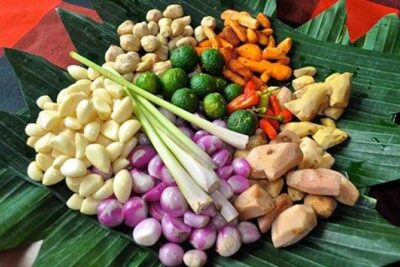
Balinese Cooking class with traditional morning market visit
Read our review →
PRIVATE Ubud Market Tour & Balinese Cooking Class with Putu
Read our review →Browse the lists this tour appears in