
Reviewed · UBUD BALINESE COOKING CLASSES
Gianyar Market Visit & Cooking Class in Ubud with Kadek & Putu
The most appealing part of this experience is the combination of Gianyar Market and a family kitchen. You do not simply watch a chef prepare Balinese food. You see the ingredients at a local market, handle them yourself, and then eat the finished dishes in a family compound with Kadek, Putu, and their relatives.
I like the private format, since your group can set the pace and discuss vegetarian, vegan, or meat dishes in advance. I also like the garden visit and fresh seasonal juice, which can include mulberry, passion fruit, papaya, mango, or jackfruit. The main consideration is that pickup is included only from Ubud hotels, and the menu changes with the season.
Key Points to Know Before Booking
- Gianyar Market visit: Explore local fruits, vegetables, and herbs with Kadek before cooking.
- Family-compound setting: Putu leads the cooking class at home, giving the meal a personal, domestic feel.
- Hands-on preparation: You work through the ingredients from chopping to cooking instead of only watching.
- Seasonal menu: Possible dishes include chicken satay, vegetable soup, stir-fried vegetables, steamed fish, rice, and Balinese desserts.
- Optional garden stop: Kadek can show you his nearby fruit and vegetable garden and serve juice made from fresh produce.
- Private four-hour outing: Round-trip pickup is included from Ubud hotels, with extra charges for hotels outside Ubud.
From Ubud Hotel Pickup to Gianyar Market
This four-hour experience begins with pickup from your Ubud hotel. Kadek handles the transport, so you can leave the map and scooter traffic behind. Be sure to provide your hotel name and address when booking, since transport is arranged around your exact location.
The first stop is Gianyar Market, where Kadek introduces you to the fruits, vegetables, and herbs used in Balinese cooking. This matters because many Balinese ingredients look familiar until you see how they are selected, combined, and used in a home kitchen. A market visit gives the class some context instead of treating each ingredient as an isolated item on a recipe sheet.
You can expect a working market rather than a polished food hall. The experience includes local stalls and busy streets, with many vendors selling similar goods. That can feel crowded and repetitive, but it is also the point. You get a look at ordinary food shopping in Gianyar and a chance to see produce before it is cleaned, chopped, and arranged for tourists.
The market portion is guided privately, which gives you room to ask what an ingredient is and how it will be used later. One especially useful feature is the chance to try some market foods. That helps you connect the taste of the raw or prepared ingredient with the dish you will make at home.
If you are interested in Balinese cooking beyond the final recipes, pay close attention here. The market shows you the building blocks of the meal: fresh produce, herbs, and seasonal items. Since the menu may change, you should treat this as an introduction to local ingredients rather than a promise of a fixed shopping list.
More Balinese cooking classes in Ubud:
- Ubud Cooking Class Bali with Balinese Chef
★ 5.0 · 1,609 reviews - PRIVATE Authentic Balinese Cooking Class in Ubud at Putu’s Home
★ 5.0 · 644 reviews - Balinese Ubud cooking school (9 Dish Cooking and Market Tour)
★ 5.0 · 540 reviews
A Possible Garden Stop and Fresh Fruit Juice
Before cooking, Kadek can show you how he grows local fruits and vegetables at his home, a few doors from his sister’s house. This stop is optional, so it may suit you especially well if you want more contact with the food before it reaches the table.
The garden adds a useful link between market and meal. You can see where some local produce grows, then taste juice made from fruit picked in season. Possibilities include mulberry, passion fruit, papaya, mango, and jackfruit, but there is no fixed fruit selection.
I like this part because it is simple and specific. A freshly made drink gives you a quick taste of Bali’s tropical produce without turning the class into a long sightseeing tour. It also offers a quiet pause before the cooking begins.
Keep your expectations practical. The garden is not listed as a formal farm tour, and the information does not promise a large agricultural visit. Think of it as a short, personal look at home-grown produce, added for people who want to understand more of the food’s source.
Cooking With Putu in a Family Compound
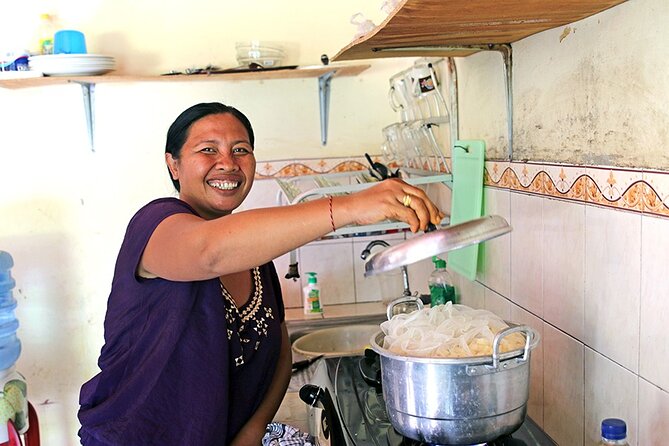
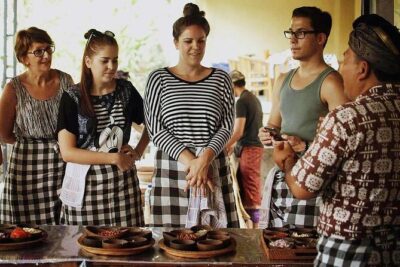
The cooking class takes place at the family compound, where Putu and members of her family help prepare the meal. The setting is a major part of the experience. You are cooking in a home rather than a large commercial teaching kitchen, so the mood is likely to feel more personal and informal.
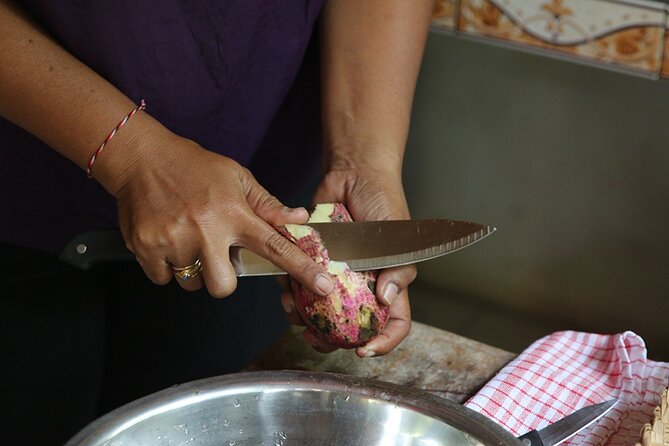
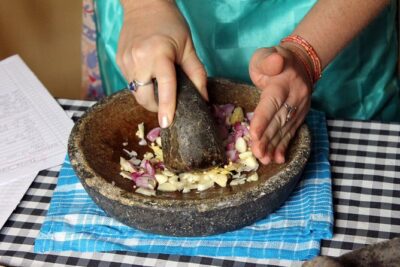
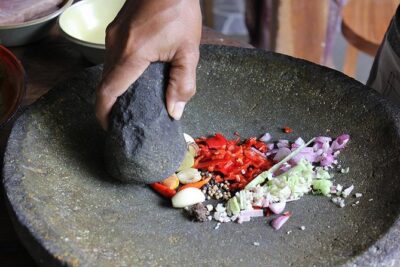
The class is designed to be hands-on. You start with the ingredients, break them down, chop them, and cook them yourself with guidance. One useful detail is that each dish begins with an explanation of its ingredients. That makes the lesson easier to follow, especially if you want to recreate the food later.
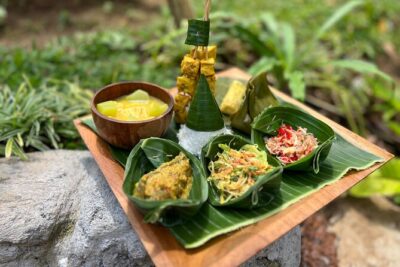
The menu can include piquant chicken satay, stir-fried vegetables, steamed fish, rice, and fresh vegetable soup. Dessert may be fried banana with grated fresh coconut and palm sugar, or black sticky rice pudding with fresh coconut cream. The exact selection depends on the season and your dietary preferences.
The menu list suggests a good spread of Balinese cooking techniques. You may work with grilled or skewered food, steamed fish, stir-fried vegetables, soup, rice, and a sweet dish. That variety gives you more than one recipe to take home and helps explain how a Balinese meal fits together.
Your dietary needs should be discussed when you book. Vegetarian options are available, and the class can accommodate vegan, meat-based, or other preferences if arranged in advance. Allergies and cooking restrictions should also be stated at booking, not left for the first morning.
The private format is valuable here. With only your group participating, you can ask about ingredients, change the balance of dishes, and spend more time on a step that seems unfamiliar. It also makes the class a good choice for couples, families, or small groups who prefer not to share a kitchen lesson with strangers.
What You Actually Eat at the End
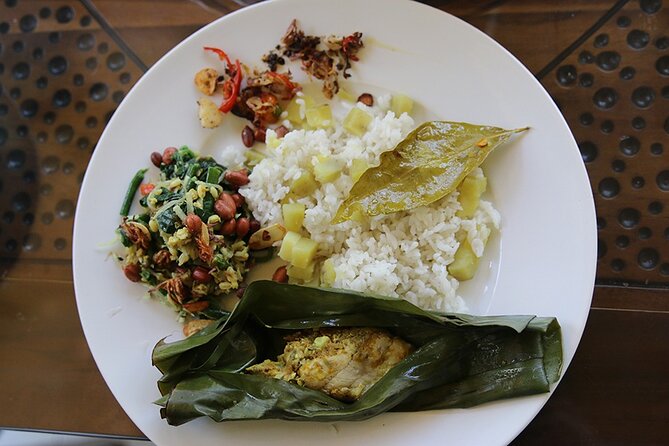
After the preparation, you sit down to eat the food made during the class. This is not just a demonstration followed by a small tasting. The experience includes a home-cooked Balinese meal, so the final table is the payoff for the work you have done.
Expect food with fresh herbs, vegetables, rice, and strong sweet or savory contrasts. Chicken satay is described as piquant, while desserts use ingredients such as coconut, banana, palm sugar, or black sticky rice. The meal may also include steamed fish and vegetable soup.
I like that the food is served after you have prepared it yourself. A familiar dish tastes different when you know how its ingredients were selected and how much chopping or seasoning went into it. You also leave with a clearer sense of what you might be able to repeat in your own kitchen.
Alcoholic beverages are included. The supplied details do not specify the type or quantity, so do not book this as a drinks-focused outing. The food and cooking remain the central features.
The meal can also help you decide if Balinese recipes suit your own cooking style. If you enjoy working from fresh produce and do not mind preparing several dishes, the class offers practical value. If you prefer a quick tasting with little participation, four hours may feel too long.
More traditional market visits around Ubud:
- Balinese Cooking class with traditional morning market visit
★ 5.0 · 161 reviews - PRIVATE Ubud Market Tour & Balinese Cooking Class with Putu
★ 5.0 · 125 reviews - Ubud Cooking Class with Optional Market Visit Pickup Included
★ 5.0 · 70 reviews - Balinese Cooking Class with Traditional Market Tour
★ 5.0 · 66 reviews
How Much Value You Get for $80
At $80 per person, the experience costs more than a simple group cooking demonstration. The price includes a private market tour, transport from and back to an Ubud hotel, the cooking class, the meal, and alcoholic beverages. It also buys a small-group setting with Kadek and Putu rather than a standard lesson where everyone follows the same steps at a distance.
The value is strongest if you use the class as several experiences in one: local market visit, family meal, cooking lesson, and short garden stop. You are not paying only for recipes. You are paying for the time and transport needed to connect ingredients, home cooking, and the finished meal.
For a couple or small group, the private format can make the price easier to justify. You can ask questions freely and choose vegetarian or other dishes ahead of time. Group discounts are offered, although the amount is not specified, so larger parties should check the final rate before booking.
The value is weaker if you mainly want a cheap lunch or a quick recipe lesson. The market, transfer, preparation, and sit-down meal take about four hours. That is a good use of a half day for food lovers, but a poor fit if your Ubud schedule is packed with temples and other tours.
This experience is typically booked about six days ahead. That is not a rule, but it is a useful planning clue. If you want a certain date, especially for a private group, booking several days early makes sense.
Who Will Get the Most From This Class?
I would choose this for anyone who wants food to be part of the cultural experience, not just something served between sightseeing stops. The market and family-compound setting give the class a local focus that a hotel kitchen may not provide.
It should suit:
- Couples looking for a private activity in Ubud
- Families who want a shared, practical experience
- Home cooks who want recipes they can attempt after Bali
- Vegetarians and vegans who arrange their menu in advance
- Visitors curious about local produce and seasonal ingredients
- Small groups that can benefit from a private rate or group discount
The class may be less suitable if you dislike chopping, cooking, or spending several hours around food. It is also not the best choice if you need pickup outside Ubud and want no extra transport charge.
The age suitability of children is not specified, so families should ask the provider before booking. Service animals are allowed, but anyone bringing one should still confirm how it will work in the family compound and kitchen.
Practical Details That Matter
The activity lasts about four hours, including the market, transport, optional garden visit, cooking, and meal. Since it includes a private pickup and drop-off, the exact rhythm can depend on your group and the time spent at each stop.
Pickup and drop-off are included only for hotels in Ubud. Hotels outside Ubud require an additional charge. This is one of the most important details to check before paying, since the advertised price does not cover all locations.
A mobile ticket is accepted, and confirmation is provided at booking. The experience is near public transportation, but the included service is private round-trip transport from Ubud hotels, not general transport for every Bali location.
The menu is seasonal. You should not book expecting every listed dish to appear on your table. Instead, use the examples as a guide to the style of food: satay, vegetables, fish, rice, soup, coconut, banana, and palm sugar.
Free cancellation is available if you cancel at least 24 hours before the local start time. Cancellations or changes made less than 24 hours ahead are not accepted for a refund, so keep that deadline in mind when arranging your Ubud plans.
The Best Reasons to Book, and the Main Caution
The strongest reason to book is the full path from market to meal. You see ingredients in Gianyar, learn how they are handled, cook them with Putu, and eat the results in a family setting. That sequence gives the class more meaning than a stand-alone recipe demonstration.
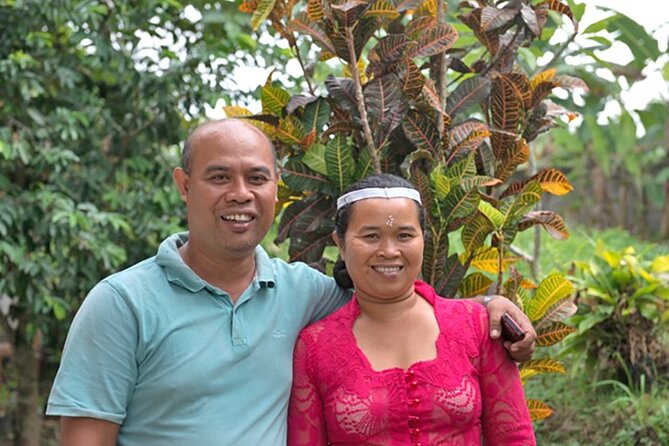
The other strong point is the warm, personal structure built around Kadek and Putu. You have a private experience, a choice of dietary direction, and a chance to ask about each dish as it comes together. The hands-on approach is especially useful if you want to remember the process rather than only take a few photos.
The caution is that the class is not a fixed, tightly scripted menu. Seasonal ingredients and your preferences shape the meal. That is a benefit for some people, but anyone wanting a guaranteed list of dishes should ask what is planned before booking.
Should You Book This Ubud Cooking Class?
Book it if you want a private, food-centered half day that combines Gianyar Market, a family home, practical cooking, and a full meal. The $80 price is reasonable when you use the included transport, personal instruction, market tour, and meal as one package.
I would skip it if you only want to eat, if you dislike hands-on kitchen work, or if your hotel is outside Ubud and the added transport charge changes the value. For everyone else, especially home cooks and visitors interested in Balinese food culture, Kadek and Putu offer a focused way to spend four hours away from the usual restaurant circuit.
FAQ
How long does the Gianyar Market and cooking experience last?
The experience lasts approximately four hours.
Is pickup included?
Pickup and drop-off are included for hotels in Ubud. Hotels outside Ubud require an additional charge.
Is this a private activity?
Yes. Only your group participates in the market tour and cooking class.
Who leads the experience?
Kadek provides the pickup and market visit. His sister, Putu, and members of the family lead the cooking experience at the family compound.
What dishes might be prepared?
Possible dishes include chicken satay, fresh vegetable soup, stir-fried vegetables, steamed fish, rice, fried banana with grated coconut and palm sugar, and black sticky rice pudding with fresh coconut cream.
Is a vegetarian option available?
Yes. A vegetarian option is available, and you should request it when booking.
Can dietary restrictions or allergies be accommodated?
You should provide details about allergies, dietary restrictions, or cooking preferences at the time of booking.
What is the cancellation policy?
You can cancel for a full refund up to 24 hours before the experience start time. Cancellations or changes made less than 24 hours in advance are not accepted for a refund.
More craft workshops in Ubud
- Ubud Silver Class Jewelry making in bali
★ 5.0 · 978 reviews - Balinese Farm Cooking Class by Pemulan Bali
★ 5.0 · 410 reviews - Ubud Monkey Forest Silver Class – Craft Your Own Silver Jewelry
★ 5.0 · 254 reviews - Balinese Authentic Cooking Class in Ubud
★ 5.0 · 239 reviews
Newly added Ubud trips
- authentic Balinese organic cooking class in Ubud★ 5.0 · 4 reviews
- Farm-to-Table Balinese Cooking Experience★ 4.0 · 3 reviews
- Sunrise Jeep Tour Mount Batur Kintamani Bali★ 5.0 · 24 reviews
- coconut wine and coffee safary tour★ 5.0 · 16 reviews
- Nungnung Waterfall,Jatiluwih Heritage UNESCO and Bedugul Tour★ 5.0 · 5 reviews
- Bali Amazing Cycling Tour★ 5.0 · 4 reviews
- Authentic Balinese Cooking Class with Jewelry Making Class★ 5.0 · 3 reviews
- Bali Rural Village Bike★ 5.0 · 10 reviews
Ubud Balinese Cooking Classes, compared.
PRIVATE Authentic Balinese Cooking Class in Ubud at Putu’s Home
Read our review →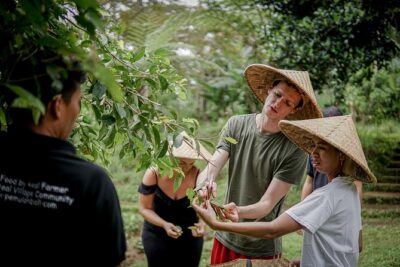
PRIVATE Balinese Cooking Class in Ubud with Dewa with Transfers
Read our review →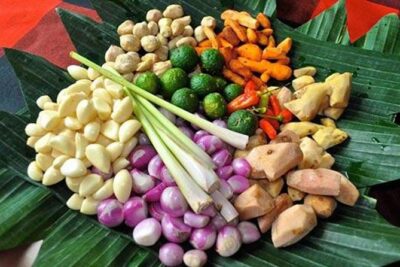
Balinese Cooking class with traditional morning market visit
Read our review →
PRIVATE Ubud Market Tour & Balinese Cooking Class with Putu
Read our review →Browse the lists this tour appears in