
Reviewed · UBUD BALINESE COOKING CLASSES
#1 Paon Bali Cooking Class with Shuttle Ubud Only
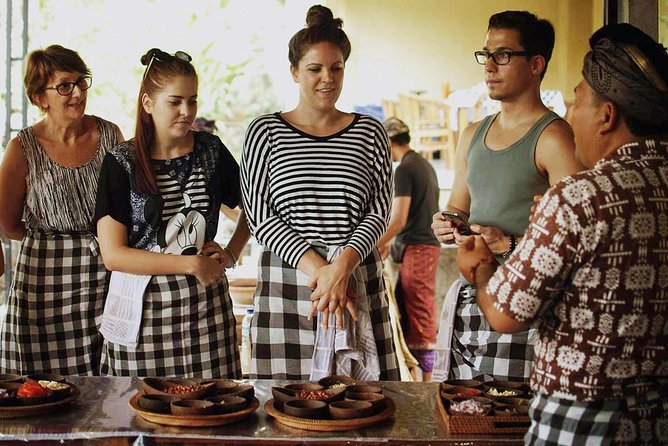
The best part of this Ubud experience happens before the cooking begins: you visit a traditional local market and learn what Balinese cooks look for, what they reject, and how bargaining fits into daily life. Back in the kitchen, you prepare several dishes yourself, then sit down to eat what you made.
I like the small-class approach, which is designed to give each person individual attention, and I like that ingredients, cooking equipment, and a meal are included. The main catch is the limited pickup area. Central Ubud transfers are included, but rides from places such as Kuta, Sanur, Canggu, or Nusa Dua cost an extra $35 per car in cash.
Key points to know before booking
- The morning class includes a market visit: You see how local ingredients are selected and learn about Balinese shopping customs before entering the kitchen.
- You cook a full set of dishes: Possible recipes include chicken in coconut curry, steamed fish wrapped in banana leaf, and boiled banana with palm sugar syrup.
- Vegetarian and non-vegetarian options are available: Choose your preference when booking.
- Ubud Center pickup is included: Pickup applies only to accommodations in central Ubud, with the activity ending back at the meeting point.
- The class lasts about three and a half hours: The morning option includes the market stop, while other details should be confirmed at booking.
- The price is $39 per person: That covers ingredients, cooking equipment, instruction, and food, but not out-of-area transfers.
A market morning before the cooking begins
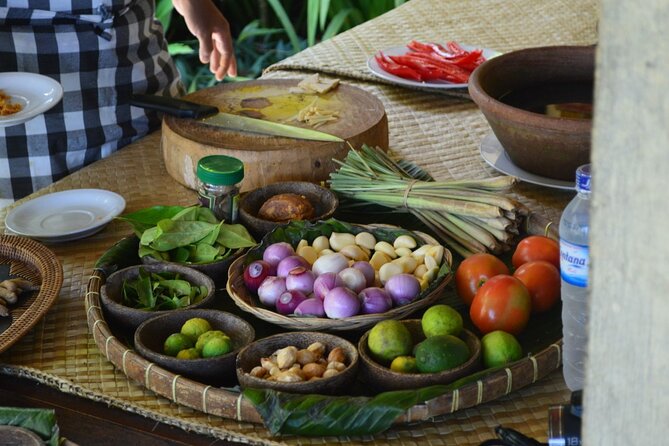
The morning class starts with a visit to a traditional local market. This is more than a quick stop to look at vegetables. The chef explains Balinese tastes, local meat and fish, seasonal produce, and the practical business of choosing fresh ingredients.
You learn what to select and what to leave behind. You also get an introduction to Balinese-style bargaining, a small but useful lesson in how food shopping fits into local life. Markets open early in Bali, so this part of the class gives you a look at the day before the kitchen work begins.
The market is listed as Ubud Traditional Art Market, while the class description focuses on a traditional food market. Because of that wording, I would not book this expecting a long market tour with a fixed list of stalls. Think of it as a guided introduction to local buying habits and ingredients.
That distinction matters. The value is in having someone explain what you are seeing. Without that help, a market can be a swirl of unfamiliar produce and activity. With a chef beside you, the food becomes part of the lesson.
The market visit is offered with the morning class only. If you choose another class time, confirm what is included before paying. This is one of the few details that could affect your decision, especially if the market is the part that interests you most.
More Balinese cooking classes in Ubud:
- Ubud Cooking Class Bali with Balinese Chef
★ 5.0 · 1,609 reviews - PRIVATE Authentic Balinese Cooking Class in Ubud at Putu’s Home
★ 5.0 · 644 reviews - Balinese Ubud cooking school (9 Dish Cooking and Market Tour)
★ 5.0 · 540 reviews
From market ingredients to a working kitchen
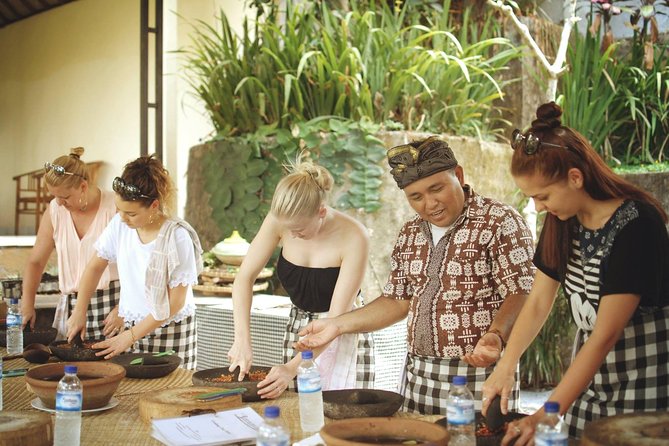
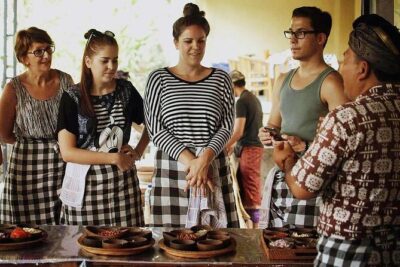
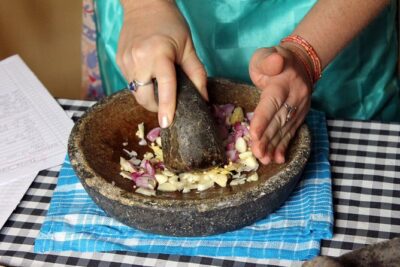
After the market, the experience shifts from watching to doing. You work with the chef and an assistant, using the provided cooking equipment and ingredients.
The class is set up so that everyone can take part rather than simply watch a demonstration. That is important for a cooking class. You should expect to handle ingredients and follow the preparation steps yourself, with help available when you need it.
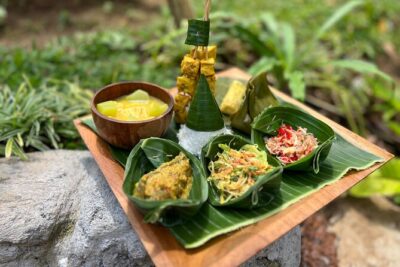
The menu gives you a good sample of Balinese cooking techniques:
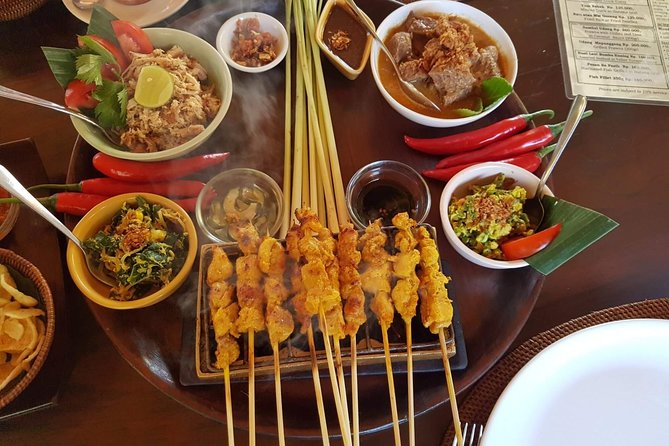
- Chicken in coconut curry introduces the use of coconut and local seasoning in a warm, savory dish.
- Balinese steamed fish in banana leaf shows how food can be wrapped and cooked in a natural covering.
- Boiled banana with palm sugar syrup provides a simple sweet finish.
The exact full menu is not provided, so you should treat these dishes as examples rather than a guaranteed complete list. The class does promise local dishes, and the available food choices include both vegetarian and non-vegetarian options.
I like this mix because it is not limited to one kind of preparation. You get a main dish, a seafood preparation, and a dessert-style recipe. That makes the lesson more useful when you return home, since you are exposed to several basic methods rather than one recipe repeated in different forms.
Why the hands-on format matters
A cooking class can be a passive demonstration with a meal at the end. This one is built around participation. You cook, taste, and eat the food prepared during the class.
That format is especially useful if you want something more personal than a sightseeing stop. The cooking becomes a way to understand how ingredients are combined and why certain foods appear together. You also get the pleasure of eating a meal that you helped make.
The class has a maximum of 24 participants. That is not an especially tiny group, but the experience is formulated to give each person individual attention. The chef is assisted by another staff member, which should help keep the work moving when several people need guidance at once.
The size also affects the mood. You are likely to be working alongside other participants and sharing the meal afterward. The class is not designed as a private lesson, so book it for interaction rather than complete quiet or personal control over the pace.
Past feedback gives the experience a 4.9 rating from 20 reviews, with 100 percent recommending it. The strongest praise centers on the food, the friendly hosts, and the fact that everyone gets involved. One especially useful detail is that Bintang beer is available during the class, making it possible to chat while cooking. That is a pleasant extra, but the supplied information does not say whether it is included in the $39 price, so ask if that matters to you.
What the meal is like at the end
The final meal is part of the experience, not an optional add-on. You eat the dishes prepared during the session, which gives you a chance to taste the results while the instructions are still fresh.
This is also where the class becomes social. You can compare your results with the other participants, talk with the hosts, and enjoy the meal at an unhurried pace. The class has been praised for its good atmosphere and for making cooking feel fun without turning it into a formal lecture.
I would pay attention to the word shared. The information confirms that the food is cooked and eaten at the end, but it does not promise a private table or a custom dining setup. If you want a quiet, restaurant-style meal, this may feel casual. If you enjoy meeting people during an activity, the format should suit you well.
The recipes also have practical value. Coconut curry, banana-leaf steaming, and palm sugar dessert are recognizable parts of Balinese cooking that can be easier to remember once you have prepared and eaten them yourself.
A completely different kind of day out from Ubud:
- All-Inclusive Ubud Private Tour
★ 5.0 · 14,344 reviews - Best of Ubud Full-Day Tour with Jungle Swing
★ 5.0 · 8,571 reviews - Ubud: Monkey Forest, Jungle Swing, Rice Terrace, and Water Temple
★ 5.0 · 7,160 reviews - Best of Ubud 1-Day Private Tour
★ 5.0 · 4,451 reviews
What the $39 price really covers
At $39 per person, this is a reasonable value if you want several elements in one short outing. The fee includes cooking ingredients, cooking equipment, instruction, and the meal you prepare. For the morning option, it also includes the market visit.
The included Ubud transfer adds value if your accommodation is in Ubud Center. You do not need to arrange a separate taxi for the included pickup area, though the meeting details should be checked when your booking is confirmed.
The price is less attractive if you are staying outside central Ubud. Pickup from Nusa Dua, Jimbaran, Canggu, Kuta, or Sanur carries an additional charge of $35 per car, paid in cash on the day. That fee is not per person, which could work better for a small private group, but it changes the total cost and should be part of your planning.
The experience lasts about three hours and 30 minutes. For that length, the price covers a market visit, instruction, hands-on preparation, and a meal. It is a good fit for a morning when you want a focused cultural activity rather than a full-day tour.
Pickup, meeting point, and timing
The listed starting point is Ubud Central Parking, Jl. Suweta No. 18, Ubud, Gianyar, Bali 80571. The activity ends back at the meeting point.
Hotel transfer is included for Ubud Center only. The wording does not promise pickup from every Ubud-area address, so confirm that your accommodation qualifies. If it does not, you may need to reach the central meeting point yourself.
The morning option is the one that includes the market tour. Since the market opens early and the class has a fixed duration, plan your morning around the pickup or meeting time rather than treating this as a drop-in activity.
Confirmation is provided at booking. That is useful because you need the final pickup details, meeting instructions, and any information about your chosen food option before the day begins.
Choosing between vegetarian and non-vegetarian food
You can choose a vegetarian or non-vegetarian option. This makes the class suitable for more people in the same booking, though the supplied details do not explain how the recipes differ or whether all menu items can be adjusted.
If you have strict dietary needs, contact the operator before booking and explain them clearly. Do not assume that choosing vegetarian automatically covers allergies or other restrictions. The available information confirms the two broad menu choices, not detailed ingredient substitutions.
For a mixed group, this flexibility is useful. One person can choose vegetarian food while another selects the non-vegetarian menu, allowing both to join the same class. Still, ask about the exact dishes if you need to avoid particular ingredients.
Who will enjoy this class most
I would recommend this experience to you if you want to learn by doing. It suits couples, friends, solo participants who enjoy group activities, and anyone who wants a break from temples, viewpoints, and photo stops.
It is also a smart choice when you have only a half-day available. The three-and-a-half-hour schedule gives you a clear cultural activity without taking over your entire day. One practical use is filling a gap before a late flight, as long as your timing leaves enough room for the airport transfer afterward.
Families and mixed-age groups may also like the format because the cooking gives everyone a clear task. However, the available information does not specify age requirements or accessibility details, so ask before booking if those points matter for your group.
You should think twice if you dislike group activities, want a private chef, or need a guaranteed menu beyond the listed examples. The maximum group size is 24, and the class is designed to be social and participatory.
Important booking details and possible drawbacks
The experience is non-refundable and cannot be changed after booking for any reason. That makes timing important. Check your accommodation, transport plans, and food preference before you commit.
The activity also depends on good weather and a minimum number of participants. If poor weather cancels the class, you are offered another date or a full refund. If the minimum number is not reached, you are offered another date or experience, or a full refund.
The biggest practical concern is the transfer policy. Central Ubud pickup is included, but outlying resort areas cost extra. Another consideration is that the morning market visit is not listed for every class time.
These are manageable issues, but they reward careful planning. Confirm the pickup zone, class time, menu choice, and market inclusion before making non-refundable arrangements.
My verdict: a useful taste of Balinese food culture
I would book this class if you want an active, good-value introduction to Balinese cooking rather than a simple meal or demonstration. The market lesson gives the experience cultural context, and the hands-on cooking makes the recipes easier to remember.
The strongest reasons to choose it are the included ingredients and equipment, the choice of vegetarian or non-vegetarian food, and the chance to eat what you prepare. The chef and assistant are there to help, and the class has earned a 4.9 rating from 20 reviews with a 100 percent recommendation rate.
Skip it if your schedule is uncertain, since the booking is non-refundable, or if you are staying far outside Ubud and do not want to pay the additional transfer charge. For most people based in central Ubud, though, this is a practical three-and-a-half-hour activity that offers more than a recipe card. You leave with a meal, a few cooking skills, and a clearer sense of how food fits into everyday Balinese life.
FAQ
How long does the cooking class last?
The experience lasts approximately three hours and 30 minutes.
Is hotel pickup included?
Pickup is included for accommodations in Ubud Center only.
Where does the activity start?
The listed meeting point is Ubud Central Parking, Jl. Suweta No. 18, Ubud, Gianyar, Bali 80571, Indonesia.
Where does the activity end?
The activity ends back at the meeting point.
Is the market visit included?
The market tour is included with the morning class only.
Which market will I visit?
The listed stop is Ubud Traditional Art Market, while the class description refers to a traditional local market visit.
Are vegetarian dishes available?
Yes. You can choose a vegetarian or non-vegetarian option.
What food might I cook?
Example dishes include chicken in coconut curry, Balinese steamed fish in banana leaf, and boiled banana in palm sugar syrup.
Is cooking equipment provided?
Yes. Cooking ware and ingredients are included.
Is there an extra pickup fee from outside Ubud?
Yes. Pickup from Nusa Dua, Jimbaran, Canggu, Kuta, or Sanur costs an additional $35 per car, payable in cash on the day.
Can I cancel or change my booking?
No. The experience is non-refundable and cannot be changed for any reason. If the operator cancels because of poor weather or an insufficient number of participants, you are offered another date, another experience, or a full refund.
More craft workshops in Ubud
- Ubud Silver Class Jewelry making in bali
★ 5.0 · 978 reviews - Ubud Monkey Forest Silver Class – Craft Your Own Silver Jewelry
★ 5.0 · 254 reviews - Canggu Scooter Lessons
★ 5.0 · 195 reviews - Crafting Heritage Batik Painting Workshops
★ 5.0 · 164 reviews
Newly added Ubud trips
- authentic Balinese organic cooking class in Ubud★ 5.0 · 4 reviews
- Farm-to-Table Balinese Cooking Experience★ 4.0 · 3 reviews
- Sunrise Jeep Tour Mount Batur Kintamani Bali★ 5.0 · 24 reviews
- coconut wine and coffee safary tour★ 5.0 · 16 reviews
- Nungnung Waterfall,Jatiluwih Heritage UNESCO and Bedugul Tour★ 5.0 · 5 reviews
- Bali Amazing Cycling Tour★ 5.0 · 4 reviews
- Authentic Balinese Cooking Class with Jewelry Making Class★ 5.0 · 3 reviews
- Bali Rural Village Bike★ 5.0 · 10 reviews
Ubud Balinese Cooking Classes, compared.
PRIVATE Authentic Balinese Cooking Class in Ubud at Putu’s Home
Read our review →
PRIVATE Balinese Cooking Class in Ubud with Dewa with Transfers
Read our review →
Balinese Cooking class with traditional morning market visit
Read our review →
PRIVATE Ubud Market Tour & Balinese Cooking Class with Putu
Read our review →Browse the lists this tour appears in