
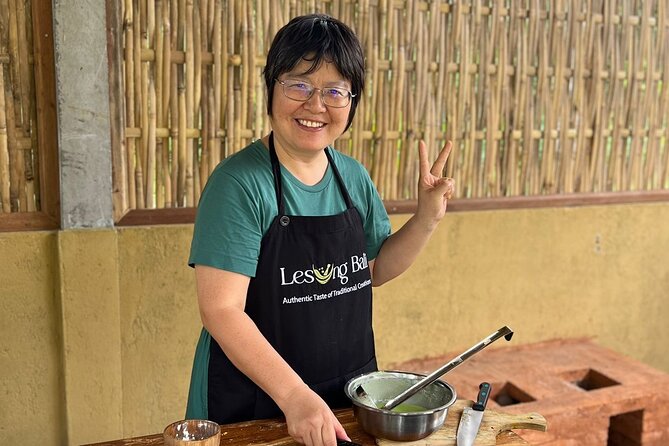
Reviewed · UBUD BALINESE COOKING CLASSES
Authentic Balinese Cooking Class in Ubud
The most memorable part of this Balinese cooking class in Ubud is that the food lesson begins long before the stove. You visit a traditional market on the morning departure, step inside a local Balinese home, then collect spices from the farm before cooking them with a local chef.
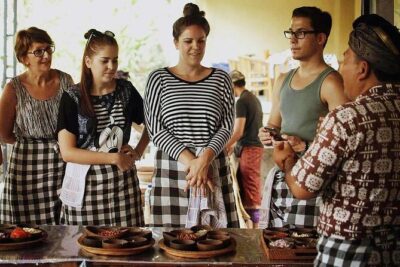
I like the mix of hands-on work and cultural context. You do not simply watch a demonstration, you pound spices in a lesung, prepare food in banana leaves, and eat the meal you helped make. I also like the practical pickup service, which saves you from sorting out transport in Ubud.
The main consideration is timing. Only the morning class includes the market visit, and the five-hour program takes a solid part of your day. If you want a quick cooking lesson, this may feel long, but the extra stops are what give it character.
Key points to know before booking
- Choose the morning class for the market visit: The early option adds a stop at a traditional market to buy local spices.
- Expect more than a kitchen lesson: The program includes a Balinese home visit, a farm walk, ingredient harvesting, and a meal.
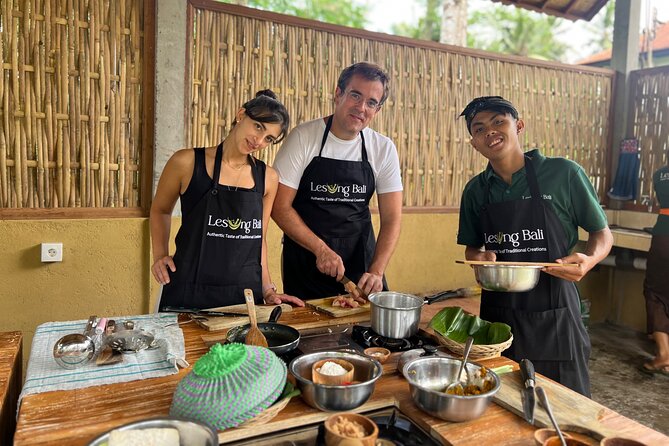
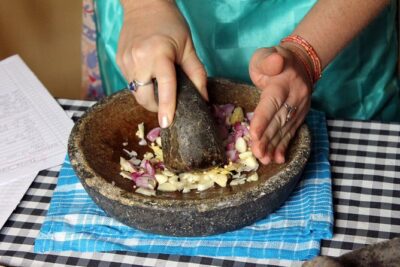
- Get your hands dirty: You will chop and pound spices with traditional tools before cooking.
- Pick your menu: Vegetarian and regular menu choices are available during the class.
- Transfers are included around Ubud: Pickup and drop-off from Ubud-area addresses come in an air-conditioned vehicle.
- Plan for a half-day: The class lasts about five hours and allows up to 15 people.
Why this Ubud cooking class feels different
Many cooking classes begin with a recipe card and end with lunch. This one uses food as a way into daily Balinese life. You see where ingredients are bought, how a traditional home is arranged, and how spices are grown and prepared before they reach the cooking area.
That sequence matters. When you pound a spice paste with a mortar and pestle after seeing the raw ingredients at the market and farm, the meal feels less like a staged demonstration. You get a clearer sense of the work behind Balinese cooking.
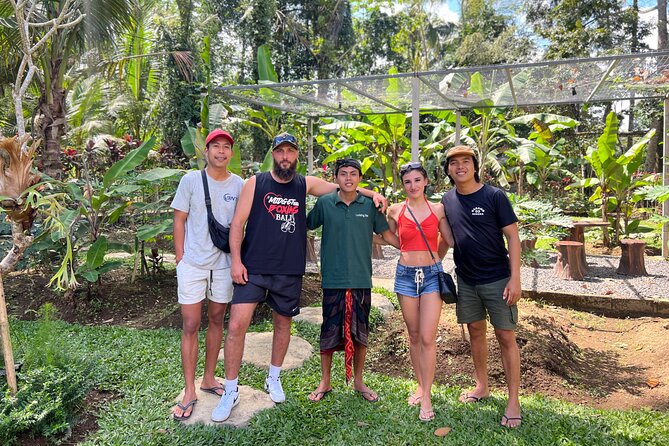
The setting is on the west side of Ubud, surrounded by green countryside. The class takes place at a farm, not in a city restaurant or a polished hotel kitchen. That rural setting should appeal to you if you want a slower, more personal activity away from Ubud’s busiest streets.
The group can reach a maximum of 15 people. That is still large enough to have a social feel, but small enough for a hands-on class to remain practical. Your exact amount of personal attention may depend on the group size and the pace of the chef.
More Balinese cooking classes in Ubud:
- Ubud Cooking Class Bali with Balinese Chef
★ 5.0 · 1,609 reviews - PRIVATE Authentic Balinese Cooking Class in Ubud at Putu’s Home
★ 5.0 · 644 reviews - Balinese Ubud cooking school (9 Dish Cooking and Market Tour)
★ 5.0 · 540 reviews
Start with a traditional market in the morning
Book the morning departure if you want the fullest program. The market stop lets you see the everyday side of local food shopping and buy some of the spices used later in class.
This is not described as a long market tour with a detailed shopping list. Instead, it is a useful introduction to the ingredients you will handle. You can connect the unfamiliar roots, leaves, and spices at the market with the dishes prepared later in the day.
I would choose this option even if the afternoon schedule is easier. A market visit gives the class a stronger sense of place, and you will have more context for the cooking once you reach the farm.
The afternoon class still includes the local home, farm, cooking lesson, and meal, but it does not include the market stop. That makes it a sensible choice if you have already visited a market or need to fit the class around another Ubud activity.
Step inside a Balinese family home
After the market on the morning schedule, the program visits a local house. You learn about Balinese culture, daily life, and the way buildings are arranged within the home compound.
This is one of the more valuable parts of the day because it gives the food lesson a social setting. Balinese cooking is not separate from family life, ceremonies, and the home. Seeing the layout helps you understand that the kitchen is part of a wider household system.
The visit is described as a visit to a typical local home, so you should approach it respectfully. A home is not a museum, and the experience may feel more personal than a standard sightseeing stop. One especially memorable possibility is encountering a family ceremony. A visit connected with a baby’s one-month birthday according to the Balinese calendar was described as part of one class, showing how closely household life and tradition can overlap.
That kind of moment cannot be guaranteed, so do not book the tour expecting a ceremony. The reliable part is the cultural explanation and the chance to see how a Balinese home is organized.
Harvest spices at the farm
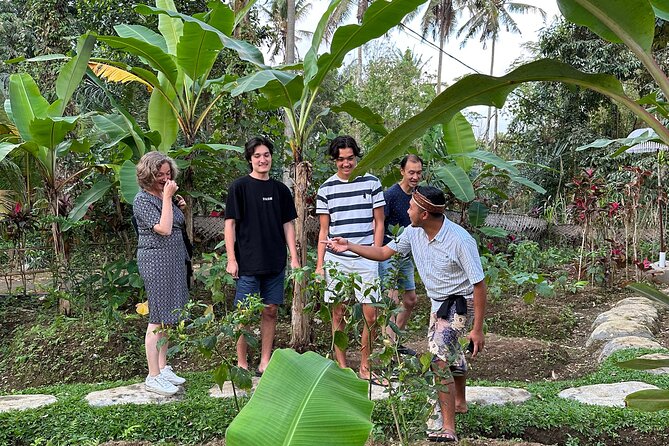
Once you reach the farm, the cooking begins with a short exploration and ingredient harvest. You help gather some of the spices that will go into the menu.
I like this step because it changes your role from observer to participant. You are not simply handed a bowl of measured ingredients. You see that the food starts with plants, leaves, and spices grown in the surrounding area.
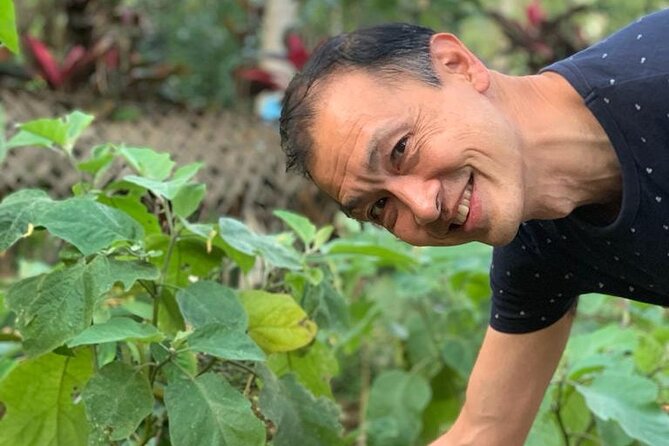
The available information does not list every crop or dish, so you should not expect a fixed farm tour with named plants. The useful point is the connection between the garden and the cooking table. If you enjoy food, gardening, or local agriculture, this part will likely hold your attention.
The rural location also gives the day a calmer rhythm. You are surrounded by countryside rather than spending all five hours indoors. For photography, the green setting and village surroundings add variety, though the main purpose remains the cooking class.
A completely different kind of day out from Ubud:
- All-Inclusive Ubud Private Tour
★ 5.0 · 14,344 reviews - Best of Ubud Full-Day Tour with Jungle Swing
★ 5.0 · 8,571 reviews - Ubud: Monkey Forest, Jungle Swing, Rice Terrace, and Water Temple
★ 5.0 · 7,160 reviews - Best of Ubud 1-Day Private Tour
★ 5.0 · 4,451 reviews
Pound, chop, wrap, and cook
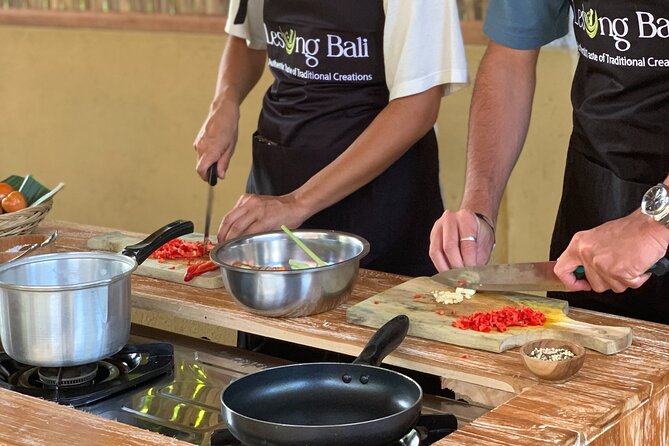
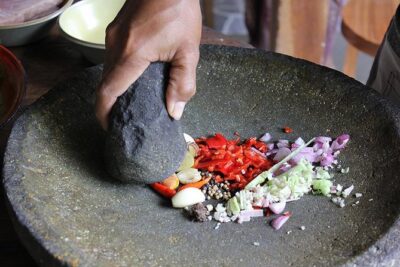
The chef demonstrates Balinese cooking techniques, including chopping and pounding spices with a lesung, a traditional mortar and pestle. This is the working heart of the class.
Pounding a spice paste takes more effort than tipping ingredients into a blender. You learn how texture changes as the spices break down, and you see how much flavor comes from freshly prepared ingredients. The chef also explains quantities, cooking methods, and what else each menu requires.
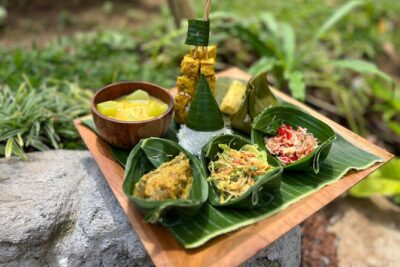
The lesson includes food prepared in banana leaves, another detail that makes the activity feel tied to local cooking rather than adapted to a Western classroom. You get a chance to handle the ingredients and utensils yourself, with an apron and cooking tools provided.
The chef decides the menu with the group, and you can choose between vegetarian and regular options. That flexibility is useful for mixed groups, couples, and families who do not all eat the same way. The supplied information does not list the exact dishes, so contact the operator if a specific recipe is important to you.
A PDF recipe is included after the class. That is a practical souvenir, especially because spice pastes and cooking methods can be hard to remember once you return home. You can use it to recreate part of the meal rather than leaving the lesson as a one-day memory.
Eat the lunch you prepared
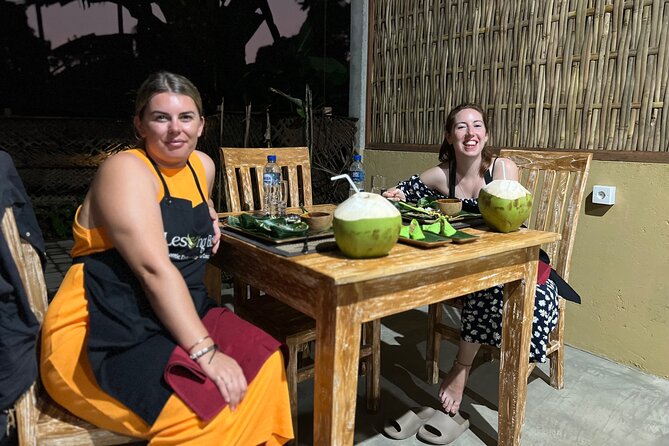
Lunch is included, along with bottled water, coffee, and tea. The meal gives you time to taste the results of the class and see how the separate ingredients work together.
I find this more satisfying than a cooking demonstration where someone else prepares the food. Your meal follows the work you have just done, from harvesting and pounding spices to cooking and assembling the dishes.
The meal is also a useful point for comparing the regular and vegetarian menus. If you have dietary needs beyond that choice, the supplied details do not explain what can be accommodated. Ask before booking rather than assuming the kitchen can change every dish.
The pace of lunch may vary with the size of the group and the menu. Since the full activity takes about five hours, you should not schedule a tight appointment immediately afterward.
The value of $49 per person
At $49 per person, the price covers more than the cooking instruction. You get roughly five hours of activity, Ubud-area pickup and drop-off, the market visit on the morning schedule, a home visit, farm time, lunch, drinks, equipment, an apron, and a PDF recipe.
That makes the price reasonable if you value cultural stops and transport as much as the food lesson. Hiring a car separately, arranging a market visit, and finding a cooking class would take time and may cost more once you add meals and transport.
The value is less clear if your only goal is to learn one or two recipes as quickly as possible. A shorter class could suit you better, but this program is designed as a half-day outing rather than a compact kitchen workshop.
Group discounts are offered, though the exact discount is not provided. If you are booking with family or friends, check the final price before paying. The group limit is 15 people, which keeps the activity from becoming a very large class.
Transfers make the half-day easier
Pickup and drop-off are included for addresses in the Ubud area. An air-conditioned vehicle handles the transfer, which is useful in Bali’s heat and saves you from arranging a driver for the day.
The pickup service is especially helpful if you are staying outside central Ubud or are not comfortable finding a rural location on your own. One class included a driver who answered questions about local culture and made an extra stop at the group’s request. That level of service may depend on the individual driver, but it shows why the transfer can be part of the experience rather than a simple ride.
Extra transport charges apply outside the Ubud area:
- Sanur: 400,000 rupiah per car
- Kuta, Seminyak, or Canggu: 450,000 rupiah per car
- Nusa Dua or Jimbaran: 550,000 rupiah per car
- Uluwatu: 700,000 rupiah per car
These are per-car charges, not per-person charges, but you should add them to the $49 price when comparing the tour with options closer to your hotel. The included Ubud transfer is the strongest transport value.
Choosing the right departure time
The morning class is the clear choice if you want the market. It gives you the complete sequence: market, home, farm, cooking, and lunch.
The afternoon option is better if you want a later start or have already visited a market. You still get the central cultural and cooking elements, but the program is not identical.
No exact departure times are supplied, only a choice of departure schedules. Confirm the available start time when booking so you can plan around other Ubud activities. Allow the full five hours, plus any time needed for pickup and return.
The program requires good weather. If poor conditions force a cancellation, you will be offered another date or a full refund. That policy matters because the market, home visit, and farm portions are not purely indoor activities.
Who will enjoy this class most
I would recommend this for couples, families, and small groups who want a cultural activity with food at its center. It also suits first-time visitors who want a structured way to learn about daily life in Bali without booking several separate excursions.
The class works particularly well for you if you like:
- Preparing food rather than only watching a chef
- Local markets and fresh ingredients
- Village settings and household culture
- Vegetarian or regular menu choices
- Activities that include pickup and a meal
- Taking recipes home for later use
It may not suit you if you want a luxury kitchen, a fixed list of famous dishes, or a very short lesson. The setting is a working farm and local home environment, not a formal culinary school. You should also leave room in your day for the five-hour schedule.
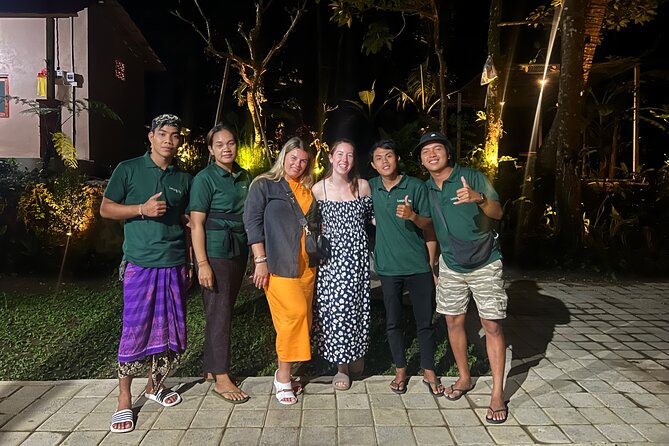
The warm personal side of the activity matters. Putri is identified as a delightful teacher in one class, and Ron was remembered as a highlight by one couple celebrating a birthday. Gusti is also mentioned as a driver and guide during a home visit. Since staffing can change, treat these names as useful details rather than a promise that every booking will include the same people.
Booking and cancellation details
Confirmation is provided at the time of booking, and mobile tickets are accepted. The activity is usually booked about 21 days ahead, so reserve earlier if your Ubud dates are fixed.
You can cancel for a full refund up to 24 hours before the local start time. Cancellations or changes made within 24 hours are not refunded or accepted. If bad weather cancels the class, you can choose another date or receive a full refund.
Should you book the Authentic Balinese Cooking Class?
Book it if you want a full cultural half-day, not just a recipe lesson. The strongest version is the morning class, which adds the market and gives you the clearest connection between shopping, home life, farming, and cooking.
At $49, the combination of transport, lunch, ingredients, instruction, and cultural visits is good value around Ubud. I would be more cautious only if you are staying far from Ubud and the extra car fee changes the calculation, or if you need a tightly timed activity.
For most people who enjoy food and local culture, this is a practical, personal way to spend five hours. Choose the morning schedule, confirm the pickup area, and arrive ready to pound spices by hand.
FAQ
How long does the Balinese cooking class last?
The activity lasts approximately five hours.
Where does the cooking class take place?
The class is located on the west side of Ubud, in a countryside setting surrounded by green areas.
Is hotel pickup included?
Pickup and drop-off are included for addresses in the Ubud area. The transfer is provided in an air-conditioned vehicle.
Does the class visit a traditional market?
The morning class includes a visit to a traditional market, where you buy some local spices. The market visit is not included in the afternoon class.
Is lunch included?
Yes. Lunch, bottled water, coffee, and tea are included.
Can I choose a vegetarian menu?
Yes. Vegetarian and regular menu options are available during the class.
What is included in the cooking lesson?
The class includes cooking utensils, an apron, and a PDF recipe. You learn techniques such as chopping and pounding spices with a traditional mortar and pestle.
What is the cancellation policy?
You can cancel at least 24 hours before the start time for a full refund. Cancellations or changes made less than 24 hours before the start time are not accepted or refunded. If poor weather cancels the activity, you can choose another date or receive a full refund.
More craft workshops in Ubud
- Ubud Silver Class Jewelry making in bali
★ 5.0 · 978 reviews - Ubud Monkey Forest Silver Class – Craft Your Own Silver Jewelry
★ 5.0 · 254 reviews - Canggu Scooter Lessons
★ 5.0 · 195 reviews - Crafting Heritage Batik Painting Workshops
★ 5.0 · 164 reviews
Newly added Ubud trips
- authentic Balinese organic cooking class in Ubud★ 5.0 · 4 reviews
- Farm-to-Table Balinese Cooking Experience★ 4.0 · 3 reviews
- Sunrise Jeep Tour Mount Batur Kintamani Bali★ 5.0 · 24 reviews
- coconut wine and coffee safary tour★ 5.0 · 16 reviews
- Nungnung Waterfall,Jatiluwih Heritage UNESCO and Bedugul Tour★ 5.0 · 5 reviews
- Bali Amazing Cycling Tour★ 5.0 · 4 reviews
- Authentic Balinese Cooking Class with Jewelry Making Class★ 5.0 · 3 reviews
- Bali Rural Village Bike★ 5.0 · 10 reviews
Ubud Balinese Cooking Classes, compared.
PRIVATE Authentic Balinese Cooking Class in Ubud at Putu’s Home
Read our review →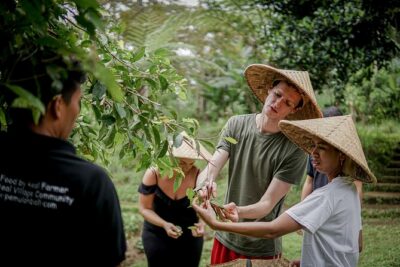
PRIVATE Balinese Cooking Class in Ubud with Dewa with Transfers
Read our review →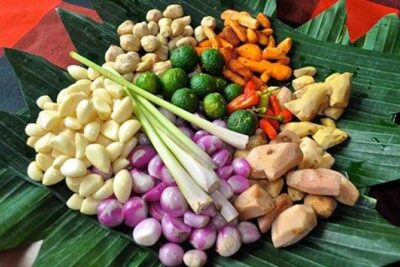
Balinese Cooking class with traditional morning market visit
Read our review →
PRIVATE Ubud Market Tour & Balinese Cooking Class with Putu
Read our review →Browse the lists this tour appears in