
Reviewed · UBUD BALINESE COOKING CLASSES
Balinese Cooking Class at Organic Farm
The best part of this Ubud cooking class happens before anyone picks up a knife. You walk through Mai Organic Farm, gather herbs and vegetables, and learn how Bali’s subak irrigation system shapes farming life. Then those fresh ingredients become lunch over a traditional wood-fired stove.
I like the true farm-to-table setup, and I like the small-group format, advertised for eight people, with a maximum of ten. The staff, including hosts such as Korong and Kadek, bring a warm, playful approach, and the cooking is active without making you feel pressured to perform.
The main consideration is location. The farm is outside central Ubud in Pejeng, so you’ll need to allow time for the ride. Pickup is offered from central Ubud hotels and rentals, but if you arrange your own transport, the meeting point is at the farm and the activity ends there.
What makes this cooking class special
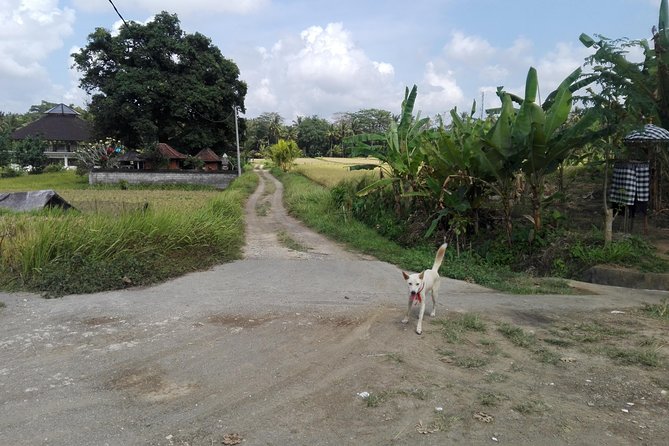
- You harvest the ingredients first: Herbs, fruit, and vegetables come from the farm before they reach your chopping board.
- You cook six Balinese dishes: Recipes include tuna sate, sate lilit kebab, and corn fritters.
- You use a traditional wood-fired stove: This adds a practical look at older Balinese cooking methods.
- You learn about the subak system: The farm visit connects food with Bali’s UNESCO-recognized irrigation tradition.
- You get more than a cooking lesson: Fresh juices, infused water, herbal drinks, Balinese coffee, and lemongrass tea are included along the way.
- You support local farmers: The Mai Organic Farm project helps farmers and villagers in Pejeng earn income and improve farm resources.
Starting with a welcome drink at Mai Organic Farm
The activity begins at Mai Organic Farm in Pejeng, outside Ubud. If you use the included pickup, transportation is arranged from a central Ubud hotel or rental. Otherwise, you meet at the farm and return there when the class ends.
The welcome is relaxed. You may start with fresh coconut water or another drink, then settle into a shaded part of the farm while the team explains its community farming project. This opening matters because it gives the class a purpose beyond preparing lunch. You are learning where the food comes from and how local farmers fit into the project.
The setting is simple and rural rather than polished like a restaurant school. That is part of the appeal. You are not standing in a showroom kitchen with ingredients measured into neat bowls. You begin among the plants, with the day’s food still growing in the soil.
Plan on roughly five hours from start to finish. That is long enough for the farm walk, food preparation, cooking, and a shared meal without making the class feel rushed. It also means you should avoid booking another tightly timed activity immediately afterward.
More Balinese cooking classes in Ubud:
- Ubud Cooking Class Bali with Balinese Chef
★ 5.0 · 1,609 reviews - PRIVATE Authentic Balinese Cooking Class in Ubud at Putu’s Home
★ 5.0 · 644 reviews - Balinese Ubud cooking school (9 Dish Cooking and Market Tour)
★ 5.0 · 540 reviews
Walking the farm and learning about Bali’s subak system
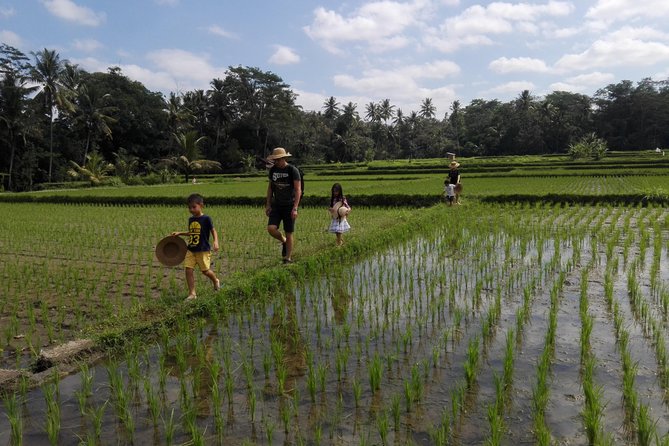
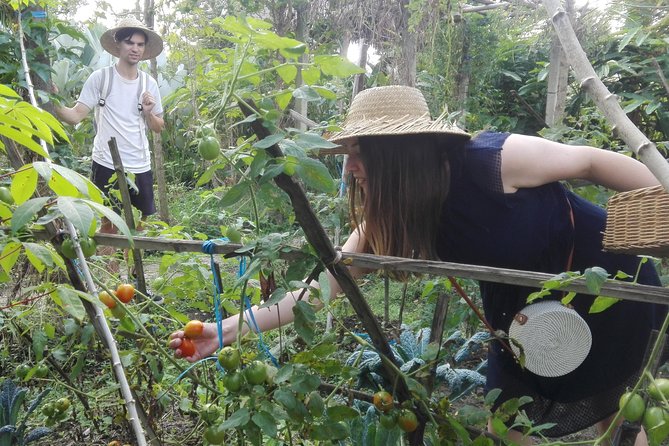
The farm tour is the part that gives the cooking class its local shape. You walk through the community farm with the staff, see how the produce is grown, and select ingredients for the meal. Depending on what is ready, you might handle herbs, vegetables, fruit, or spices.
This is a useful way to understand Balinese cooking. Many cooking classes begin with ingredients already arranged on a table. Here, you see the plants first, smell the spices close to their source, and connect each ingredient with the finished dish. Children can take part in this step too. Families with children aged six, nine, twelve, and thirteen have found the harvest portion easy to enjoy.
The farm visit also introduces Bali’s subak system, the traditional cooperative approach to managing irrigation and rice cultivation. It is recognized by UNESCO, and learning about it places agriculture within the wider Balinese community system. The class does not treat food as an isolated subject. It links farming, water, village cooperation, and daily meals.
Do not expect a formal lecture with a long technical explanation. The experience is built around walking, looking, picking, and asking questions. That makes it a good fit if you prefer learning by doing. If you want a detailed agricultural tour, you may find the explanation more introductory than extensive.
Preparing six Balinese dishes together
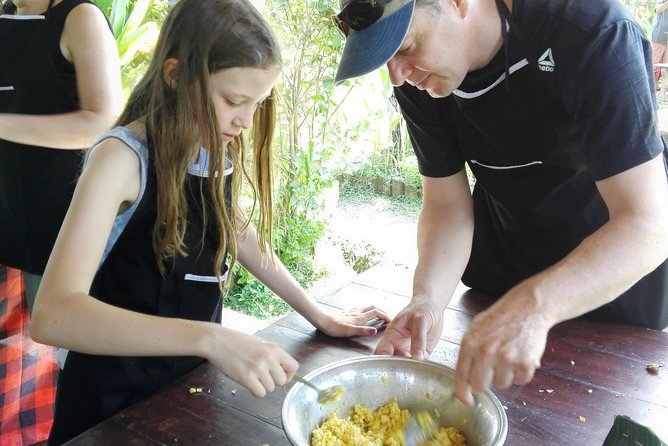
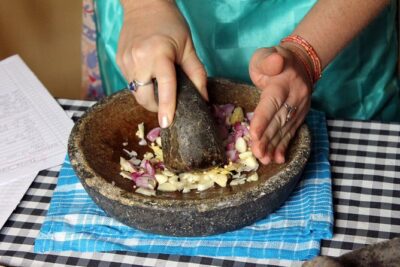
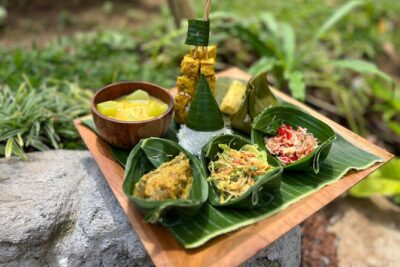
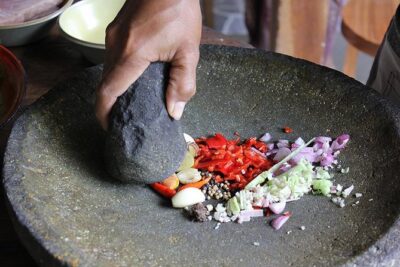
After the farm walk, you move to the cooking area at Mai Organic Farm. The class prepares six Balinese dishes, with tuna sate and corn fritters among the examples. Sate lilit, a Balinese kebab made by shaping seasoned mixture around a stick, is another key dish.
The menu gives you a useful spread of Balinese cooking methods. You work with fresh herbs, sauces, fritters, and grilled food rather than making one dish and watching the rest happen. The group prepares the meal together, so different people can chop, mix, shape, grill, or help with the sauces.
You can participate as much or as little as you like. That flexibility is important. Confident home cooks can take an active role, while children or anyone less comfortable with kitchen work can help with simpler tasks and still follow the process.
The class is hands-on, but it is not presented as a demanding professional lesson. The aim is to cook, eat, and understand the food. You should leave with a clearer sense of how Balinese flavors are built, though the exact recipes and techniques will depend on the day’s menu and instruction.
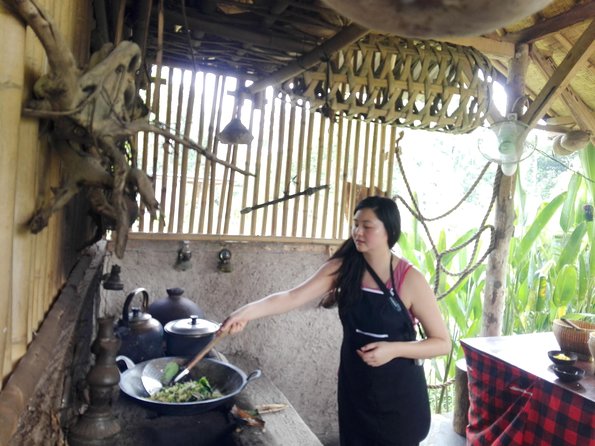
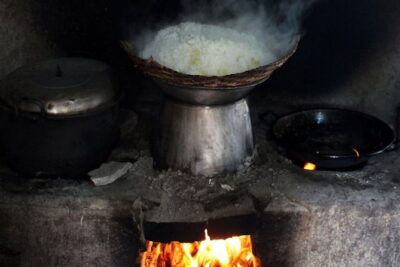
The team uses a traditional wood-fired stove and an outdoor grill. This is one of the most memorable details because it changes the pace of the cooking. You are not simply turning a dial on a modern range. You are working with heat in a more direct way, as Balinese families have done for generations.
That said, wood-fired cooking can be less controlled than a home kitchen. Smoke, heat, and timing are part of the experience. If you want a spotless, air-conditioned cooking studio, this is not the right choice. If you want a practical look at traditional preparation, it adds real value.
Drinks that extend the farm-to-table idea
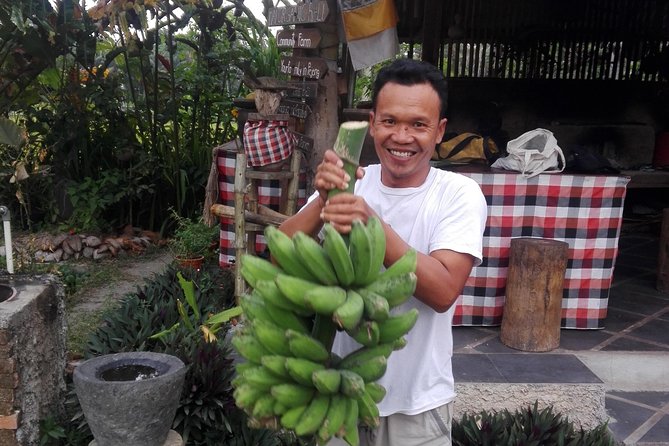
Food gets most of the attention, but the drinks help shape the day. The experience includes juice made from fruit and vegetables from local farms, infused water, herbal drinks, Balinese coffee, and lemongrass tea.
The fresh juice comes after the farm walk, which makes it feel like a continuation of the harvest rather than a standard welcome beverage. Coconut water may also be served at the start. These drinks offer small pauses between activities and give you more chances to try local ingredients without adding another formal lesson.
Balinese coffee and lemongrass tea are especially fitting at the end of the meal. You can compare the two and see how herbs and simple ingredients play a role in everyday drinks. The offerings may vary slightly, so do not treat the list as a promise that every drink will appear in the same order.
More organic farm visits around Ubud:
- Balinese Farm Cooking Class by Pemulan Bali
★ 5.0 · 410 reviews - From Ubud: Authentic Bali Farm Cooking School & Organic Farm
★ 5.0 · 122 reviews - Small-Group Farm Tour & Balinese Cooking Class in Ubud with Kadek
★ 5.0 · 16 reviews - Farm-to-Table Balinese Cooking Experience
★ 4.0 · 3 reviews
Eating lunch in a quiet gubuk
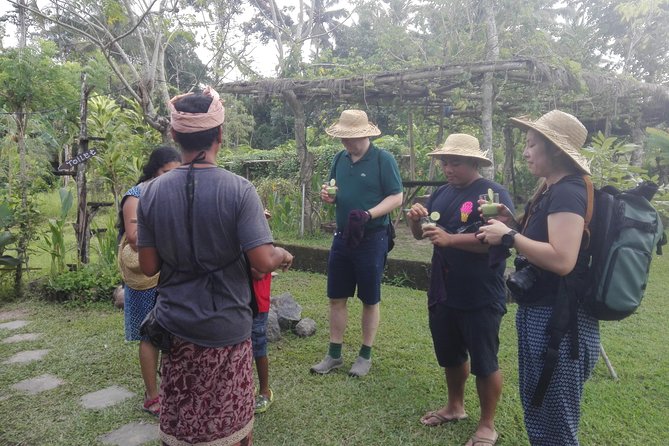
Once the cooking is complete, you sit down together in a gubuk, a simple hut, and eat the meal you helped prepare. The shared meal is a strong finish because the cooking does not end with everyone scattering to separate tables.
The hut provides a calm place to talk with the group and the hosts. It also keeps the focus on the food and the rural setting. You are eating what you picked, prepared, and cooked, which gives the lunch more meaning than a standard restaurant stop.
The food is designed to be approachable, but you should remember that Balinese cooking can use strong herbs, spices, and seasoning. The class is communal, so the meal may not be tailored to every dietary preference unless you confirm arrangements in advance. The supplied information does not specify vegetarian, vegan, allergy, or other special menus.
One nice touch is the recipe book provided at the end of the experience. It gives you a way to recreate at least some of the dishes after returning home. Ask about the recipes before leaving if you want to remember which ingredients or methods were used.
A small group with room for families
The advertised group size is eight people, while the additional information lists a maximum of ten. Either way, this is intended to be a small class rather than a large demonstration. Confirm the final group limit when booking if group size matters to you.
A small group makes a real difference here. You have a better chance to take part in chopping, mixing, grilling, and shaping the food. The hosts can also keep an eye on the stove and explain what is happening without shouting across a crowded kitchen.
The class works well for couples, friends, and families. Children have enjoyed both the farm walk and the communal cooking, and the flexible participation level means nobody needs to handle every task. Still, the five-hour duration may be a long morning for very young children, especially if they are not interested in food preparation.
The hosts are a major part of the experience. Korong is described as lively and full of useful information, while Kadek is associated with the class’s thoughtful community spirit and interest in improving the experience. Staff members are friendly and use English well, according to the available details.
What the $40 price includes
At about $40 per person, this is a good-value half-day experience if you want more than a recipe demonstration. The price covers the farm visit, ingredient gathering, cooking instruction, drinks, the six-dish meal, and round-trip pickup from central Ubud hotels and rentals.
The value comes from the number of parts packed into five hours. You are paying for transport convenience, a farm tour, cultural context, hands-on cooking, and lunch. A simple cooking class might cost less, but it may not include the farm visit or the chance to gather ingredients yourself.
The class also supports Mai Organic Farm’s work with local farmers and villagers in Pejeng. That does not replace the need to judge the food and teaching on their own merits, but it gives your spending a clear local connection.
Pickup makes the price more attractive if you are staying in central Ubud. If your accommodation is outside the stated pickup area, the practical value changes because you may need to arrange your own way to Pejeng. The meeting point is Mai Organic Farm, and the activity ends there.
Timing, weather, and practical planning
The activity generally runs for about five hours. It is best treated as a main event for the day, not a quick morning stop squeezed between other bookings.
Good weather is required because part of the experience takes place outdoors. If poor weather causes a cancellation, you are offered another date or a full refund. For your own planning, keep some flexibility around the booking, especially during Bali’s wetter periods.
Free cancellation is available until 24 hours before the start time. Cancellations or changes made less than 24 hours in advance are not accepted for a refund, and the cut-off follows local time.
The tour is booked on a mobile ticket, and confirmation is provided within 48 hours, subject to availability. Since the experience is often reserved well ahead of time, booking roughly two to three weeks in advance is sensible if your Bali schedule is fixed.
Who should choose this experience
I would choose this class if you want to understand Balinese food through farming and community life, not just learn a few recipes. It is particularly well suited to people who enjoy local markets, village settings, outdoor activities, and shared meals.
Families should consider it seriously. The farm walk gives children something to do before the cooking begins, and the menu preparation can be divided into simple tasks. Older children and teenagers may also enjoy the wood-fired stove and the chance to see ingredients before they become lunch.
Couples and friends get a social experience with plenty of time to talk. Solo participants can also fit in easily because the cooking is shared and the group is small.
I would hesitate to recommend it if you need a highly structured culinary course, guaranteed dietary substitutions, or a city-center location. The exact dishes can vary, outdoor conditions matter, and the farm is reached outside central Ubud. Those are not flaws, but they are important expectations to set.
Should you book the Mai Organic Farm class?
Yes, if you want an active and personal introduction to Balinese cooking. The strongest features are the ingredient gathering, the traditional stove, the small group, and the chance to eat together in the same rural place where the food was grown.
Book it as a half-day cultural experience rather than a simple cooking lesson. Leave room in your schedule, use the pickup if you are staying in central Ubud, and confirm the group size and any dietary needs before paying.
At $40, the combination of transport, farm tour, drinks, six dishes, instruction, and lunch makes sense. You are also helping a community farm project in Pejeng. For food-focused visitors who want a practical connection to Bali, this is an easy choice.
FAQ
Where does the cooking class take place?
The class takes place at Mai Organic Farm Bali in Subak Kana, Banjar Panglan, Pejeng, in the Gianyar area of Bali.
How long does the experience last?
The activity lasts approximately five hours.
Is pickup available?
Yes. Round-trip pickup is offered from central Ubud hotels and rentals.
Where does the activity end?
The activity ends back at the meeting point at Mai Organic Farm.
How many dishes will I prepare?
You will prepare six Balinese dishes. Examples include tuna sate, sate lilit kebab, and corn fritters.
Are drinks included?
Yes. The experience includes juice, infused water, herbal drinks, Balinese coffee, and lemongrass tea. A welcome drink is also provided.
Will I visit the farm before cooking?
Yes. You walk through the organic farm, learn about its produce and the subak system, and pick ingredients for the cooking class.
Is the cooking done on a traditional stove?
Yes. The class uses a traditional wood-fired stove and an outdoor grill.
How large is the group?
The class is advertised as capped at eight people, while the additional information gives a maximum of ten. Confirm the final group size when booking if this is important to you.
Can I cancel for a full refund?
Yes. You can cancel at least 24 hours before the start time for a full refund. If poor weather causes the operator to cancel, you are offered another date or a full refund.
More craft workshops in Ubud
- Ubud Silver Class Jewelry making in bali
★ 5.0 · 978 reviews - Ubud Monkey Forest Silver Class – Craft Your Own Silver Jewelry
★ 5.0 · 254 reviews - Balinese Authentic Cooking Class in Ubud
★ 5.0 · 239 reviews - PRIVATE Balinese Cooking Class in Ubud with Dewa with Transfers
★ 5.0 · 213 reviews
Newly added Ubud trips
- Sunrise Jeep Tour Mount Batur Kintamani Bali★ 5.0 · 24 reviews
- authentic Balinese organic cooking class in Ubud★ 5.0 · 4 reviews
- Farm-to-Table Balinese Cooking Experience★ 4.0 · 3 reviews
- coconut wine and coffee safary tour★ 5.0 · 16 reviews
- Nungnung Waterfall,Jatiluwih Heritage UNESCO and Bedugul Tour★ 5.0 · 5 reviews
- Bali Amazing Cycling Tour★ 5.0 · 4 reviews
- Authentic Balinese Cooking Class with Jewelry Making Class★ 5.0 · 3 reviews
- Bali Rural Village Bike★ 5.0 · 10 reviews
Ubud Balinese Cooking Classes, compared.
PRIVATE Authentic Balinese Cooking Class in Ubud at Putu’s Home
Read our review →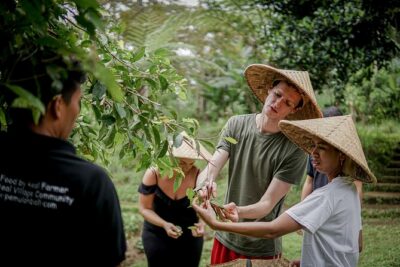
PRIVATE Balinese Cooking Class in Ubud with Dewa with Transfers
Read our review →
Balinese Cooking class with traditional morning market visit
Read our review →
PRIVATE Ubud Market Tour & Balinese Cooking Class with Putu
Read our review →Browse the lists this tour appears in